
Cee Cee Creative Newsletter Book Neighborhood Map Lessons
Stadtplan
Information
archive temp
loop temp
THROUGH THEIR EYES: C/O BERLIN PRESENTS THE FEMALE PHOTOGRAPHERS OF MAGNUM AGENCY

THROUGH THEIR EYES: C/O BERLIN PRESENTS THE FEMALE PHOTOGRAPHERS OF MAGNUM AGENCY

Since she was 16, Lebanese photographer Myriam Boulos has relied on her camera to get closer to reality. She photographed the everyday lives of her friends in Beirut as the 2019 revolution erupted outside the windows. She captured the quiet moments indoors, amid ruins and demonstrations. In search of intimacy and personal space, she now works as a photographer for the renowned Magnum Agency. At C/O Berlin, Boulos’ diary-like images are displayed as part of the Close Enough exhibition, alongside works by eleven other Magnum photographers. In a long-term project, Alessandra Sanguinetti documented two girls in rural Argentina over several decades. Carolyn Drake, in her series “Men Untitled”, puts male models seeking new expressions of masculinity in the spotlight. The exhibition was first shown in New York in 2022 to mark Magnum’s 75th anniversary. C/O Berlin is now celebrating its 25th birthday by bringing the concept to Berlin, slightly reimagined.

Building on the statement by war photographer Robert Capa, “If your pictures aren’t good enough, you’re not close enough,” the twelve photographers examine the extent to which intimacy is appropriate in a documentary gaze. How much familiarity and how much distance is needed between image-maker and subject? You can ask Carolyn Drake in person on 18.11.2025, when she visits C/O Berlin with her colleague Bieke Depoorters, offering insights into their working methods and the photobooks that emerged from their projects. The interplay of closeness and documentary distance also runs through the film series curated by Mubi for the exhibition. On 22.11., Mubi Night at C/O Berlin takes place. The evening highlight will be a screening of Lizzie Borden’s iconic film Working Girls (1986), part of the film series Close Enough: Perspectives by Women Filmmakers. The film follows sex workers through their daily lives, treating them with respect and humanity — far from voyeurism or naïveté. Additionally, the exhibition will remain open until midnight with free admission. Early visitors will receive a special giveaway and complimentary drink, while DJ Natalie Robinson provides the musical backdrop. Both Borden’s approach and the stance of her protagonists encapsulate the essence of “Close Enough” perfectly. Emotional boundaries remain invisible even where, at first glance, there seems to be no room for distance.

Text: Laura Storfner / Credits: The Necklace, 1999 © Alessandra Sanguinetti/Magnum Photos; A plane flying low over students at an amusemenet park, Istanbul, Turkey, 2018 © Sabiha Çimen/Magnum Photos; David von Becker

C/O Berlin, Hardenbergstr. 22–24, 10623 Berlin–Charlottenburg; map
Close Enough – Perspectives by Women Photographers of Magnum until 28.01.2026

Talking Books Expanded with Bieke Depoorter & Carolyn Drake 18.11.2025 18–20h. Further dates on 03.12.2025 with Lúa Ribeira and 22.01.2026 with Myriam Boulos + Olivia Arthur.

Mubi Night at C/O Berlin 22.11.2025 18–00h. Free entry. 
Film Screening of Working Girls: 18–19h30 (registration closed, remaining seats available on site)
DJ-Set at 20h with Natalie Robinson.

@coberlin

cee_cee_logo
MEMORY IS AN ACTIVE THING: 25 YEARS OF TWIN CITIES WINDHOEK — BERLIN

MEMORY IS AN ACTIVE THING: 25 YEARS OF TWIN CITIES WINDHOEK — BERLIN

About 8,356 kilometers separate Berlin and Windhoek, the capital of Namibia. Yet, on the anniversary of their partnership as twin cities, they feel closer than ever. Their histories have long been intertwined, shaped by the colonial past. With the purpose to (in part) make this past tangible, the partnership has been in place for 25 years, honoring remembrance while looking toward the future — creating spaces, exchanges, and diverse perspectives for a sustainable tomorrow. During the anniversary week 25 years of twin cities Windhoek – Berlin, from 17.–23.11.2025, this connection will not only be celebrated but actively practiced. Over 30 events will take place, involving more than 40 partners and around 100 participants from art, film, music, and science fields. The core pillars of the program are civil society and activist actors from both cities, who aim to strengthen municipal networks and foster dialogue. Throughout the week, the artistic intervention “Memory Scripts” by Windhoek-based artist Vitjitua Ndjiharine will be projected onto the Berlin House of Representatives. Guided city tours by Berlin Postkolonial and deSta – decolonial city tours will reveal just how much colonial heritage is embedded in Berlin’s buildings and streets. One highlight comes on 21., 22., and 23.11. at the Humboldt Forum. Following its world premiere in Windhoek, traditional choral music meets performance, dance, and theater when the Namibian-German artist collective around the theater association Momentbühne performs the musical theater production “People of Song.” 

On November 19, Afrikamera will present Namibian short films under the title Windhoek Shorts and invite filmmakers and interested audiences to exchange ideas at Sinema Transtopia. The pop-up photo exhibition Reframe Namibia showcases the resistant perspectives of a young collective of photographers. At the Gropiusbau (20.11.) and Berlin Global Village (17.11.), panels and workshops will ask important questions. How can a city partnership be conceived decolonially? How can relationships be built that do not simply manage the colonial legacy, but uncover it? During this week, remembrance is not a quiet retrospective, it is an active movement, spanning kilometers and unfolding right at our doorstep.

Text: Emma Zylla / Credits: “People of Song” © Michael Nakapandi, Surreal Art Creative Studio, Windhoek; “Memory Scripts” © Vitjitua Ndjiharine; “Shadows of the Past” © Julia Runge, 2023-2025

25 Years of Twin Cities Windhoek – Berlin
17.–23.11.2025. Find the full program and locations here.

@kulturprojekteberlin

cee_cee_logo
FACES AGAINST FORGETTING — MA BISTRASS! A PHOTO EXHIBITION FROM PARIS TO BERLIN

FACES AGAINST FORGETTING — MA BISTRASS! A PHOTO EXHIBITION FROM PARIS TO BERLIN

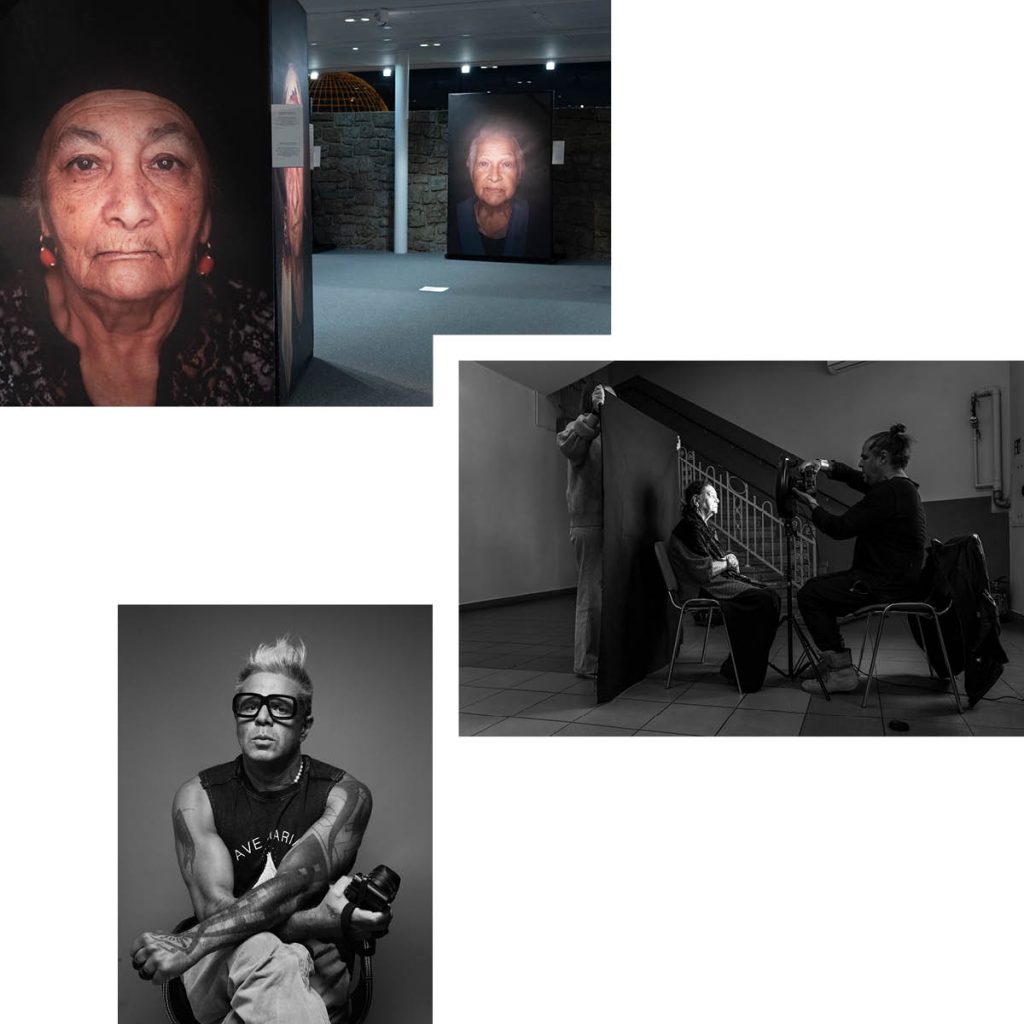
In the summer of 2024, photographer Luigi Toscano traveled through Eastern Europe in his role as UNESCO Artist for Peace to meet the last surviving victims of the Nazi genocide against Sinti and Roma. His photographs and interviews give a face and voice to those who have long been overlooked. The larger-than-life portraits, created in Poland, the Czech Republic and Ukraine, are powerful testimonies of pain and resistance. After its premiere at UNESCO headquarters in Paris, Ma Bistrass! is now coming to Berlin. Until 15.11.2025, the exhibition will be accessible around the clock along Ladestraße on the grounds of the Deutsches Technikmuseum, and thereafter until 06.12.2025 at Steinplatz in Charlottenburg. Ma Bistrass! translates roughly to “Lest we forget!”. Toscano’s images remember a minority that was only recognized as victims of Nazi persecution in 1982. Even today, Sinti and Roma face prejudice and social exclusion. In cooperation with the EVZ Foundation, a new, if temporary, place of remembrance and learning is being created in the heart of Berlin. The project is accompanied by guided tours and an educational program. Toscano’s work is more than documentation; it’s a call to look closely. Every gaze into one of these faces tells a story of survival, loss, and the hope that responsibility endures.

Text: Isabel Raab / Photos: Claire Demoute, Łukasz Überhuber

Deutsches Technikmuseum, Möckernstr. 26, 10963 Berlin–Kreuzberg; map

Ma Bistrass! A project by Luigi Toscano in cooperation with the EVZ Foundation
First stop until 15.11.2025.

Am Steinplatz, 10623 Berlin–Charlottenburg; map
Second stop 15.11.–06.12.2025, Admission 24 hours a day, no ticket required.

@deutschestechnikmuseum
@toscano7327
@evzfoundation
@unesco 

cee_cee_logo
OVERCOMING TRAUMA IN A TRACKSUIT: THE Y2K REALNESS OF “CALL ME PARIS”

OVERCOMING TRAUMA IN A TRACKSUIT: THE Y2K REALNESS OF “CALL ME PARIS”

The stage is bathed in pink. On a pale pink carpet stands a large hotel bed draped in ruffled satin, where a blonde woman in a pink velour tracksuit sits. Blood stains the floor, and a man’s body lies under the bed. Call me Paris by Yana Eva Thönnes begins at the Schaubühne Berlin. Everyone knows Paris Hilton. Even 15-year-old Julia (Alina Stiegler), whose story unfolds alongside that of the It girl. In 2004 Los Angeles, Hilton’s ex-boyfriend released a sex tape without her consent. “1 Night in Paris” became one of the most viewed porn videos of the 2000s. Hilton fought for years to reclaim her image rights. Meanwhile, in Bergisch Gladbach, newly arrived and blonde, Julia is immediately nicknamed “Paris” by her classmates. Every millennial woman who spent her teenage years in provincial Germany during the 2000s will recognize something of herself in Julia’s memories. Whether it’s the rhinestone on her friend Kathi’s canine tooth, the low-rise Miss Sixty jeans, the white Deichmann boots (like J.Lo’s), or the family PC in her father’s study that enabled her first exploration of the internet.

But she recognizes herself most clearly in the shameless objectification that women of that era were subjected to. Three leading actresses tell the story. Paris Hilton (Ruth Rosenfeld) offers advice on self-presentation, perfection, and what it takes to be an “It girl”. Julia’s mother (played by Jule Böwe, with glittering butterfly earrings, small braids, a craving for attention, and a dysfunctional marriage) has plenty to say about her daughter’s body, but little about the photos that the much older small-town hairdresser takes of the underage girl. Julia speaks about him, and about his film “1 Night in Paris”, in which she suddenly finds herself playing the leading role against her will. Actor Holger Bülow plays all the men in the production: the taciturn, alcoholic father and the abusive hairdresser. Twenty years later, Julia meets the latter again in a hotel room to talk about the tape. The encounter ends brutally, bloodily, and with devastating honesty. And while Y2K – with its skinny brows and lip-gloss aesthetic – has recently been glorified and revived, “Call me Paris” exposes something else: disturbingly intimate yet strangely detached, the pink light falls mercilessly on its own shadows.

Text: Inga Krumme / Photos: Philip Frowein

Call me Paris at Schaubühne, Kurfürstendamm 153, 10709 Berlin–Charlottenburg; map

@schaubuehne_berlin

cee_cee_logo
OPENING UP SPACES, SHIFTING PERSPECTIVES: THE PERFORMING ARTS SEASON 2025/26

OPENING UP SPACES, SHIFTING PERSPECTIVES: THE PERFORMING ARTS SEASON 2025/26

When South Korean choreographer Eun-Me Ahn’s Post-Orientalist Express rolls in, you let yourself be swept along — and be prepared to leave your baggage behind. In her latest work, which will celebrate its European premiere on 15.11.2025 at the Haus der Berliner Festspiele as part of the Performing Arts Season 2025/26, Eun-Me Ahn explores the legacy of Orientalism. She deconstructs the stories that the “enlightened West” tells about the “mysterious Orient” and asks: Who is speaking about whom — and how? Together with her ensemble, she searches for hybrid choreographic identities that move beyond internalized stereotypes. On a stage that merges traditional cultural forms with neo-traditional remix elements, Ahn demonstrates that “tradition” and “modernity” are no longer separate categories but exist in continuous dialogue, often through contradictory images. These tensions are visible in the 90 costumes, all designed by Ahn herself. Her questions remain pressing: How do orientalist perspectives continue to shape the work of Asian artists today? What role does the memory of colonial regimes of the gaze still play? And how can encounters between East and West be reimagined? The Post-Orientalist Express doesn’t simply travel from A to B, it traverses spaces, ideas, and attributions, inviting audiences to climb aboard and dive in deeply.

Continuing this exploration of deconstructing clichés and inherited images, Gisèle Vienne and Étienne Bideau-Rey’s Showroomdummies #4 premieres on 05.12.2025. Here, dolls meet performers, and the boundaries between body and object become disturbingly interchangeable. Vienne and Bideau-Rey work with the tension between attraction and repulsion, drawing on references that range from masochism to Japanese horror. The result is a piece that lays bare desire, the staging of femininity, and the mechanics of the gaze. The dolls are not mere props; they form an integral part of a dramaturgy of withdrawal and suggestion. While Ahn interrogates questions of identity and attribution, Vienne and Bideau-Rey examine attribution itself as a physical and theatrical pattern. Together, both productions transform the stage into a laboratory of perception, standing as emblematic examples of the radical, playful, and critical international dance, theater, and performance works that the Performing Arts Season will bring to the Haus der Berliner Festspiele through early 2026.

Text: Laura Storfner / Photos: Credit: Jean-Marie Chabot, Hervé Véronèse, Sukmu Yun & Jiyang Kim

Haus der Berliner Festspiele, Schaperstr. 24, 10719 Berlin-Wilmersdorf; map

Performing Arts Season 2025/26 until 25.01.2026. Info and tickets can be found here.

@berlinerfestspiele

cee_cee_logo