
Cee Cee Creative Newsletter Book Neighborhood Map Lessons
Stadtplan
Information
archive temp
loop temp
FLOWERS DONE DIFFERENTLY: CREATE A BOUQUET WITH SNAKEGARDEN

FLOWERS DONE DIFFERENTLY: CREATE A BOUQUET WITH SNAKEGARDEN

All around, flowers are blooming, and all I want to do is bring a little spring inside. Luckily, I came across Snakegarden, a flower atelier in Berlin where you can have bouquets arranged, and also take part in workshops. Just in time for Mother’s Day on Sunday (10.05.), Snakegarden offers different ways to share floral joy. Will it be a ready-made, colorful bouquet? Or one assembled yourself? Or perhaps a workshop as a shared experience? We’re leaning towards the last option! Snakegarden was founded by Xenia Zarecineva from Chișinău, emerging from her desire to return to hands-on craftsmanship after eight years of digital work. Trained as an interior designer, she began to see flowers as an essential part of spatial composition and immersed herself in traditional floristry. Very quickly, however, she realized she wanted to create something of her own, with a new approach. That’s how Snakegarden came to life. Carefully selected seasonal flowers, plants you wouldn’t typically expect in a bouquet, and contrasts that play with soft and striking forms. Her arrangements are distinct. You can order them online on Tuesdays and Saturdays and have them delivered directly to your home. And for those who want Xenia’s arrangements to become a fixed part of their space, there is a subscription option: fresh arrangements delivered every two weeks. Or get hands-on yourself in a workshop, where you have the chance to build your own bouquet step by step. Instead of simply giving flowers, make them yourself, with a little guidance along the way.

With a focus on craftsmanship, you cut, adjust and build your own colorful piece. If you opt for a one-to-one experience in a private course with your loved ones, you can decide whether you want something traditional, sculptural or minimal, in an ikebana style. From June 2026, curated floristry sets will be available online, so you can be a florist at home. If you’re looking for a special gift, you’re in the right place.

Text: Isabelle Marten / Photos: Mohit Amlani

Snakegarden

@snakegarden.berlin

cee_cee_logo
A WALK ALONG THE TELTOW CANAL TO THE SCHLEUSE VON KLEINMACHNOW

A WALK ALONG THE TELTOW CANAL TO THE SCHLEUSE VON KLEINMACHNOW

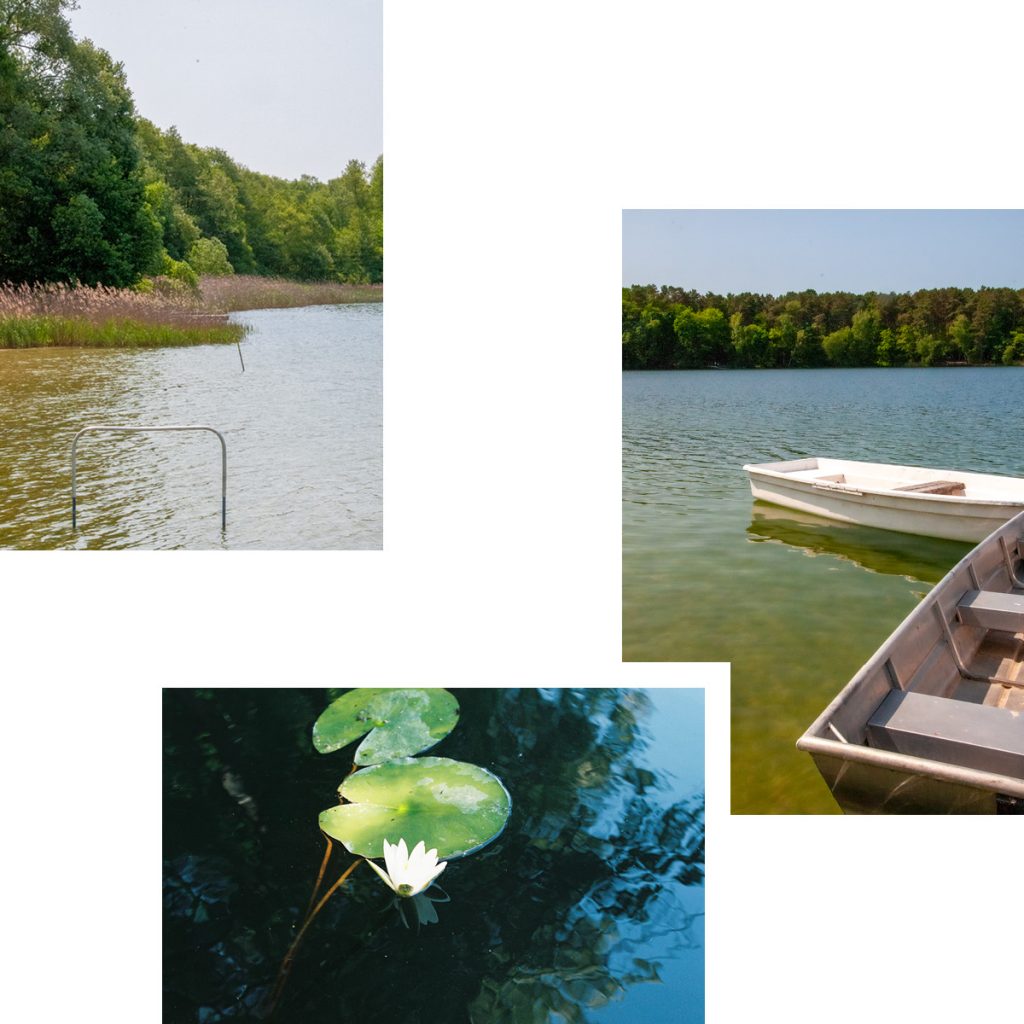
In 1906, Kaiser Wilhelm II inaugurated the Teltow Canal aboard his private yacht, the Alexandria. Today, the boats and their owners may be a little less grand, but the walk along the water is anything but, whether it is raining or the sun is out. Griebnitzsee lies just beyond Wannsee and only a few S-Bahn stops from central Berlin. That’s where this hike begins, though not before a quick stop at the station café Buena Vida Coffee Roasters to top up on caffeine and get ready with rain capes and waterproof pants. The radar promises no quick end to the rain, but there is no such thing as bad weather, only the wrong clothing, and for now our feet are still warm and dry in Gore-Tex shoes, the mood is cheerful, and the coffee is excellent. A short walk through the woods takes us along the Königsweg to the Teltow Canal. What strikes us is how rich the forest sounds: rain tapping on the leaves, birds calling from the treetops now that spring has brought them back. It’s remarkable how little we notice in the soundscape of everyday life, and all the nicer when a trip into nature draws our attention not just to its visual beauty, but to its acoustic beauty as well.

Following the canal bank, the route leads on to Machnower See, where a fine mist hangs over the water. In this setting, sunshine and blue skies would almost feel less fitting. We keep up the pace, though, because 17 kilometers is no short walk, and we want to stay warm. After circling the lake, we arrive at the historic lock in Kleinmachnow. Nearby stands a historic tram car from the former line 96, now converted into a small museum and information point. Since it no longer runs, we head back on foot toward Griebnitzsee station. Luckily, the final stretch leads through the woods again, where the trees shelter us from the rain. Back onto the S-Bahn and homeward bound. But after this walk, the saturated green all around leaves little doubt: rainy days can be beautiful after all.

Text & photos: Laura Iriondo

You can find the hike here.

@fortuna.forest

cee_cee_logo
BUILT UTOPIA: EXPLORING THE HANSAVIERTEL WITH GROTTO

BUILT UTOPIA: EXPLORING THE HANSAVIERTEL WITH GROTTO

The Berlin district of Hansaviertel and I go way back. As a landscape architect, I know the area between the Großer Tiergarten and the Spree inside out, through every season. At least, I thought I already knew everything. Tours by Grotto, with architect Maria Helena (in English) or curator and café owner Leonie Herweg (in German) — an expert who lives and works there — proved me wrong. Before the Hansaviertel became what it is today, it was one of Berlin’s most sought-after bourgeois addresses. The cityscape at the time featured elegant boulevards, richly decorated façades and grand villas, and was home to historic sites such as Rosa Luxemburg’s first Berlin apartment and Käthe Kollwitz’s studio. It was also home to one of Berlin’s largest Jewish communities and two synagogues in pre-war Berlin. Three remaining historic buildings and the original street names still recall those past eras. After the Second World War, the area became the site of the 1957 International Building Exhibition, a model project for modern housing. The Interbau 1957 invited Walter Gropius, Oscar Niemeyer, Alvar Aalto, Werner Düttmann and around fifty visionary architects to design a city of tomorrow, positioned as a direct ideological counter-model to the monumental Karl-Marx-Allee (then Stalinallee), which was built in the eastern part of the city in 1951.

The Hansaviertel is composed of a range of architectural typologies: slab and point high-rises, linear housing blocks, special-purpose buildings and bungalows. Herta Hammerbacher, the only woman among the participants, designed the Hansaplatz — the heart of the district. We stroll past architectural jewels such as the Akademie der Künste, known not only for its striking façade but also as a hub for art and culture. Further west, set within the dense greenery of the Tiergarten, stand my favorite buildings: the Oscar Niemeyer House, the Eternithaus, the Alvar Aalto House and the Swedish House with the new Café Tiergarten, which Leonie has been running with her business partners since 2025. In the sunny garden of the Hansabibliothek, we enjoy the calm together with a few scattered readers. It’s the perfect retreat in the middle of the city’s bustle. Walking further west, we pass the bungalows by Sep Ruf and Arne Jacobsen. From the ruins emerged one of Berlin’s boldest urban experiments. The use of new materials, split-levels, flexible floor plans and generous glass façades defines the new residential buildings. The Hansaviertel remains a built utopia, and at the same time, a place where history resonates in every sightline. Anyone joining the tour with Leonie and Maria and paying close attention will discover, between concrete and greenery, the layered history of a city that is constantly reinventing itself.

Text: Milena Kalojanov / Photos: Grotto

Meeting point: Hansabibliothek, Altonaer Str.15, 10557 Berlin–Hansaviertel; map

Book the Hansaviertel tour here.

@grotto.berlin

cee_cee_logo
STRONGER TOGETHER: STRENGTH TRAINING AT QUEER POWER GYM

STRONGER TOGETHER: STRENGTH TRAINING AT QUEER POWER GYM

Gyms are usually ruled by bros. Anyone who has ever set foot in a gym probably knows the feeling — I certainly do. You walk in and immediately feel out of place. Around me, there are guys on weight machines or standing in front of the mirror, sighing and grunting, usually a little too loudly, all following an unspoken choreography I don’t understand. And honestly, I don’t want to understand it. That’s how traditional gyms feel for me, for many women, and especially for many queer people. Which is why someone in Berlin set out to create a safe space for strength training for queer people: Queer Power Gym. Founder Eve has been strength training for twenty years and quickly realized that, as a nonbinary person, it’s easy to feel out of place in conventional gym environments. So they began offering personal training, and from there, the idea of creating a space of their own formed. At Queer Power Gym, it’s not just about squats or bench presses. From the moment you arrive, it’s clear people are welcome, addressed by name, with the correct pronouns, and with their individual goals in mind. Many come wanting to build strength in the traditional sense, others want to reduce pain, and others are there for gender-affirming training.

For some, that means building muscle in specific areas of the body, such as the arms or back. For others, it means training in a space where their bodies are not questioned — offered in the form of small group personal training. This format grew out of the original one-on-one sessions. While progress there was significant, the price was out of reach for many people. In small groups, much of that same individual attention can be maintained while making the training more accessible. Structure plays a central role, especially in the beginning, when many people feel lost in the gym among all the machines, routines and exercises. At Queer Power Gym, it’s clear from the start what to do. A reliable framework, group training and familiar faces help people build a routine. Queer circles, too, often stay within their own bubbles. People usually meet at the bar, not at the gym. At Eve’s, the LGBTQIA+ community mixes, and that is what makes it so special. Some people stay after training for a nonalcoholic beer at the Späti, while others come because they feel comfortable in the group. The project is still young. After a long search, Eve found a training space at Oranienplatz in Kreuzberg. Now, there is a space for strength that doesn’t feel intimidating. So, queers, let’s get to training. Finally, a gym where we don’t have to explain ourselves or prove ourselves before picking up a dumbbell.

Text: Inga Krumme / Photos: Evelyn Bastian

Queer Power Gym, Oranienstr.163, 10969 Berlin–Kreuzberg; map

@queer.power.gym.berlin

cee_cee_logo
UNDER ONE ROOF — STRENGTH & PILATES CLASSES FOR CHILDREN & ADULTS AT MINI MOVERS CLUB

UNDER ONE ROOF — STRENGTH & PILATES CLASSES FOR CHILDREN & ADULTS AT MINI MOVERS CLUB

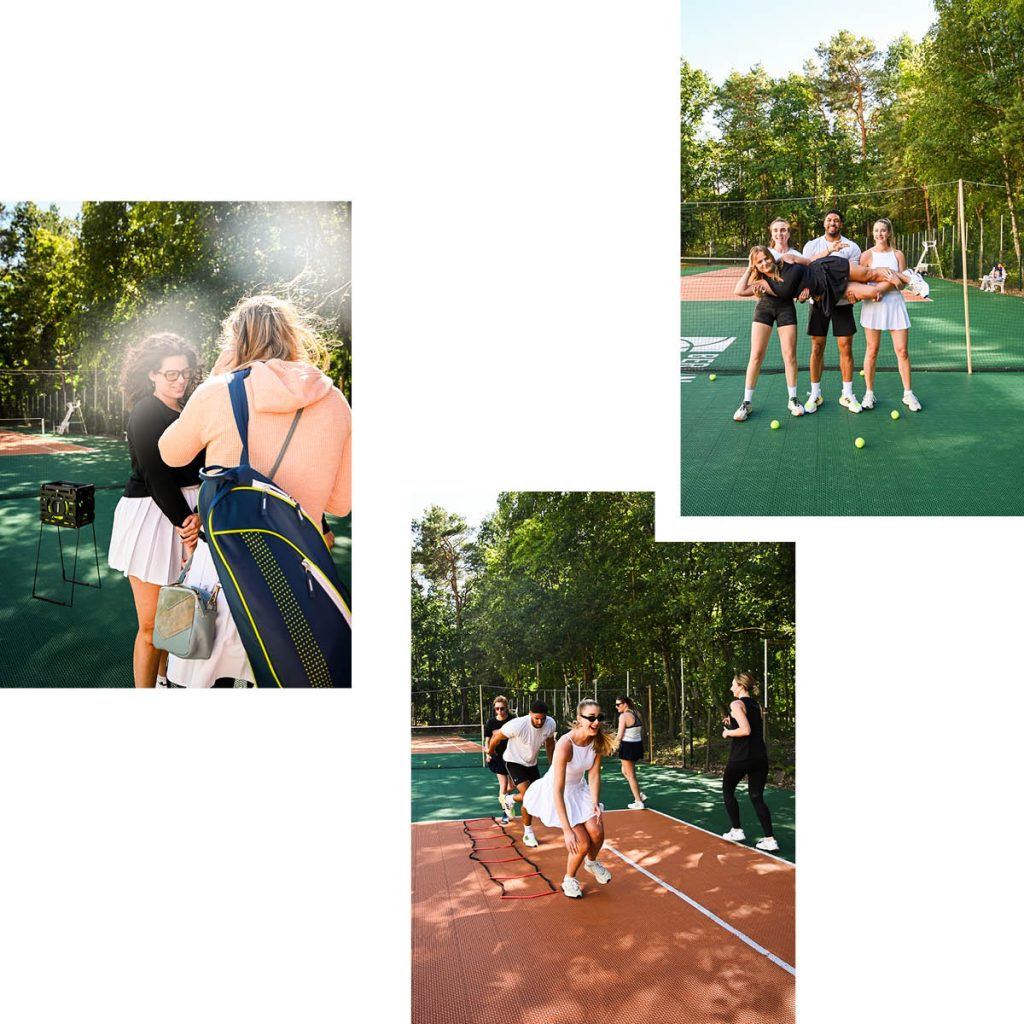
Since becoming a parent, finding time for me, while also juggling work and family life has been one of the bigger challenges. Not exactly a new problem, but one Victoria Densing and Verena Schwarz, founders of Mini Movers Club decided to tackle head-on. Their solution: a sports and social club as a third place for families – running exercise classes for kids and adults simultaneously, under one roof. This means while your child is letting off steam with songs and their own child-friendly hip-hop class, you have time to focus on you. Join a class (pilates, weights, HIIT or a posture-focused “Healthy Back”), or don’t. Sit down, have a coffee, read a few pages, answer those emails. For the little ones (4–6 and 6–8), the signature class mixes mindful movement with moments of calm (think: songs, dance and reflection). Guided by experienced instructors like Sophie and Annabelle – parents can take a moment to themselves. Younger kids (2–4) can join “Mini & Me”, a 45-minute session of movement and sensory play designed to be fun for both child and accompanying adult. And soon: classes for babies (0–2) and parents/caregivers are coming up, meaning no one is left out at this club. Right now, you’ll find the pop-up at Adidas Sports Base in Kreuzberg – a beautiful spot with high ceilings, lots of wood and plenty of room to move. Come fall season, the plan is to settle into a permanent home. In the meantime, they’re celebrating the season: Easter specials like “Hoppel Parcours” and a themed Mini Movers Signature class are running in the first two weeks of April 2026. And because this club isn’t just about getting a workout in – it’s about connection, community and peer support, there’s a range of community events around the topics of health, parenthood, relationships and movement coming soon.

Text: Chloë Galea / Photos: Patrick Desbrosses

Mini Movers Club

adidas Sports Base, Schleusenufer 4, 10997 Berlin–Kreuzberg; map
Get 10% off all tickets with the code “CeeCee10”.

@minimovers.club

cee_cee_logo