
Cee Cee Creative Newsletter Book Neighborhood Map Lessons
Stadtplan
Information
archive temp
loop temp
THE KINDL AS A SPACE OF RESONANCE: CONTEMPORARY ART IN THE HEART OF NEUKÖLLN

THE KINDL AS A SPACE OF RESONANCE: CONTEMPORARY ART IN THE HEART OF NEUKÖLLN

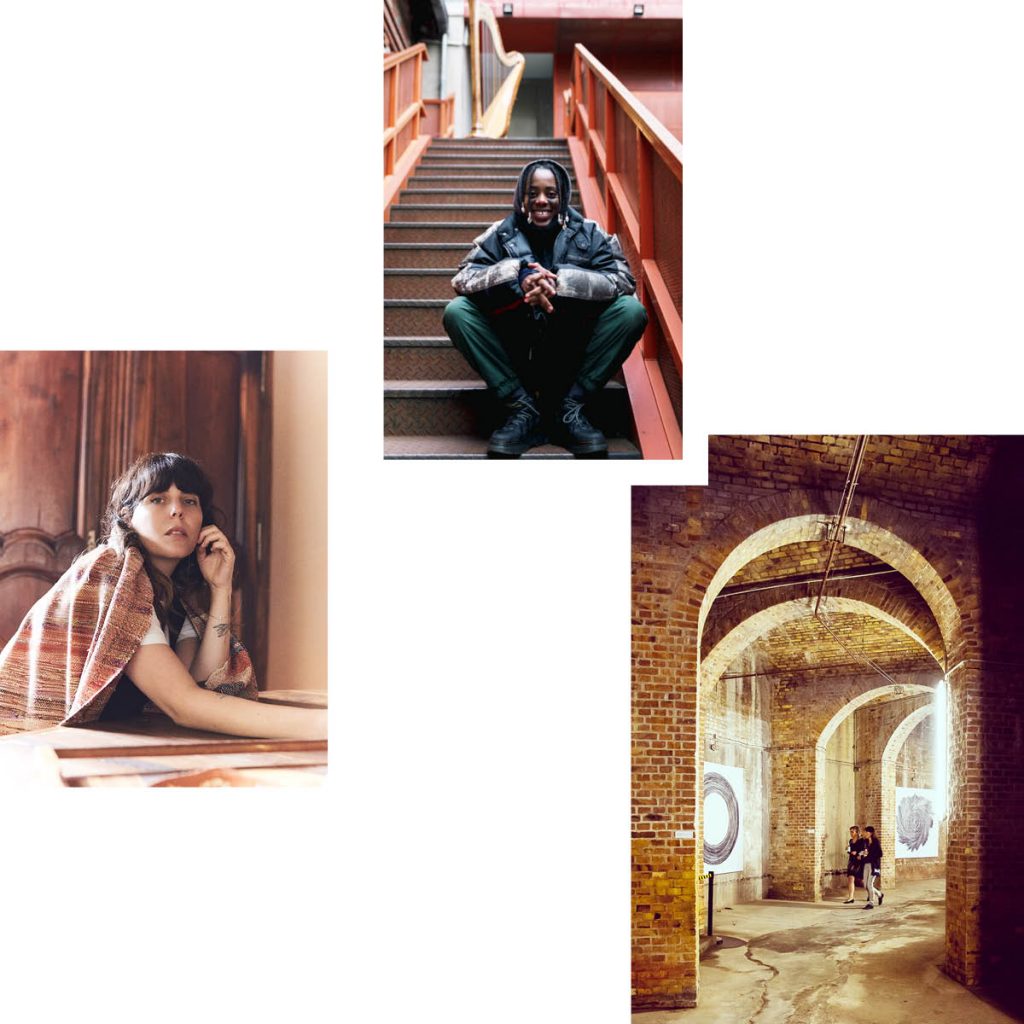
Once, enormous brewing vats filled this space with beer. Today, ideas and artworks inhabit the halls of the former Neukölln brewery. Since its careful renovation in 2016, the Kindl has established itself as a hub for contemporary Berlin art, and not just because of its 20-meter-high boiler house. Here, British artist Cornelia Parker realized Stolen Thunder (A Storm Gathering), an immersive installation that can be experienced until 24.05.2026. Sound, light, and shadow create a fictional, physically tangible event that recalls expressionist cinema while reflecting on climate disasters and political instability. Minimalist in gesture but monumental in effect are the works of Phoebe Collings-James. Until 15.02., the Maschinenhaus M1 hosts the British-Jamaican artist’s first institutional solo exhibition in Germany. Ceramic sculptures and a newly created sound work merge personal and collective experience, making the engagement with body, desire, and anti-colonial practices spatially perceptible. In the M1 VideoSpace, Cihad Caner presents hybrid, animated monsters inspired by historical and pop-cultural figures. Born in Istanbul in 1990, the artist gives them voices, exploring — both abstractly and directly — questions of integration and hospitality. On 04.02., Cihad Caner will discuss the exhibition’s themes in conversation with Çaǧla Ilk, the Designated Artistic Director of the Maxim Gorki Theatre.

Urban life and coexistence are also central to Erik Schmidt, whose retrospective The Rise and Fall of Erik Schmidt is on view until 01.02. in Maschinenhaus M2. Through a narrative parcours of painting, drawing, and video, he constructs a layered self-portrait that encompasses queer identity and a sense of community. On 29.01., Schmidt will provide further insight into his practice in conversation with Krist Gruijthuijsen, the new Director of the Espoo Museum of Modern Art. All of these exhibitions reveal what the Kindl is at its very core: not a quiet display case, but a vibrant kaleidoscope. A place of exchange that responds to (and engages with) its audience. For ten years, the Kindl has proven itself as an institution where art can be reflexive, conversational, and at times challenging. It is a space that connects and sparks discussion. The impressive building, where the industrial pulse of the past is still palpable, has reinvented itself as a dynamic forum for discourse. Under the direction of Kathrin Becker, art is not simply exhibited; it is negotiated as an expression of feeling, power relations, and uncertainty in our globalized world.

Text: Laura Storfner / Photos: Fabian Brennecke, Jens Ziehe, Marco Funke

Kindl – Zentrum für zeitgenössische Kunst, Am Sudhaus 3, 12053 Berlin–Neukölln; map

Cornelia Parker: Stolen Thunder (A Storm Gathering) until 24.05.2026

Phoebe Collings-James: The subtle rules the dense until 15.02.2026 
Landing / Bodies – Lecture by Kathryn Yusoff (Professor of Inhuman Geography, Queen Mary University of London), followed by a conversation with Maïa Beyrouti (artist, material research, Berlin) and Kathryn Yusoff, as part of the Phoebe Collings-James exhibition. 21.01.2026 19h, in English.

Cihad Caner, Demonst(e)rating the Untamable Monster until 15.02.2026
Çaǧla Ilk (Designated Artistic Director of the Maxim Gorki Theatre, Berlin) in conversation with Cihad Caner, as part of the exhibition Cihad Caner. Demonst(e)rating the Untamable Monster. 04.02.2026 19h, in English.

The Rise and Fall of Erik Schmidt until 01.02.2026
Krist Gruijthuijsen (Director, EMMA | Espoo Museum of Modern Art, Finland) in conversation with Erik Schmidt, as part of the exhibition The Rise and Fall of Erik Schmidt. 29.01.2026 19h, in English.

@kindlberlin

cee_cee_logo
LISTENING TO TIME: MOOR MOTHER TRANSFORMS THE NEUE NATIONALGALERIE

LISTENING TO TIME: MOOR MOTHER TRANSFORMS THE NEUE NATIONALGALERIE

Over four evenings in January 2026, the Neue Nationalgalerie becomes an open stage for acoustic experiments, performative moments, and collective time travel in the here and now. The poet, activist, and musician Camae Ayewa, also known as Moor Mother, together with Ensemble Mosaik, invite audiences to more than just listen. As part of Time Travel Hear Today, participants develop their own soundscapes, navigating between composed structures, improvised sounds, and interactive elements. The glass hall of Mies van der Rohe’s building transforms into a resonance space and playground where sound and time are intertwined and shifted. Hip-hop influences, traces of free jazz, electronic textures, and philosophical impulses blend into a free composition – just as director and set designer Tilman Hecker envisioned for the “Time Travel Hear Today” concept. Each of the four evenings highlights different elements: during the day, preparatory workshops take place, while in the evenings, chance encounters become part of the open program.

Spontaneous ideas and performances ensure that no evening is the same. Running in parallel is Christian Marclay’s video installation “The Clock”. The film montage collages iconic clips of clocks, alarms, and timepieces into a 24-hour loop in real time. “The Clock” can be seen as an experimental meditation on transience, offering a potential complementary layer to what Moor Mother expresses acoustically. “Time Travel Hear Today” aims to be more than a performance: it is a forum for perception, for thinking in loops, and for experiencing time as a flowing, shapeable dimension. Moor Mother speaks to the curious, to lovers of sound, and to anyone who understands art as a space of possibilities — where every minute has a life of its own. To listen, in this context, means to travel, to resonate, and to think along.

Text: Laura Storfner / Photos: Daniel Dittus, Ebru Yildiz, Ensemble Mosaik, Distruktur

Neue Nationalgalerie, Potsdamer Str.50, 10785 Berlin–Tiergarten; map

Time Travel Hear Today – Moor Mother & Guests, A Project by Tilman Hecker, 07.–10.01.2026. Get tickets here.

@moormother
@ensemble_mosaik

cee_cee_logo
GIFT MUSEUM MOMENTS: WITH FOTOGRAFISKA MEMBERSHIPS

GIFT MUSEUM MOMENTS: WITH FOTOGRAFISKA MEMBERSHIPS

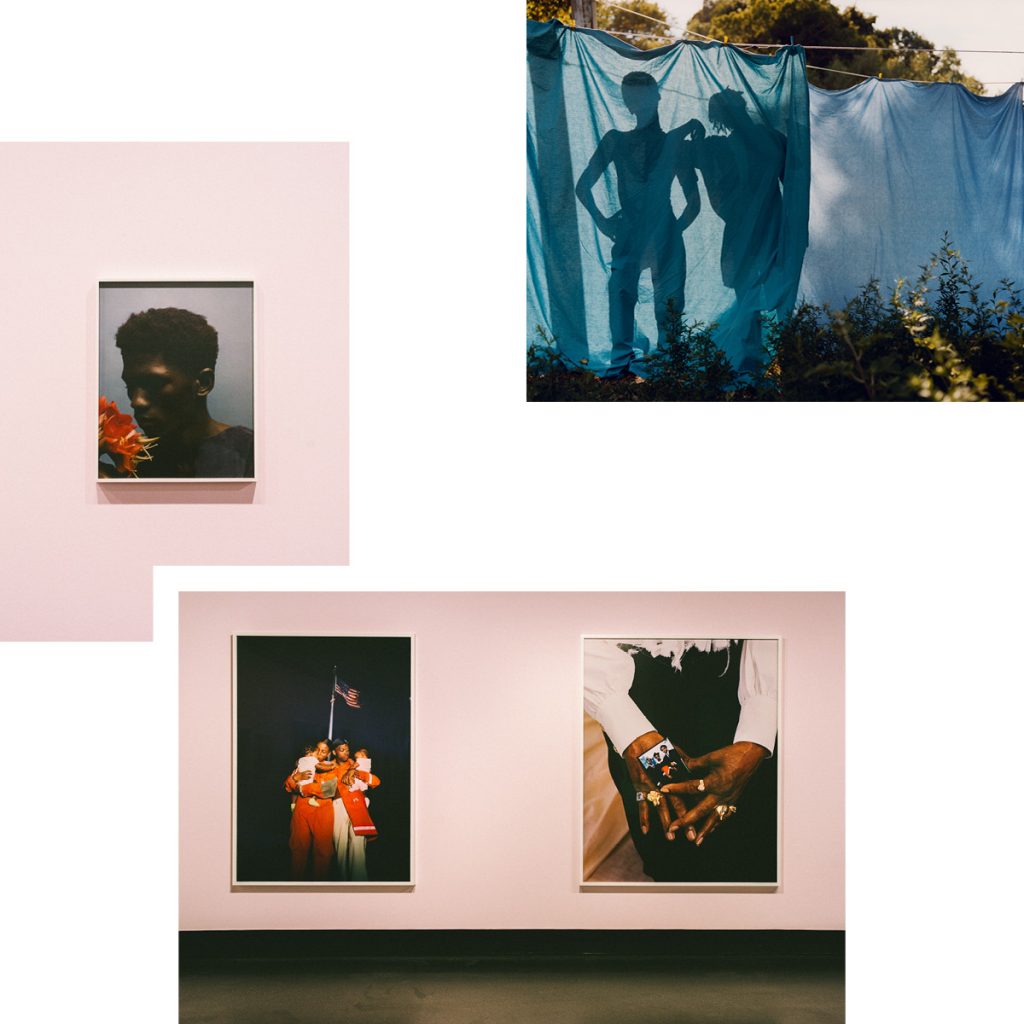
Some gifts end up tucked away in a cupboard, while others leave an impression that lasts all year long. An annual pass to a favorite museum belongs to the latter — and it’s easy to pack for anyone heading home over the holidays. The cultural institution Fotografiska in Mitte offers three different membership options: as a “Member,” you get unlimited access to the museum for 79€ a year — not just in Berlin, but at all Fotografiska locations worldwide, from Shanghai to Stockholm. “Members” enjoy exclusive previews and guided tours, along with discounts in the museum shop and on-site restaurants. The “Companion” membership, however, extends these benefits to two people. For €129 a year, you and your plus-one can experience art together, making it the perfect option for anyone who knows that exhibitions are best shared. With this membership, you’re not just giving access to a show, but also shared moments at openings, events, or over a drink after the tour.

The “Supporter” membership takes the experience even further. This option is perfect for families, friend groups, or true art lovers: for 300€ a year, the standard membership benefits extend to you and three guests. As a “Supporter,” you join the inner circle, gaining access to the annual dinner with Fotografiska curators, art excursions, and exclusive supporter events and conferences. No matter which membership you choose, it’s far from a standard gift. Until April 2026, Diana Markosian’s exhibition Father is well worth a visit, while from the end of January 2026, the works of photojournalist James Nachtwey invite reflection on morality and humanity in times of crisis. A Fotografiska membership is more than a gift — it’s a gesture that connects you to art, to people, and to moments you won’t forget.

Text: Isabel Raab / Photos: Fotografiska, Julia Schoierer

Fotografiska Berlin, Oranienburger Str.54, 10117 Berlin–Mitte; map
Find all the memberships here.

@fotografiska.berlin

cee_cee_logo
DIGITAL ART PRECISION-ENGINEERED FOR THE SENSES — TECHNO-PSYCHEDELIC VISUALS AT P61 GALLERY

DIGITAL ART PRECISION-ENGINEERED FOR THE SENSES — TECHNO-PSYCHEDELIC VISUALS AT P61 GALLERY

“Immersive” is a word you read a lot in descriptions of digital art. But Digital Dimensions at P61 Gallery legitimately earns that tag, so hypnotic are its artworks. Glossy, synthetic, swirling and saturated, the installations make no pretense to be naturalistic. They are precision-engineered to appeal to the senses. Occupying eight rooms of a postwar utilitarian block in Schöneberg, the 300 works are broadly organized into three themes: “Physic-Flow Art”, “Liquid Universes”, and “Rhythmic Math Art”. Whatever the subject, the visuals have a flow and geometry that gives them a techno-psychedelic quality. A total of 40 artists were commissioned for the computational artworks, digital objects and motion design, including the likes of 3D artist Vincent Schwenk. The otherworldly atmosphere of the artworks and soundscapes is mesmerizing, pulling you in and holding you there until you look down and realize twenty minutes have passed. “Math art”, it turns out, is more than the sum of its parts…

Text: Benji Haughton / Credits: P61 Gallery

P61 Gallery, Potsdamer Str. 61, 10785 Berlin–Schöneberg; map
Digital Dimensions. Tickets are available online.

@p61gallery

cee_cee_logo
AN EXHIBITION AGAINST LOOKING AWAY: GLOBAL FASCISMS AT HKW

AN EXHIBITION AGAINST LOOKING AWAY: GLOBAL FASCISMS AT HKW

“You can say it, I don’t mind,” the President of the United States comments in response to a journalist asking New York’s new mayor whether he considers Trump a fascist. He almost seems proud of his own image. Around the world, a movement toward the darker side of power is becoming increasingly visible. Fascism is becoming more and more socially acceptable. Yet there is a reluctance to talk about this shift. Whether as a coping mechanism or blatant denial, one thing is clear: we must confront the topic to resist it. The exhibition Global Fascisms at the Haus der Kulturen der Welt takes on this challenge. But how do you visualize fascism? Where do power structures become visible? And how much aesthetics are involved? Since early September 2025, the group exhibition has explored these questions, bringing together artistic positions that trace the rise of authoritarianism in our time: the bodies it shapes, the technologies that drive it, and the psychological landscapes it leaves behind. The show features work by 50 international artists grappling with the growing influence of fascist ideologies. Contemporary painting, film, performance, discourse, and digital art sit alongside historical works that feel eerily familiar. A recurring theme: the seductive aesthetics of fascist systems and their analysis. And the technological and technical advances: what role, for example, do artificial intelligence and its associated (often aesthetic) pigeonholing play in the rise of fascism?

Artist Josh Kline shows how AI, automation, and political right-wing shifts hollow out work environments and make people replaceable. Jane Alexander’s sculptures (Council with Emblem) oscillate between the familiar and threatening, suggesting authority without a clear message and challenging us to question our prejudices. Eli Cortiñas dissects the image politics of the surveillance society and envisions counter-images of hybrid, resistant bodies. Hou Chun-Ming weaves queerness, mythology, and political history into a multilayered commentary on desire and repression. Anna Maria Maiolino demonstrates how migration, military dictatorship, and censorship shape artistic language without diminishing clarity or power. And Fuyuhiko Tanaka, with Japan Erection, delivers a bawdy yet painfully sharp commentary on the destructive drive and potential of patriarchal power structures. Global Fascisms is on view until 07.12.2025, with free entry on the final weekend. It’s an invitation to face hard truths.

Text: Inga Krumme / Credits: Gülsün Karamustafa, Soldier (1976), Courtesy Gülsün Karamustafa,  BüroSarıgedik.Salt Research and Gülsün Karamustafa Archive; Jane Alexander, Council with emblem (2025), Monitor (2023), Representative in law enforcement jacket, (2006,14), Bird in Step Out tunic (2024), Beast (2003), Emblem (2025), Courtesy Jane Alexander; Exhibition View Global Fascisms, Haus der Kulturen der Welt (HKW), 2025, Photo: Hanna Wiedemann/HKW

Haus der Kulturen der Welt (HKW), John-Foster-Dulles-Allee 10, 10557 Berlin–Tiergarten; map

Global Fascisms 13.09.–07.12.2025. Find the full program here.

@hkw_berlin

cee_cee_logo