


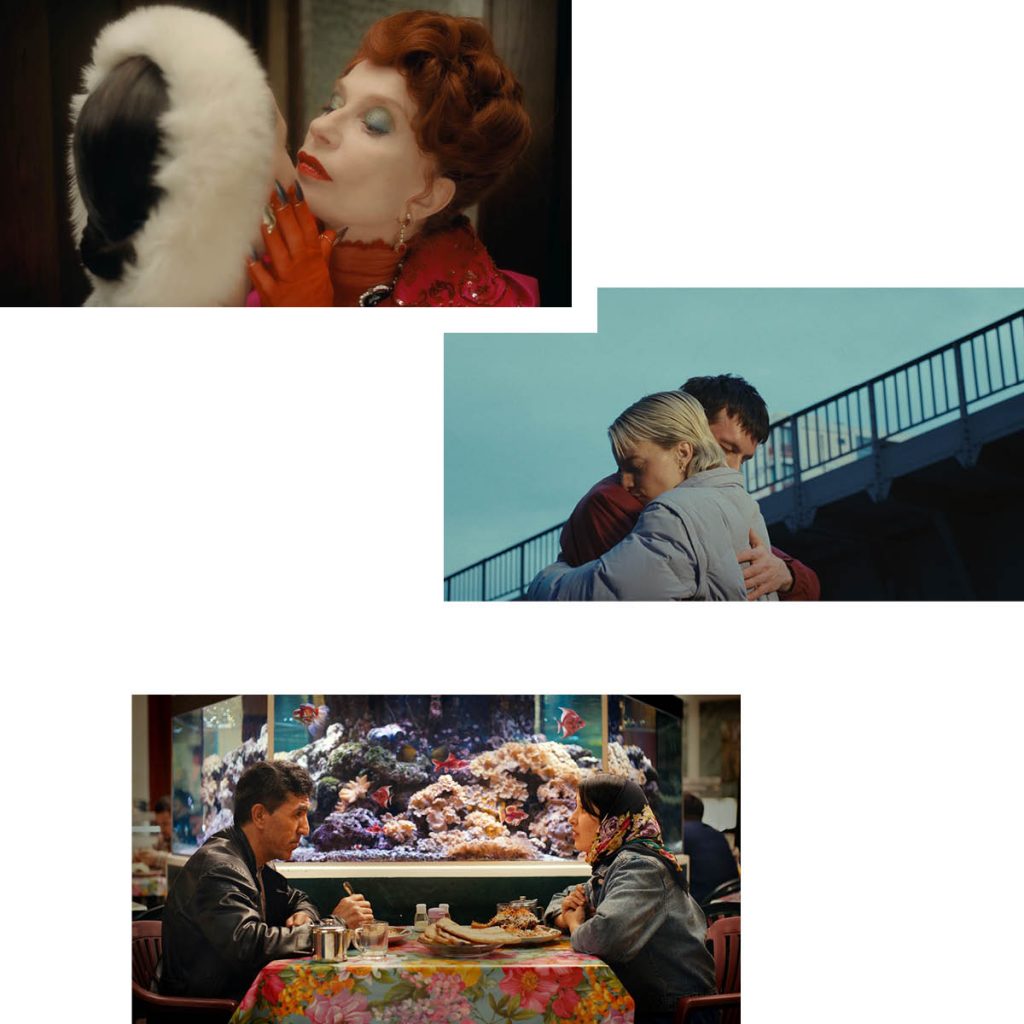
From 12.02.2026, it’s that time of year again… Festival director Tricia Tuttle will officially open the 76th Berlin International Film Festival at the Berlinale Palast. Then it’s a race to secure one of the coveted tickets in advance. Already, the Golden Bear shines from the city’s posters. Excitement is building for the ten-day festival (12.–22.02.2026) with its diverse, bold, and political program. 276 films from more than 50 countries across eleven sections are waiting to be seen. The festival opens with No Good Men, the third feature by the award-winning Afghan director Shahrbanoo Sadat. The film tells the story of Naru (Sadat), the only female camerawoman at Kabul TV, who is convinced that there are no good men in Afghanistan. But shortly before the Taliban return, she accompanies reporter Qodrat on an assignment, and her opinion begins to change… Will this film win a prize? Who knows. In total, 22 films, each a world premiere, compete for the coveted Silver and Golden Bears. On the festival’s final day, the prizes will be awarded by the jury, chaired by the German director Wim Wenders.
In À voix basse by Leyla Bouzid, Lilia travels to Tunisia for her uncle’s funeral. Her family knows nothing about her life in Paris, least of all her love life. In Yellow Letters by İlker Çatak, artist couple Derya and Aziz experience the arbitrariness of the state, losing their jobs and livelihood overnight. Geneviève Dulude-de Celles’ Nina Roza follows an art dealer from Québec as he returns to his abandoned hometown in rural Bulgaria to appraise the paintings of a mysterious prodigy. In Markus Schleinzer’s Rose, a soldier (Sandra Hüller) arrives in a village claiming to be the heir to an abandoned estate. Yet a mysterious secret surrounds him, and the villagers’ mistrust grows. Rosebush Pruning by Karim Aïnouz tells the story of four wealthy siblings — Jack, Ed, Anna, and Robert — living in a secluded Spanish villa. The truth about their mother’s death threatens to unravel their fragile family structure. In Ulrike Ottinger’s The Blood Countess, Isabelle Huppert and her maid embark on a wild hunt for the red elixir of life and a book that could spell the end of the vampire kingdom. The Perspectives section features debut films, including Where To? by Israeli director Assaf Machnes. The 55-year-old Palestinian Uber driver Hassan ferries partygoers through Berlin nights. A young Israeli, at risk of losing himself in the city, becomes his regular passenger — they are bound by broken hearts. Also debuting, Palestinian director Abdallah Alkhatib’s Chronicles from the Siege portrays the lives of people whose daily existence is thrown into chaos by the siege of their city. To survive, each of them must make impossible choices. My favorite section is Panorama. Anna Roller finally brings her film Allegro Pastell to the screen, following author Tanja and web designer Jerome, both in their mid-30s, navigating the closeness and distance of a long-distance relationship. Mahnaz Mohammadi’s Roya tells the story of an Iranian teacher imprisoned for her political beliefs, forced to choose between giving a coerced confession or remaining incarcerated. Sabine Lidl’s Siri Hustvedt follows the author from her first novel to becoming one of contemporary literature’s most influential voices — a film about feminist perspectives and Hustvedt’s soulmate, Paul Auster. At the top of my list is Aidan Zamiri’s The Moment: a mockumentary about and with Charli XCX, the global phenomenon “Brat Summer”, the pressures of the music industry, and the price of success. Ukrainians Alisa Kovalenko and Marysia Nikitiuk present Traces, a moving film about the resistance of Ukrainian women and their fight against silence and stigma. For those still craving more beyond the many world premieres, the retrospective offers a chance to revisit classics by Spike Jonze, Werner Herzog, Tom Tykwer, Jean-Luc Godard, and Krzysztof Kieślowski. The 76th Berlinale once again proves that cinema does more than entertain; it challenges, moves, and reveals political realities, on the big screen and in the discussions that follow.
Text: Milena Kalojanov / Stills: Amour Fou Vienna, Amour Fou Luxembourg, Heimatfilm, P. Domenigg; Felix Pflieger; Virginie Surdej
76th Berlinale 12.–22.02.2026
Find the full program here. From 09.02.2026, tickets will be sold online.
@berlinale
