
Cee Cee Creative Newsletter Book Neighborhood Map Lessons
Stadtplan
Information
archive temp
loop temp
LONG LIVE THE ARBOR WITH NARA: SUSTAINABLE ALLOTMENT GARDEN ARCHITECTURE

LONG LIVE THE ARBOR WITH NARA: SUSTAINABLE ALLOTMENT GARDEN ARCHITECTURE

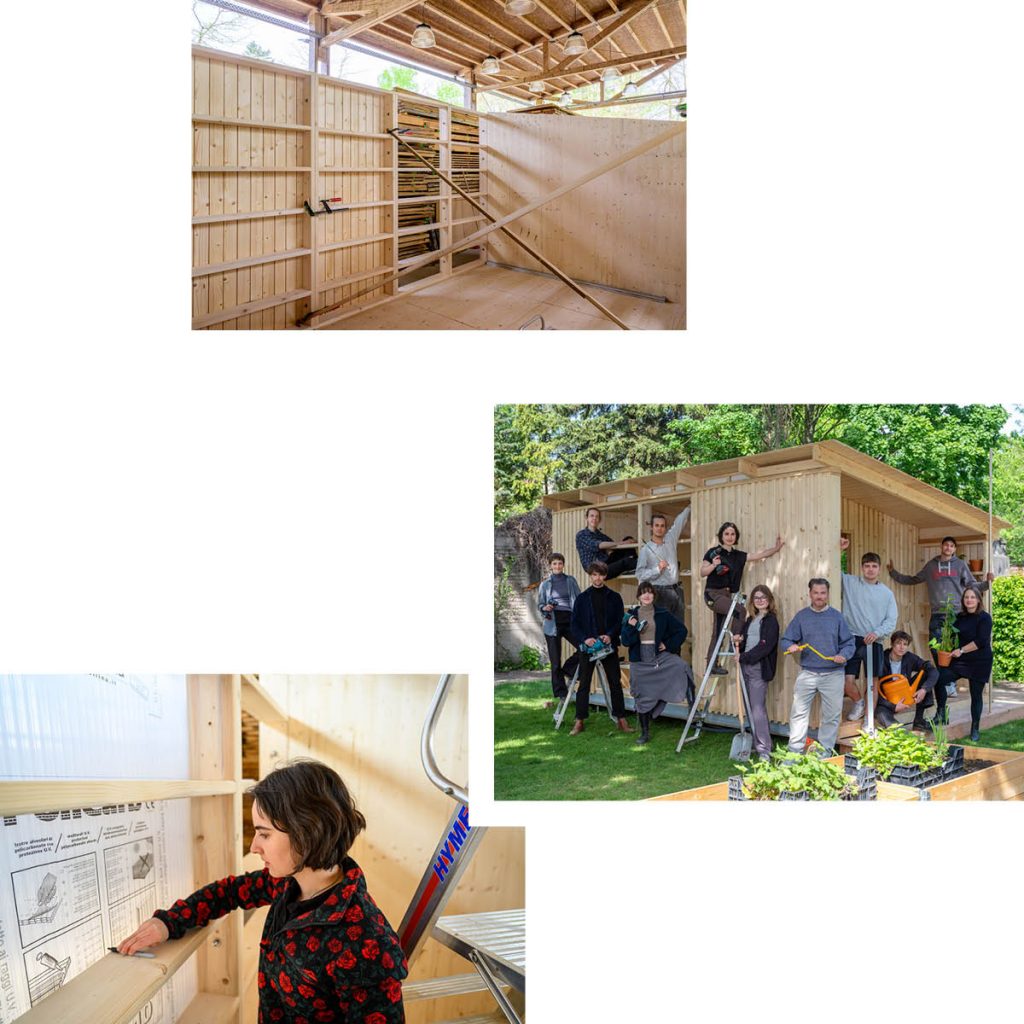
Allotment garden associations are a quirky and fascinating microcosm, and the garden arbor is too. So insanely German, the small houses, often built or extended, follow a set of rules no one has written down but everyone more or less follows. They’re built in a resource-efficient manner, but not always environmentally-friendly. Leftover materials and scraps are often used to create temporary works of art until the next extension or conversion is carried out. The German Allotment Garden Federation (BKD), together with the Potsdam University of Applied Sciences, has courageously taken on this particular issue aiming to rethink the arbor from the ground up. The project is called “Nara“, and is intended to be capable of many things: a natural space and garden house in one that combines sustainable construction, inclusive thinking and contemporary design, with the option of expansion possible.

The result is a well-thought-out house on sixteen square meters, which has an extremely clever room layout — covered terrace, airy interior, and integrated equipment room. It’s built from untreated spruce wood, modularly expandable, barrier-free, and biodiversity-promoting. Insect hotels? Nesting boxes? Green roof? Everything is possible. The exhibition at the German Allotment Garden Federation is now showing the 1:1 prototype (in the garden, of course) and the entire development process during Berlin Design Week: from the first sketch to the finished model. And if that isn’t enough greenery for you, visit the accompanying exhibition “Stadt, Natur, Mensch – Kleine Gärten, große Wirkung” — see you in the garden!

Text: Inga Krumme / Photos: Bernd Hiepe, Ulrich Wessollek

German Allotment Garden Federation (BKD), Hermannstr.186, 12049 Berlin–Neukölln; map

Kleingarten-Laube goes Berlin Design Week” 15.–18.05.2025 11–15h, 20.05.2025–31.10.2026
Stadt I Natur I Mensch – Kleine Gärten, große Wirkung” until October 2026.

@kleingartenbund

cee_cee_logo
SUMMER NIGHT DREAMS: PHOTOGRAPHS OF SPYROS RENNT AT ROSEGARDEN

SUMMER NIGHT DREAMS: PHOTOGRAPHS OF SPYROS RENNT AT ROSEGARDEN

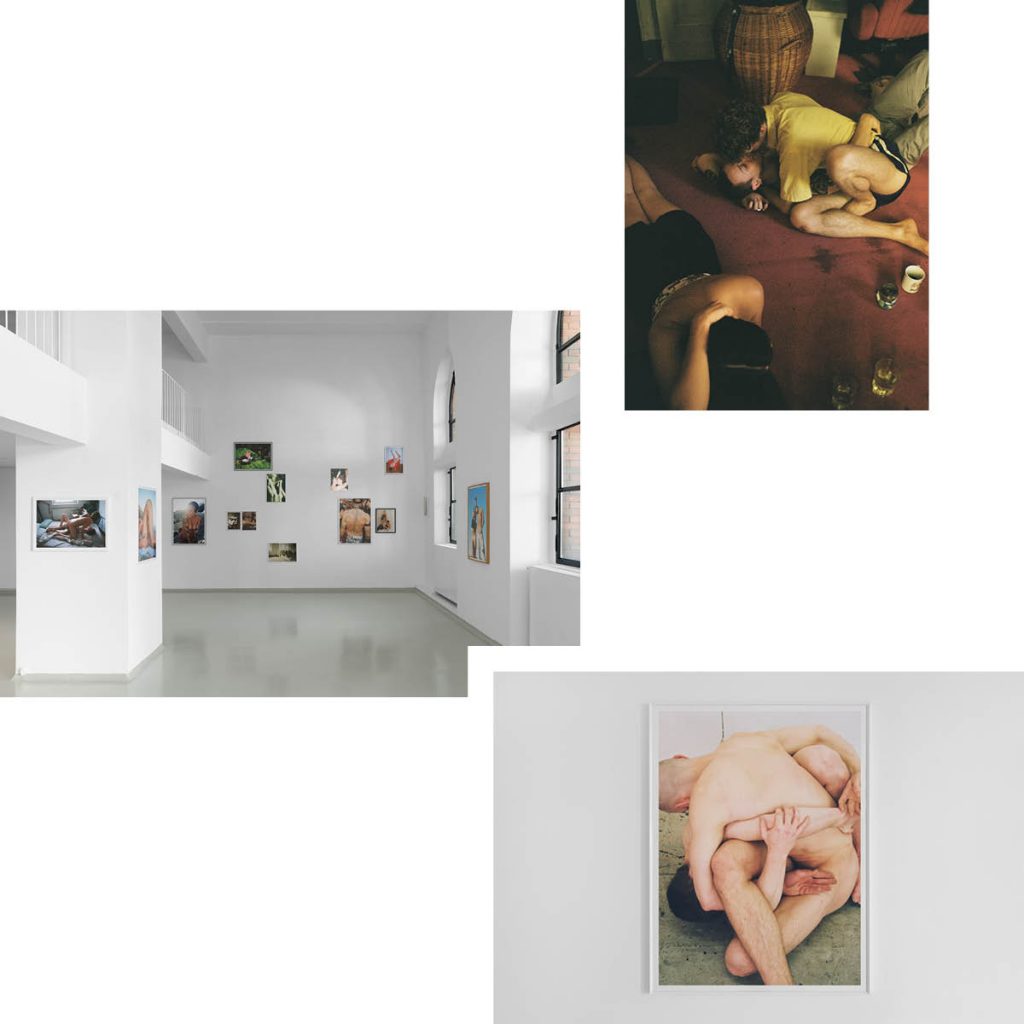
These are pictures of a summer that we’ve all experienced in one way or another. Greek photographer Spyros Renntstrings together scenes of an endless vacation day where there are no deadlines or submissions due. Only the sunset marks the change from day to night. Rennt walks around the houses with friends and looks at the blood-red sky over the sea. Along the way, he meets acquaintances and strangers, drifts from dance floor to dance floor until everyone is exhausted, intertwined, sweaty and in love on a sofa at dawn. Too awake to sleep. Too tired to move. Photographs from the last eight years are seen in his largest solo exhibition, “Kiss Against the Fire“, at the new Rosegarden project space. They take you to Greek beaches and Berlin clubs that no longer exist. Spyros Rennt succeeds in radically portraying queerness without exhibiting it.

His camera zooms in close but is never voyeuristic. What all the images have in common is the euphoria of a warm August night and the Sunday anxiety inherent in every vacation. Excess and boredom are not mutually exclusive in his pictures. They flow into each other as naturally as Campari and soda. What appears liberated is always political. Rennt deservedly belongs to a new generation of photographers who depict the inclusive attitude to life in the present as directly and unembellished as Peter Hujar and David Wojnarowicz did before them in New York in the 1980s. Because, even almost fifty years later, we still need art that offers resistance, and burns brightly for a life in which bodies know no boundaries.

Text: Laura Storfner / Photos: Joanna Wilk, Spyros Rennt

Rosegarden by Frontrose, Potsdamer Str.98A, 10785 Berlin–Tiergarten; map
Spyros Rennt – Kiss Against the Fire until 30.05.2025

@spyressence
@frontrose.global

cee_cee_logo
BETWEEN HEAVEN & SELF: THE NEUE NATIONALGALERIE SHOWS FUJIKO NAKAYA

BETWEEN HEAVEN & SELF: THE NEUE NATIONALGALERIE SHOWS FUJIKO NAKAYA

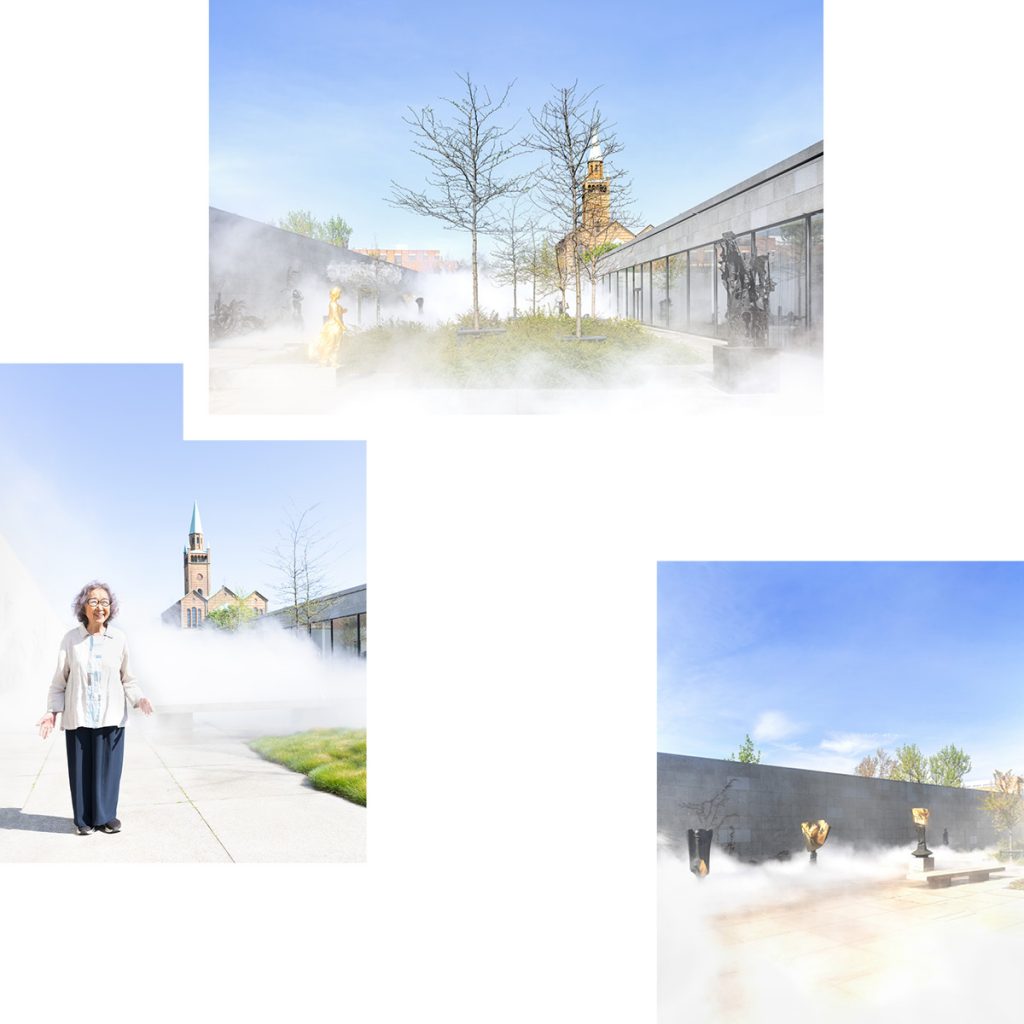
She doesn’t need much to completely change a room, an exhibition hall, or, as in the case of the Neue Nationalgalerie, a garden. Japanese artist Fujiko Nakaya creates her art from nothing but water and air. Artificially generated, her fine veils of mist envelope sculptures by Alicja Kwade and Henri Laurens (permanently installed in the garden). And although we’ve seen these sculptures before, with Nakaya’s intervention it’s like seeing them for the first time. On the hour, when the fog condenses over the meadow in a discreetly choreographed manner, slowly spreading and then gradually disappearing into the sky again, what is always there appears new or changed. The ephemeral installation changes depending on the time of day, wind and temperature, but one thing remains the same: the experience, which is more than just seeing. Whether it’s in the morning, when it opens at 10h and the air is still cool, or in the late afternoon. Regardless of whether it’s drizzling or the sun is beating down on the museum forecourt, Nakaya’s fog is something you want to feel again and again. Her sculptures are meditations on everyday life. Every puff of mist is a haiku hanging in the air.

Born in Sapporo in 1933, Nakaya has traveled the world with her installations since the late 1960s. She exhibited at the World Expo in Osaka and the Tate Modern, added a second layer of fog to the already foggy harbor in San Francisco, and covered the English Garden at Munich’s Haus der Kunst in a fine haze. The radical simplicity, the ephemeral, makes her work so beguiling you can’t help but lose yourself in them. Nakaya doesn’t need much. But their impact could not be greater.

Text: Laura Storfner / Photos: Neue Nationalgalerie, Stiftung Preußischer Kulturbesitz, David von Becker

Neue Nationalgalerie, Potsdamer Str.50, 10785 Berlin–Tiergarten; map

Fujiko Nakaya: Fog Sculpture in the Sculpture Garden of the Neue Nationalgalerie until 14.09.2025
The sculpture starts on the hour between 10h and 17h.

@neuenationalgalerie

cee_cee_logo
SATURATED SURREALISM: UNCANNY PHOTOGRAPHY FROM TOILETPAPER AT FOTOGRAFISKA BERLIN

SATURATED SURREALISM: UNCANNY PHOTOGRAPHY FROM TOILETPAPER AT FOTOGRAFISKA BERLIN

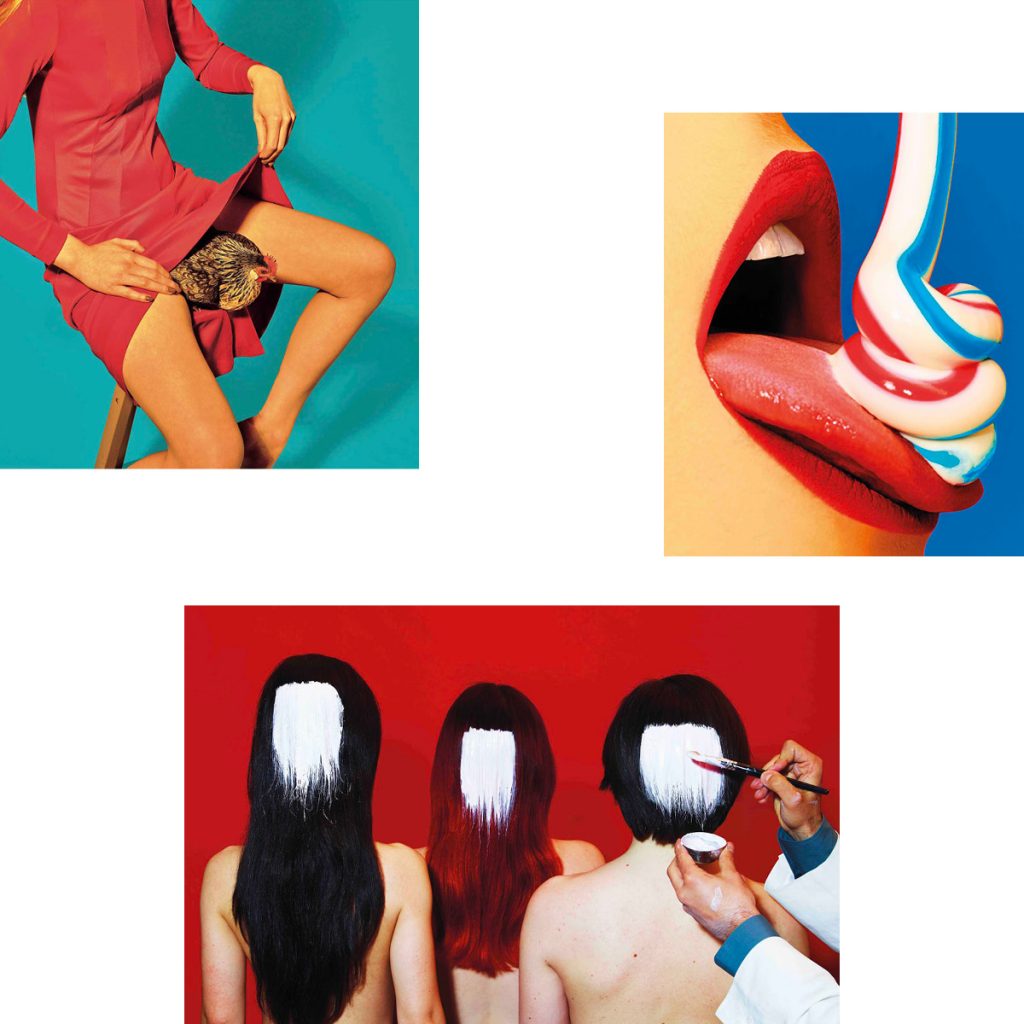
High-gloss, high-camp, playful and weird, the photo magazine Toiletpaper grabs your gaze and doesn’t let go, so bold and saturated are its visuals. The meticulously produced photographs in the Milan-based publication – released biannually by artist Maurizio Cattelan and photographer Pierpaolo Ferrari since 2010 – are frequently jarring and unnerving. But boring they are not. Now the duo’s deranged vignettes will be even harder to miss as they migrate from shiny print to the walls of Fotografiska Berlin. The exhibition, ToiletFotoPaperGrafiska, opens tomorrow (09.05.2025) and brings together highlights from Cattelan and Ferrari’s compositions over the years. The pair say the show is akin to being at a party “where everyone is wildly intoxicated and you’re the only sober person in the room”. True to form, tomorrow’s openingwill be a decadent late-night dance-off with performances, live sets and a DJ program of trademark swing-heavy house and disco from the Toy Tonics crew, and a live concert by Myss Keta. And yes, the photographs will be there – not that you could ever miss them…

Text: Benji Haughton / Photos: Toiletpaper

Fotografiska Berlin, Oranienburger Str.54, 10117 Berlin–Mitte; map

ToiletFotoPaperGrafiska (09.05–31.08.2025) – tickets for tomorrow’s opening party are available here

@fotografiska.berlin

cee_cee_logo
WHAT IF THE SPREE WERE A REEF? — REDISCOVERING MATERIALITY & SHAPING THE FUTURE AT MATTER FESTIVAL

WHAT IF THE SPREE WERE A REEF? — REDISCOVERING MATERIALITY & SHAPING THE FUTURE AT MATTER FESTIVAL

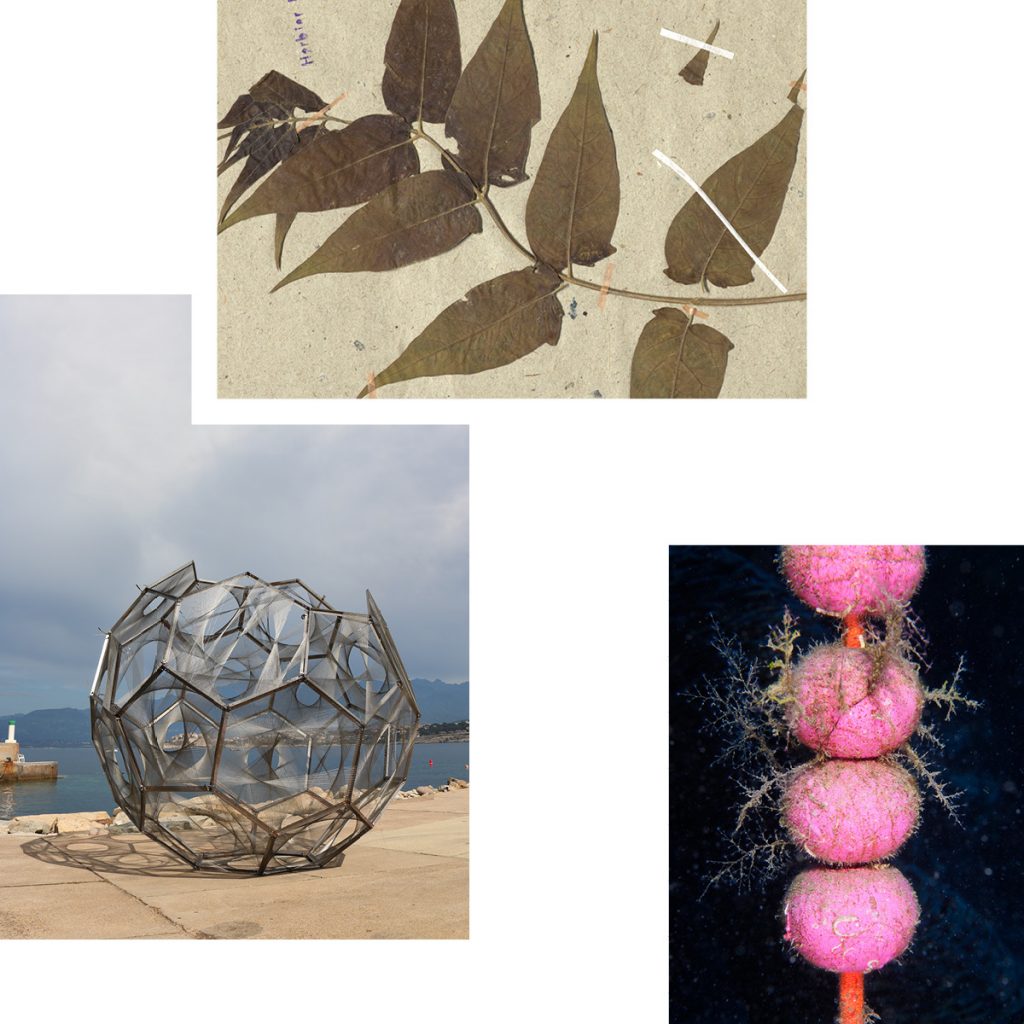
As we know, the best festivals are the ones that last the whole summer and are remembered without a hangover. Interdisciplinary __matter Festival 2025 meets both requirements. Running through October, it will transform Berlin into a living laboratory of material culture at the intersection of science, art and design. Initiated by the Cluster of Excellence Matters of Activity at Humboldt-Universität zu Berlin, the event series focuses on a core theme: materials. What may sound abstract at first turns out to be far-reaching and deeply relevant because, ultimately, it’s about our ecological, social, and creative future. Eleven exhibitions. A rich program. Twelve venues — from Art Laboratory Berlin to the Späth Arboretum, from the Kunstgewerbemuseum to Silent Green Kulturquartier. More than 70 researchers from around 40 disciplines will contribute their expertise to reimagine the relationship between nature and culture, biology and technology, symbolism and materiality. In the Re:future Lab, for example, Rasa Weber dives into the depths of the Spree with a question: What if the Ocean Were a City? Her project, Syntopolis, is an immersive reef installation that transforms space into an urban underwater habitat. Here, boundaries blur between city and ocean, human and more-than-human communities. What if the Spree were a reef?

What would our shared life look like if we changed our perspective? At the Späth Arboretum — that fantastical hidden gem in the south of Neukölln — you can find out. The Vegetal Companions series invites you to encounter plants and trees as independent agents. The collective of flora becomes a source of inspiration for new forms of knowledge: soil as archive, philosophy as gardening, art as research. Here, humans are no longer seen as masters of nature but as participants in a polyphonic ecosystem. Fermenting Textiles at Art Laboratory Berlin also weaves anthropology, microbiology, and art to create a multi-sensory experience. Textiles are fermented in mud and plant material, a metaphor for collaboration between species, disciplines and traditions. The festival is a manifesto for the analog in a digital age. Materials are no longer seen as passive carriers, but as active, shaping forces — tools that define our world. We’re invited to rethink materiality as something that connects, transforms and determines the future. And what could be more satisfying than sharp ideas and fresh perspectives on the world, stretched across an entire summer?

Text: Hilka Dirks / Photos: Mathieu Kelhetter; Musée national d’historie Luxembourg; Aubin Woehrel

__matter Festival 2025

The entire program and all locations can be found here.

@mattersofactivity

cee_cee_logo