
Cee Cee Creative Newsletter Book Neighborhood Map Lessons
Stadtplan
Information
archive temp
loop temp
UNREGULATED PATHS: A SUMMER OF NON-CONFORMITY IN THE TROPEZ PROJECT SPACE

UNREGULATED PATHS: A SUMMER OF NON-CONFORMITY IN THE TROPEZ PROJECT SPACE

Even if summer is still a little way off, one of our favorite project spaces officially declares the season open on Saturday (07.06.2025). The Tropez team is once again bringing an exhibition, including performances and workshops, to the Sommerbad Humboldthain. The concept has proven its worth, as we can no longer imagine a visit to the outdoor pool in Wedding without art between a dip in the water and a break for chips. Parasite is this year’s title. We can expect a summer of non-conformity, in which new and unexpected things are created, and thus also an eloquent image for Tropez as a space that breaks the rules of classical exhibiting. It starts in the entrance area, where artist Amine Habki, known for his textile works, has installed colorful disruptors by the lockers. Some artists focus on outdoor pool culture in its purest form. Maya Mann’s giant swimming ring sculpture, which has already been exhibited at the Whitney Museum in New York, can’t be imagined anywhere else but near the edge of the pool. Get active on the new mini-golf course by the Sundays collective, which also functions as a walk-in work of art. Dancer Tilhenn Klapper translates the open-air chaos and noise into her choreographies, while Arthur Chruszcz takes over the sunbathing lawn with his pantomime piece. Even if we are still dreaming of 35 degrees, with Tropez, summer has officially arrived.

Text: Laura Storfner / Photos: Ink Agop

Tropez at Sommerbad Humboldthain, Wiesenstr.1, 13357 Berlin–Wedding; map

Parasite 07.06.–07.09.2025. Opening 07.06. 14–18h with live music, entry until 17h. 

@tropez_tropez

cee_cee_logo
BEYOND THE FRAME — LYGIA CLARK AT THE NEUE NATIONALGALERIE

BEYOND THE FRAME — LYGIA CLARK AT THE NEUE NATIONALGALERIE

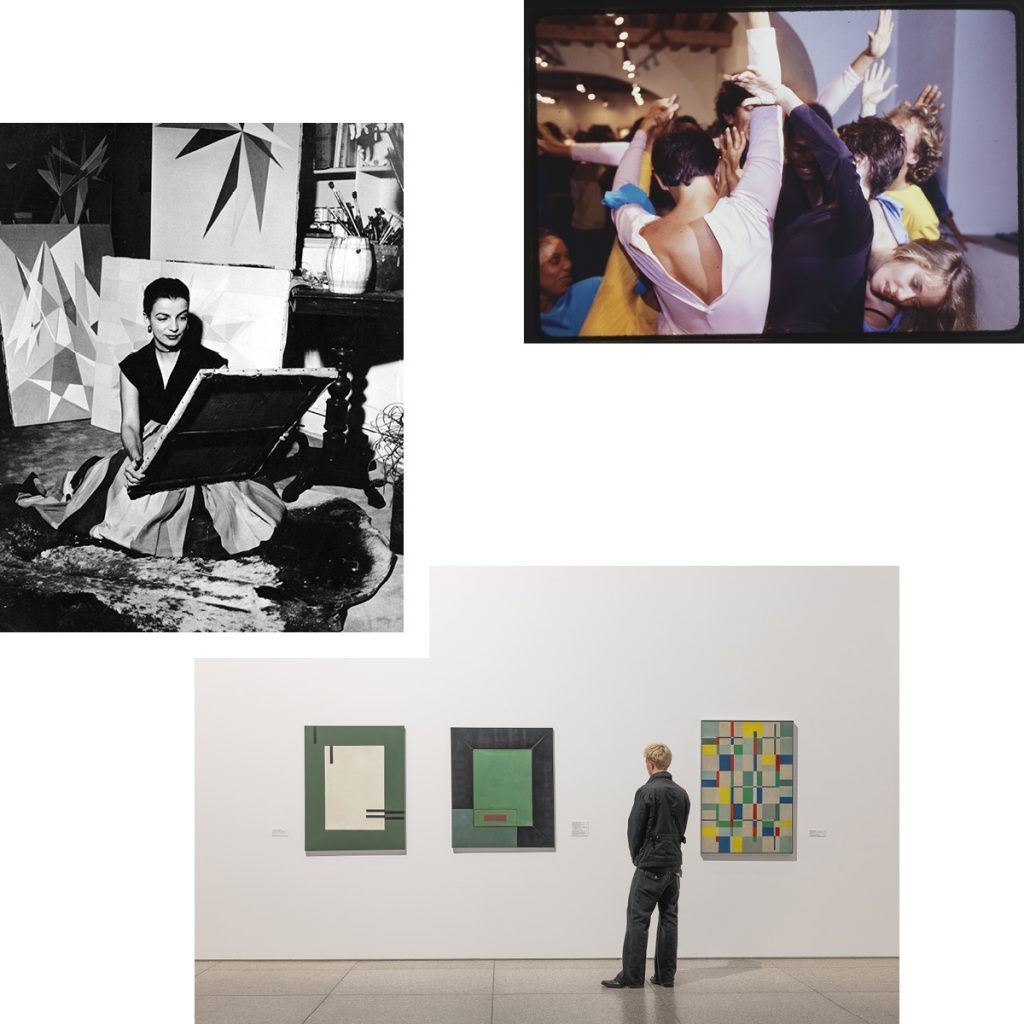
In 1965, Brazilian artist Lygia Clark addressed her audience directly in an exhibition text, “It’s you who now give expression to my thoughts, to draw from them whatever vital experience you want”. Even then, it was clear she didn’t just want people to look at her work, she saw them as participants, even co-authors, whose involvement made her sculptures and performances possible in the first place. Now, the Neue Nationalgalerie presents a comprehensive retrospective that revisits Clark’s radical, participatory practice and her role as a leading figure of the Neoconcretismo movement, which emerged in late-1950s Rio de Janeiro. The neo-concretists aimed to create art that could be experienced through the senses — things that exist not just as objects, but in the space between artwork and viewer, between artist and audience. Before Clark turned to interactive formats, her work was rooted in geometric abstraction. Even her early paintings from the 1950s show a clear preoccupation with the relationship between object and space. But she soon began breaking free from the canvas. In 1959, she created her first geometric sculptures, which she called Bichos (animals). At first glance, they resemble oversized origami made of aluminum. What makes them unique? They’re foldable, movable, and designed to be manipulated, changing shape with the viewer’s touch.

While the viewer becomes the creator of the Bichos, Clark’s Objetos Sensoriais (Sensory Objects) expand the experience to the body. These wearable pieces — jackets, masks, glasses — are to be used alone or together, encouraging a heightened awareness of self, surroundings, and others. The idea of shared experience took center stage in her later work. From the late 1960s until her death in 1988, Clark developed the concept of the Corpo Coletivo (Collective Body), shifting focus to group performances and embodied interaction. With around 120 original works and 50 reconstructions, curators Irina Hiebert Grun and Maike Steinkamp offer a rare opportunity to experience Clark’s visionary thinking — art that invites all the senses. But it’s not just the objects that form her legacy. A wide-ranging performance program activates Clark’s ideas today, including her 1970 piece Collective Body, in which participants wear colorful overalls connected by threads. One person moves, and the others must follow, forming a single, interdependent body in motion. Just as Lygia Clark envisioned.

Text: Laura Storfner / Credit: Cultural Association “The World of Lygia Clark”; Associação Cultural O Mundo de Lygia Clark; Neue Nationalgalerie – Stiftung Preußischer Kulturbesitz, David von Becker

Neue Nationalgalerie, Potsdamer Str.50, 10785 Berlin-Tiergarten; map 
Lygia Clark. Retrospektive until 12.10.2025  

@neuenationalgalerie

cee_cee_logo
BETWEEN ORIGIN & DESTINATION — ARTISTIC PERSPECTIVES ON EXILE AT THE PERFORMING EXILES FESTIVAL

BETWEEN ORIGIN & DESTINATION — ARTISTIC PERSPECTIVES ON EXILE AT THE PERFORMING EXILES FESTIVAL

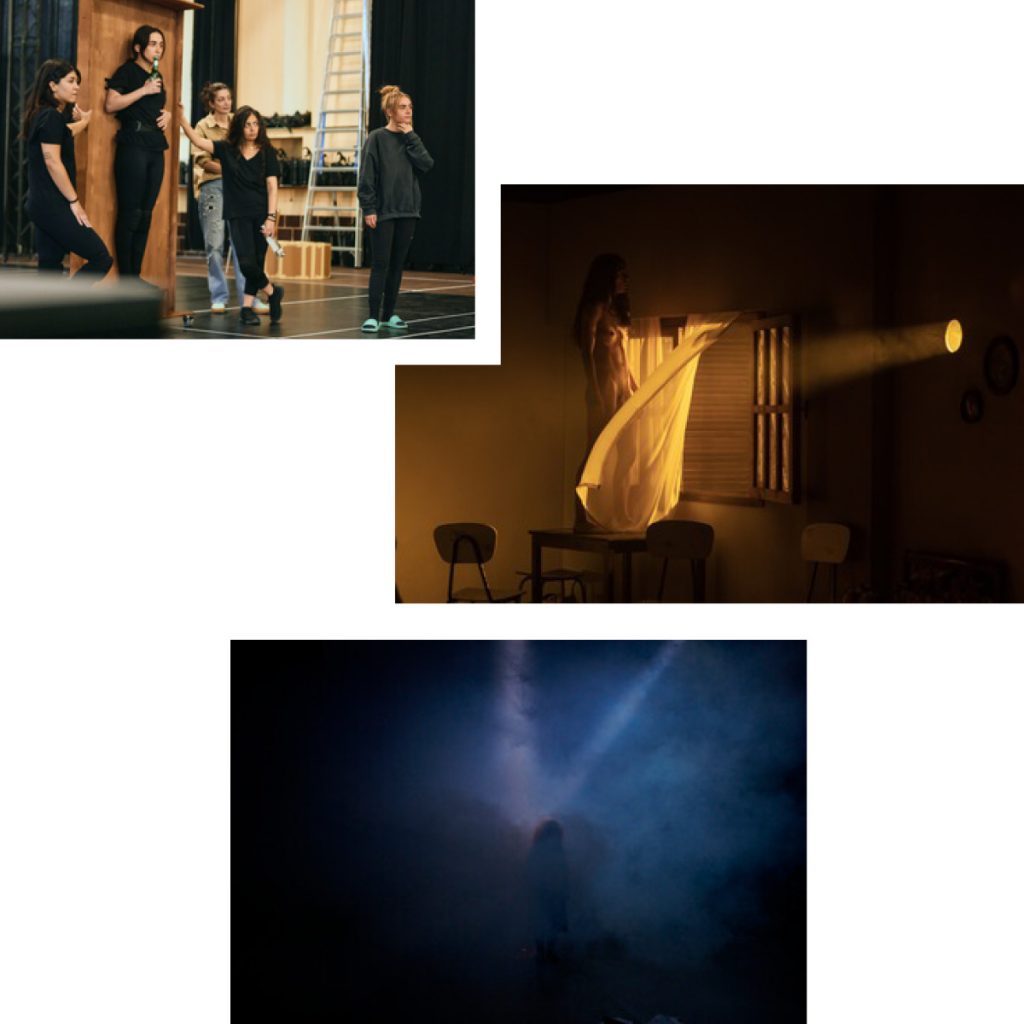
What does exile feel like today, in the middle of Europe? What remains when language, identity, or a sense of safety becomes fragile? When home is no longer a place of comfort? And how is Berlin changing — this city that has long been a point of departure and a destination for exiles from all over the world? From 19.06 to 28.06.2025, the Berliner Festspiele’s Performing Exiles festival explores these questions through theater, performance, dance, and talks — spread across three venues: Haus der Berliner Festspiele, HAU – Hebbel am Ufer, and Ballhaus Ost. The festival focuses on diasporic artists and their perspectives on identity, displacement, resistance, and memory. Some works are autobiographical, others experimental, but all are rooted in the urgency of experience. Among the program highlights is a world premiere by Iranian filmmaker Mohammad Rasoulof, who fled Iran and now presents Destination: Origin, a piece exploring the elusive idea of home. From Kyiv, theater maker Tamara Trunova brings a new work developed between war and everyday life.

Mario Banushi, born in Tirana and raised in Athens, presents the wordless piece Goodbye, Lindita, a production widely discussed on the international stage. In a collaborative work, Lina Majdalanie and Rabih Mroué reflect on their experiences of exile and interweave them with texts by one of Germany’s well-known exiles, Bertolt Brecht. A standout format within the festival is 100° Diaspora, a mini-festival inside the festival. Three days, five stages, 45 projects, and no jury, no curation, no gatekeeping. First come, first perform. From readings to performances, installations to circus, low to high. Among them, Rodrigo Zorzanelli’s solo performance Multiple Memberships (26.06.) is one not to miss. In its second edition, Performing Exiles once again brings urgency to the stage — without sensationalism. What does performing exile feel like? Open, sometimes uncomfortable, often moving.

Text: Hilka Dirks / Photos: Christophe Berlet, Fabian Schellhorn & Theofilos Tsimas

Performing Exiles Festival 19.–28.06.2025

The festival takes place in the Haus der Berliner Festspiele at HAU and Ballhaus Ost. The entire program can be found here.

@berlinerfestspiele

cee_cee_logo
LETTING GO OF BEING RIGHT — FINDING LANGUAGE AT THE POESIEFESTIVAL BERLIN

LETTING GO OF BEING RIGHT — FINDING LANGUAGE AT THE POESIEFESTIVAL BERLIN

What would the world be like if we stopped claiming to know everything and asked questions instead? If we did a bit of research, made space for new perspectives, and learned to sit with nuance and contradictions? Sound liberating? I think so too. A good place to explore what that would be like is Poesiefestival, running throughout the city until 15.06.2025. Venues include the Akademie der Künste’s Moabit Division and Silent Green in Wedding, a space of transience and possibility. Over 150 authors, performers, and thinkers from around the world will gather here. The main festival opens on Tuesday (03.06), with the Berlin Poetry Lecture by Claudia Rankine, titled Writing as Seeing. What follows is a diverse program of poetry talks, performances, the Zebra Poetry Film Festival, and themed evenings such a Writing Identities.

A highlight? Open-air readings in the garden. For the closing weekend (14.–15.06), the festival returns to the Akademie der Künste: on Saturday (14.06), the focus is Writing Sports — a series of readings exploring the link between poetry and physical movement. On Sunday (15.06.) Weltklang – Nacht der Poesie brings together voices in many languages, reminding us that poetry doesn’t require national borders to resonate. And if you’d like to take a piece of the festival home, in the courtyard poetry market you’ll discover hand-stitched booklets, readings for children, casual conversations in the greenery, and poems as quiet companions for everyday life. If all of this sounds too lofty, don’t worry, nothing is claimed as fact, only offered as a pause for thought.

Text: Hilka Dirks / Photos: Ricardo DeAratanha, Michael Kuchinke-Hofer / Still: Requiem for Eve, Anna-Maria Chernigovskaya

Poesiefestival Berlin until 15.06.2025

You can find the tickets, program and more here.

@hausfuerpoesie

cee_cee_logo
BECOME AN ART COLLECTOR — RAFFLE ARTS MAKES IT POSSIBLE

BECOME AN ART COLLECTOR — RAFFLE ARTS MAKES IT POSSIBLE

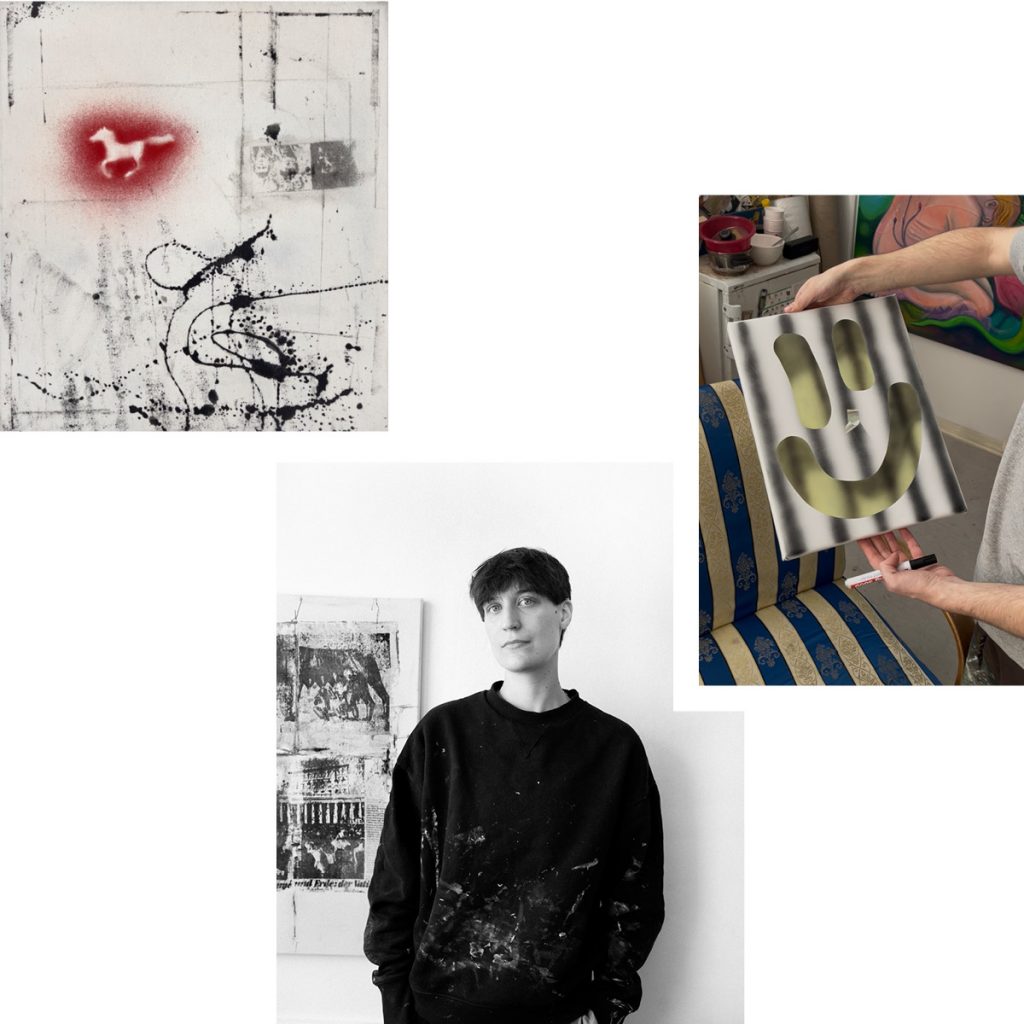
Many of us dream of owning an original work of art. But for most, it stops at admiring gallery pieces — too expensive, elitist, and unapproachable. Raffle Arts offers an alternative: a new format that makes art accessible through the simplest means, a raffle. Each month, a new work by an emerging or established artist is curated and presented. For a small amount, you can purchase a raffle ticket. At the end of the month, one lucky winner receives the original piece. Ten additional winners receive a signed edition. Only 100 tickets are sold per round. The idea was born in Berlin, after several self-curated exhibitions and countless conversations with artists and collectors. Raffle Arts was founded by Luca Keil, who first explored the idea while curating shows for artist friends. He aims to sell art fairly, increase visibility for emerging talent, and inspire a new generation of collectors, without gallery markups or gatekeeping. It’s a mini-revolution in the art world: playful, approachable, and refreshingly unpretentious. A chance to start collecting or simply fall in love with a piece of art all over again.

Text: Inga Krumme / Photos: Miriam Beichert & Luca Keil

Click here for the current issue.

@rafflearts

cee_cee_logo