
Cee Cee Creative Newsletter Book Neighborhood Map Lessons
Stadtplan
Information
home temp
loop temp
FROM NORTH EURASIA TO PERU: THE HKW OPENS TWO NEW EXHIBITIONS

FROM NORTH EURASIA TO PERU: THE HKW OPENS TWO NEW EXHIBITIONS

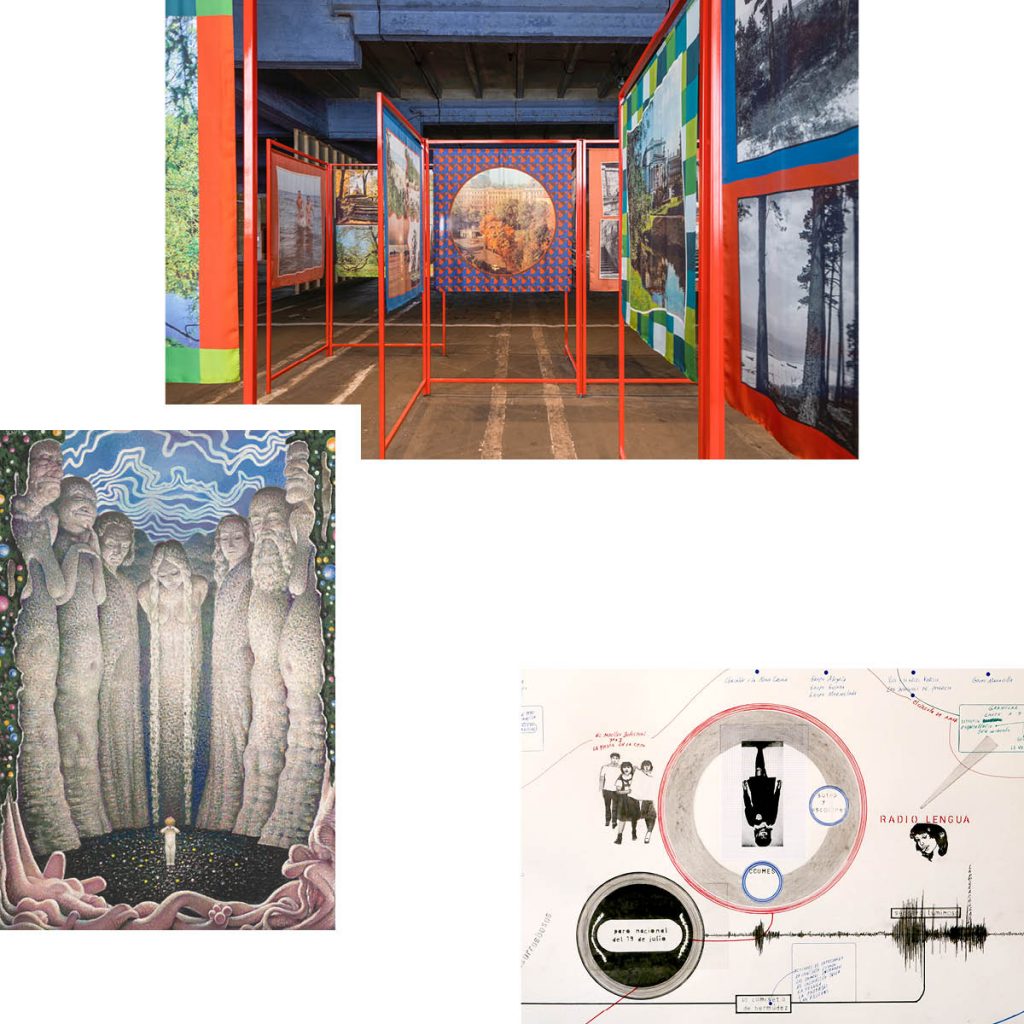
How do artists, curators and writers talk about Northern Eurasia? Beginning tomorrow evening, the Haus der Kulturen der Welt will present various chapters from which a fragmentary narrative of the region emerges as part of a new exhibition As Though We Hid the Sun in a Sea of Stories. The show roams the territory of northern Eurasia, casting spotlights on more than a dozen countries that were first in the territory or sphere of influence of the Russian Empire, and later in the Soviet Union. Equal parts presentation and research project, the show chronicles control and resistance, pain and self-empowerment. The fact that the narrative takes detours in the process and is composed in a collage-like manner is reflected in the title of the exhibition: it refers to a poem by the Kashmiri-American poet Agha Shahid Ali from 1990 – a time when the USSR was slowly dissolving. Ali dedicates it to the situation in his violence-plagued homeland and at the same time references the Polish-Jewish-Soviet poet Ossip Mandelstam, who died in a labor camp near Vladivostok in 1938. In the exhibition title, verses by the two poets are interwoven into a stanzaic line.

The fragmentary nature underlying this procedure also connects the show’s various temporal levels and narrative strands on a large scale. Only amid ambiguity and complexity can one attempt to understand what has moved the region in the past and where it is headed in the future. The Peruvian artist Sergio Zevallos is also concerned with regaining control over one’s own self in times of oppression. The HKW is dedicating a solo exhibition to him that looks back on his 40 years of work. Exercises in Transformation looks at dominant systems of knowledge and presents strategies for subverting them. In doing so, Zevallos repeatedly uses his own body as a starting point for ways out of a society determined by colonialism and capitalism. Zevallos’ performances are painful and intimate, but instead of relying on grand gestures, ultimately it is the incidental poetics found in nuances that outlast structures and situations.

Text: Laura Storfner / Credit: Sergio Zevallos; Jaanus Samma, Temnikova & Kasela Gallery; Auseklis Baušķenieks / Photos: Ansis Starks

Haus der Kulturen der Welt, John–Foster–Dulles–Allee 10, 10557 Berlin–Mitte; map
Wed–Mon 12–19h

As Though We Hid the Sun in a Sea of Stories: Fragments for a Geopoetics of North Eurasia 21.10.2023–14.01.2024

Exercises in Transformation—Sergio Zevallos Exhibition, Archive, Performances, Publication 21.10.2023–14.01.2024 Opening 20.10.2023

Free entry every Monday and every first Sunday of the month (Museum Sunday).

@hkw_berlin

cee_cee_logo
NORTHERN ITALIAN APERITIVO ACCOMPANIED BY INTERNATIONAL ART — EARLY EVENING DRINKS & SNACKS AT FOTOGRAFISKA

NORTHERN ITALIAN APERITIVO ACCOMPANIED BY INTERNATIONAL ART — EARLY EVENING DRINKS & SNACKS AT FOTOGRAFISKA

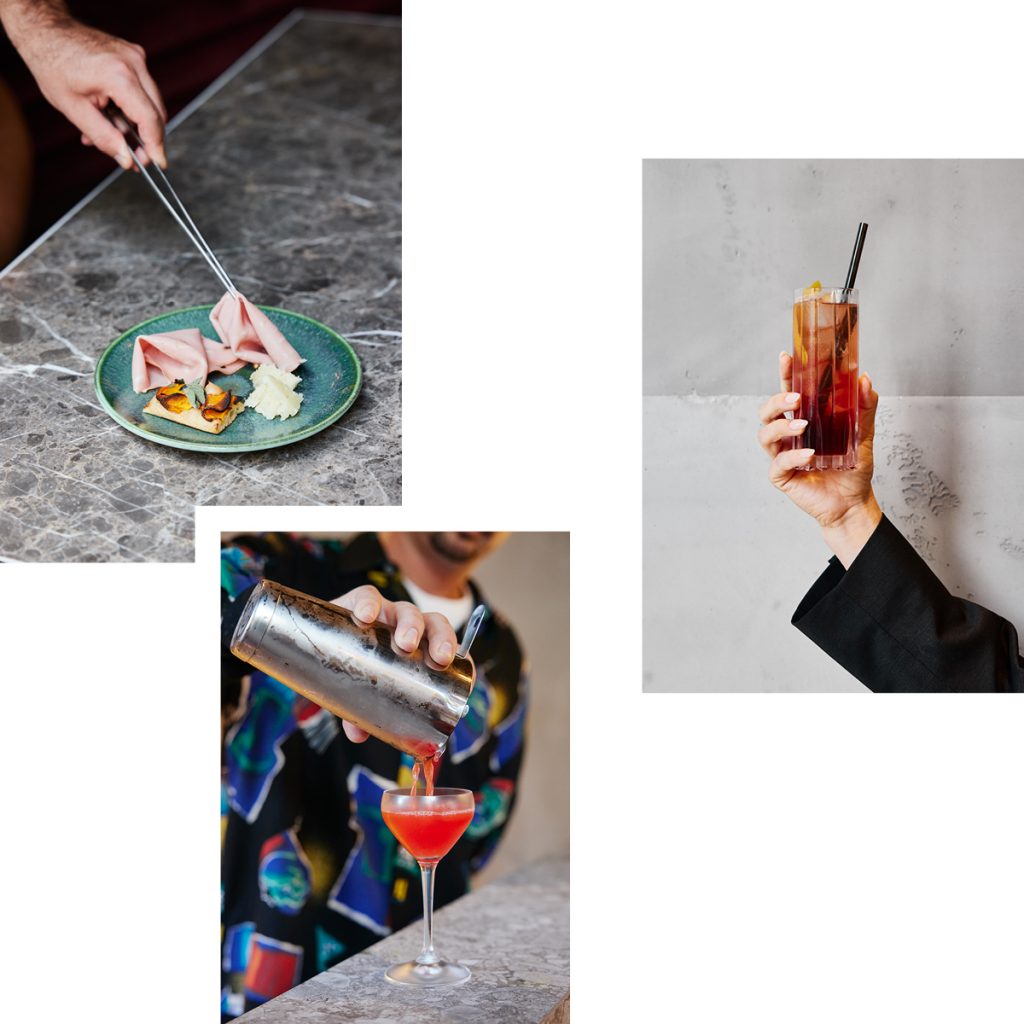
As of a few weeks ago, Berlin has a new museum for contemporary art, photography and culture: Fotografiska. Art has returned to the iconic and historic building with its heritage listed staircase. And now, upscale drinking has returned as well. In keeping with the spirit of the place, community, creativity and solidarity are top priorities – so here come the new aperitivo hours, daily from 16-18h. The Northern Italian concept combines good drinks and small appetizers before dinner. The Fotografiska bar on the first floor serves complimentary small Mediterranean snacks: grilled vegetables, a good selection of cheeses, olives, bruschetta, and more. Exquisite half-size cocktails at half the price entice you to taste your way through the entire menu. Best of all, drinks are allowed in the galleries, too! What better way to start the evening than consuming Berlin’s hippest culture with your favorite people and your favorite drinks? After all, one should “…offer the body something good, so that the soul feels like dwelling in it.” It’s a good thing that Oranienstrasse is now offering both.

Text: Alina Herbel / Photos: xxx

Café Bar at Fotografiska, Oranienburger Str.54, 10117 Berlin–Mitte; map
Mon–Sun 10–23h, Aperitivo Hours Mon–Sun 16–18h.

@fotografiska.berlin

cee_cee_logo
ANIMA — LISTENING BAR THAT COMBINES GOOD COCKTAILS, BAR MENU & MUSIC

ANIMA — LISTENING BAR THAT COMBINES GOOD COCKTAILS, BAR MENU & MUSIC

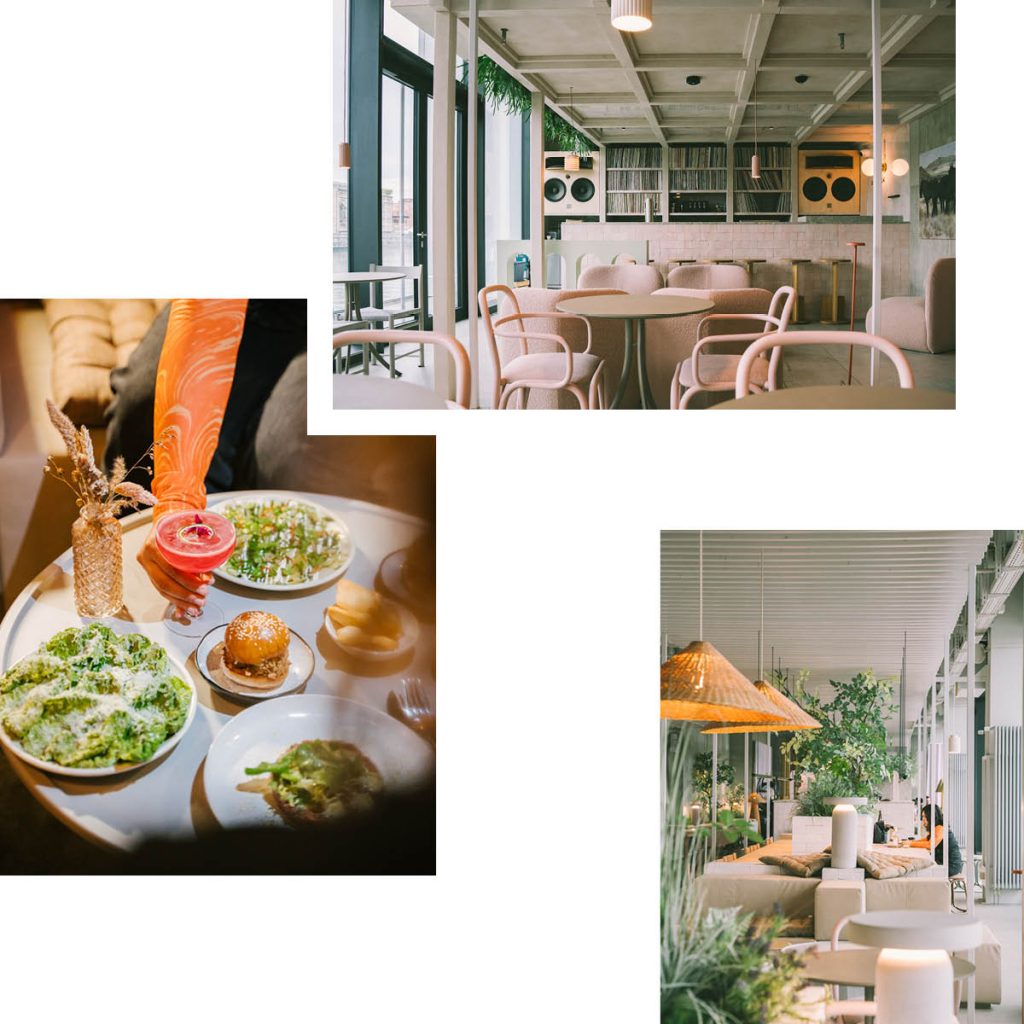
What happens when two DJs and a chef meet in Berlin? Well, as of the beginning of September 2023, you can find out for yourself right on the Spree at Anima. Anima is a new listening bar and one in which everything is just right: the music, the drinks and the bar menu all perfectly aligned. Each of these things in itself would make for a perfect evening, but it all adds up to make the Anima so exceptional. Add to that the panoramic view over the Spree and the pastel interior design that we are used to (and love) from Locke Hotels. Because, yes, The Anima awaits you right at the entrance of the new Locke in Berlin: Thibault and Robin, the owners of the listening bar, submitted a concept for the vacant space, and were able to snag the place for themselves among much competition. Café by day, listening bar by night with a sophisticated menu. You can visit both without being a guest of the house – quite the opposite, in fact: they’re happy to welcome friends, familiar faces and locals. But back where it all began: Thibault and Robin have been pursuing their DJ careers for 12 years, and although they’ve played for different collectives, the two have always felt like a well-oiled team. Robin moved to London quite early, before moving to Berlin nine years ago. Thibault moved to London a little later, after studying in Paris for several years. But it was because of Robin that he decided to move to Berlin seven years ago. I don’t remember exactly where the two of them met, but it feels like they’ve known each other for ages.

Besides music, the two share a love of food and evenings together in listening bars. What is still rather rare here has been a popular alternative to the usual pubs in London for years. It was clear to both of them that they wanted to open their own bar at some point, where snacks would not only play a supporting role, but would be a fixed and important part of the evening. And for this purpose, the two brought Andrea Iannicella on board – or rather into the kitchen. Andrea has worked in renowned restaurants such as Dóttir and Kink before Anima. On the handwritten menu (which I admittedly needed to swipe simply because it’s so beautiful) you’ll find a compilation of various bar snacks with a mix of Mediterranean influences and those from all sorts of places the three have traveled. Among them, for example, the Pork Slider, which is also available with mushrooms in a vegetarian version, mussels in tomato sauce, beef tartare or classics like marinated olives and bread with butter. In addition one of the terrific cocktails, like the Paloma, served in a glass dipped in chili salt, as a crowning finale a panna cotta or profiteroles. And if you’re wondering what great music is playing with your drink, just take a look at the bar: right next to the record player, the vinyl record covers being played are presented on a designated shelf – so you always know what’s playing. Good food, a fancy cocktail, music in the background, leaning back in comfortable armchairs with a view of the Spree – Anima is the perfect place to unwind.

Text & Photos: Robyn Steffen

Anima at Locke at East Side Gallery, Mühlenstr.61–63, 10243 Berlin–Friedrichshain; map
Tue–Sat 18h30–00h

@anima.berlin

cee_cee_logo
THE GREAT REPAIR  — AN EXHIBITION ON THE TOPIC OF RESOURCES & REPAIR IN OUR SOCIETY

THE GREAT REPAIR — AN EXHIBITION ON THE TOPIC OF RESOURCES & REPAIR IN OUR SOCIETY

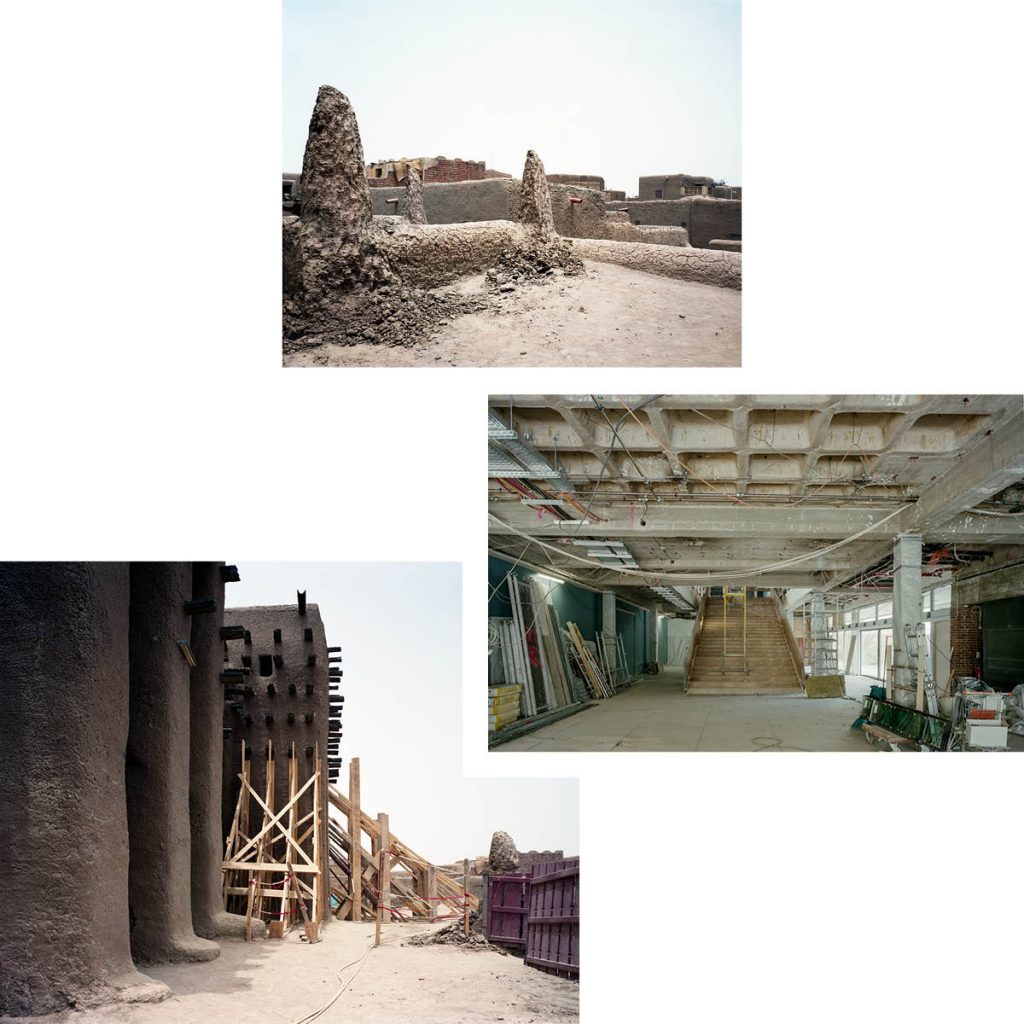
We need to rethink – and fast! Against the backdrop of ecological, social, and political crises, the ubiquitous topic of “Limits to Growth / Building in Existing Contexts” is not a task for the future but begins immediately. The effects affect us all. The handling of our resources, especially in architecture and urban planning, requires creativity and respect above all. This is demonstrated by the current exhibition, “The Great Repair,” which features over 40 positions from architecture and art in which maintenance and repair can be experienced as the design paradigms of our time. “The Great Repair” is not only an idea but a mediator on the topic of sustainability, climate, and the environmental crisis. The exhibition, organized by Arch+ and the Akademie der Künste, is dedicated to intelligent concepts that use grey energy, dovetail new construction with existing buildings, and perceive and take the city and its existing buildings and structures seriously. Key questions include: How does one deal with the advancing environmental destruction and waste of resources? How does one deal with the ongoing conflict between growth and climate protection in favor of market-oriented policies?

The most striking example is the planned construction of some 400,000 new homes, even though 40 percent of global CO2 emissions are attributed to the construction sector. At the heart of the exhibition is the recognition that the current economic system, with its emphasis on innovation, growth, and progress, and its logic based on consumption and waste, has led to a ruthless exploitation of people and nature. The exhibition explores the extent to which the politics and aesthetics of repair can be a meaningful alternative from a postcolonial and feminist perspective. Longevity and reappropriation are thereby explored as politics of a repair society. An extensive program, numerous talks and discussions, workshops, and guided tours for children, young people, and adults will expand the exhibition. It all starts on the opening weekend: in the framework of the “School of Repair,” an extensive program of events will take place to deepen the themes of the exhibition and the positions of Assemble, Atelier Bow-Wow, the Center for Spatial Technologies, Anna Heringer, the University of Luxembourg, Folke Köbberling & Martin Kaltwasser, Lacaton & Vassal, Charlotte Malterre-Barthes, Mapping Ukraine ETH Zurich, Zara Pfeifer, Bas Princen, Basel Nasr, Natasha Aruri, Sahar Qawasmi, Milica Topalović / Architecture of Territory ETH Zurich, and others.

Text: Milena Kalojanov / Credit: Bas Princen & Holger Herschel

The Great Repair, Akademie der Künste, Hanseatenweg, Berlin–Tiergarten; map
14.10.2023–14.01.2024 Tues–Fri 14–19h, Sat & Sun 11–19h. Vernissage 13.10.2023 19h.

@archplusnet

cee_cee_logo
ROOTY PLANT HUB: BERLIN’S HIDDEN GEM FOR PLANT LOVERS — RECOMMENDED BY JEROEN OTTE

ROOTY PLANT HUB: BERLIN’S HIDDEN GEM FOR PLANT LOVERS — RECOMMENDED BY JEROEN OTTE

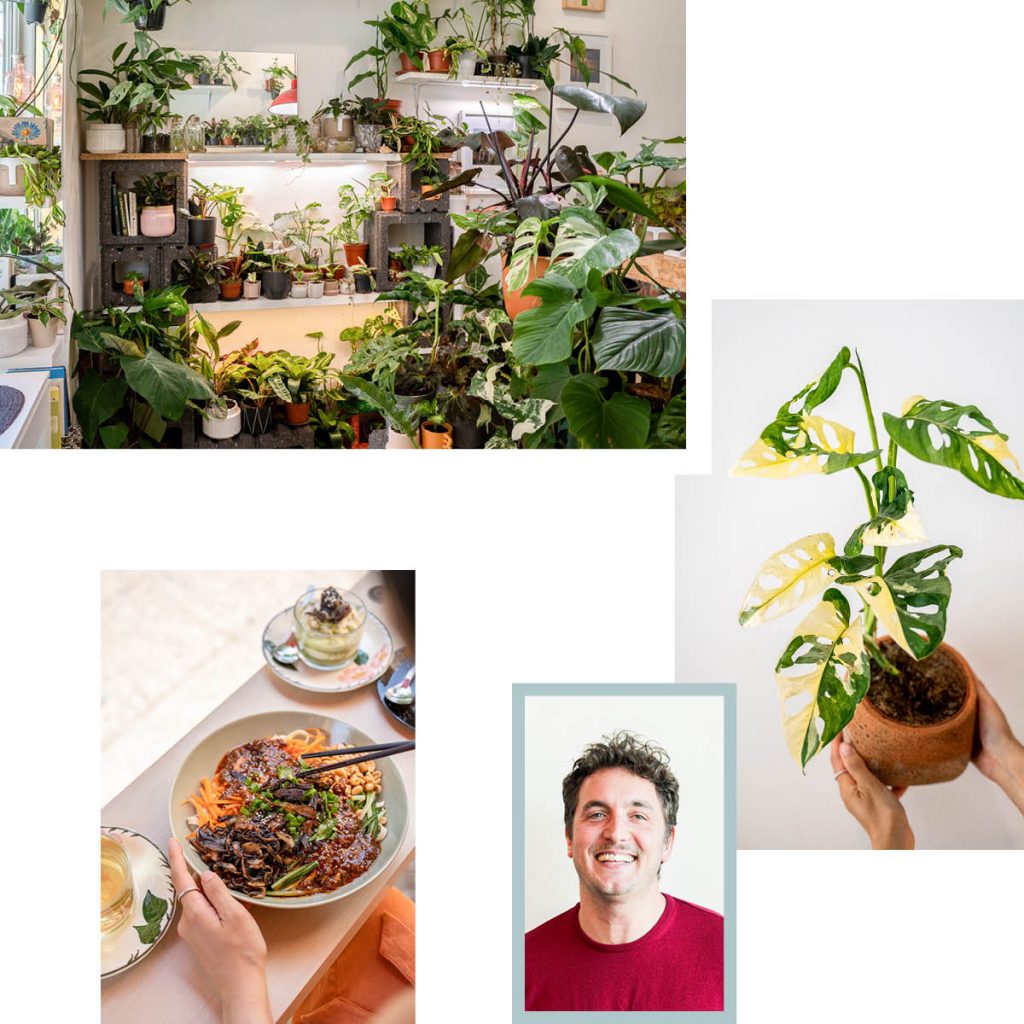
Rooty Plant Hub is why I love Berlin, a city that has countless hidden gems. Even after living here for four years, I keep discovering new things. The shop is located on Warthestrasse, a rather peculiar street, flanked on two sides by abandoned cemeteries overgrown with beautiful trees. It’s a stone’s throw from Tempelhofer Feld. I had cycled past the shop multiple times since I lived in the neighborhood, but never noticed that it was there. On this particular day, it had some new and interesting plants outside that caught my attention. I got into terrarium making after participating in a unique workshop with the Prinzessinnengarten Kollektiv just around the corner. The organizer recommended that I go to Der Holländer for terrarium plants. Standing in front of this shop, I thought it had the potential to provide the materials for my massive empty terrarium barrel.

Once inside, I was overwhelmed by the vast array of well-nurtured plants of all sizes. It’s a combination of plant, gift, and coffee shop, and even has a vegan lunch place within a tiny room. It’s owned by the lovely Shania from Hong Kong. You can see right away that she has a keen eye for quality. So, after your next visit to Tempelhofer Feld, make sure to visit Rooty, because love for plants is multiplied when shared.

Jeroen Otte runs the Berlin office of Koos, a global design and innovation agency. He moved from Amsterdam to Berlin 4 years ago. One might say he’s the only living soul that experiences the Berlin winters as “an upgrade”. One might also say Jeroen is a very optimistic person.

Text: Jeroen Otte / Photos: Rebecca Schatz

Rooty Plant Hub, Warthestr.4, 12051 Berlin–Neukölln; map
Thurs–Mon 11–18h30 & Fri 10h30–19h

@rootyplanthub

cee_cee_logo