

Cee Cee Creative Newsletter Book Neighborhood Map Lessons
Stadtplan
Information
archive temp
loop temp
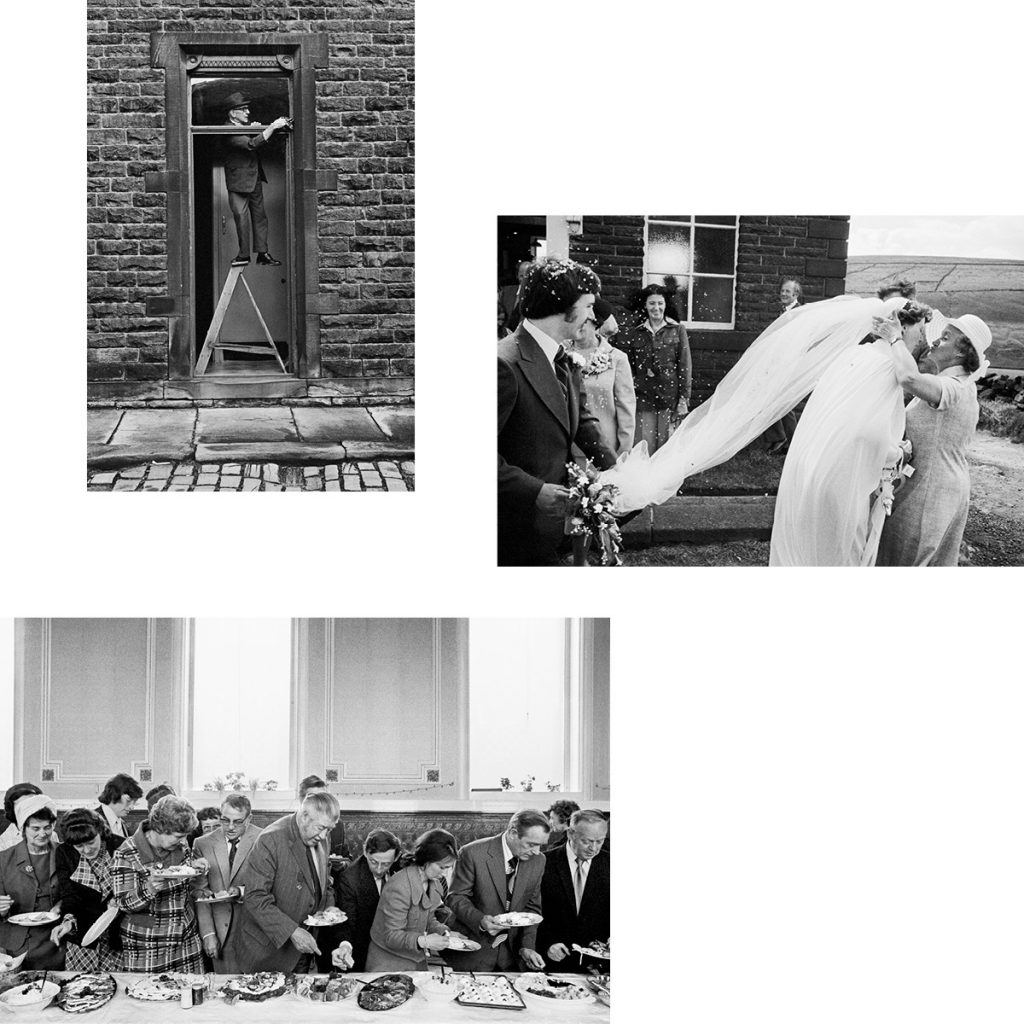
COLORS YOU CAN ALMOST SEE — MARTIN PARR’S EARLY BLACK-AND-WHITE PHOTOS AT F3

COLORS YOU CAN ALMOST SEE — MARTIN PARR’S EARLY BLACK-AND-WHITE PHOTOS AT F3

A look at Martin Parr’s early work at f3 – Freiraum für Fotografie reveals the roots of his sharp humor and keen eye for observation. When one thinks of Martin Parr’s fantastic photographs, it’s usually the colors that come to mind — those bright yet strangely weary tones that humorously dissect British society. Tanned skin, pink plastic, flash-lit sky blue. All the more exciting, then, to see Early Works by the British documentary photographer, photojournalist, and Magnum member (born 1952) now on view at f3 – Freiraum für Fotografie. These images are black and white — and rarely exhibited. The series captures vacation trips to the Scottish Highlands, provincial soccer games, bird club meetings in Surrey, traditional village festivals, and pilgrimages to the Pope in Ireland. Even as a young photographer, Parr was already fascinated by — and amused by — the sometimes quirky activities of his compatriots. His characteristic exaggeration and razor-sharp observation are already present here, bordering on the provocative but never crossing the line. Parr’s Early Works is one of those quiet, sophisticated Berlin fall exhibitions that should not be missed. And if you look closely, you may find that these early black-and-white images not only reveal a photographer coming into his own but might even shift your own perspective on life, society, and people in general.

Text: Hilka Dirks / Photos: Martin Parr / Credit: Magnum Photos

f³ – Freiraum für Fotografie, Prinzessinnenstr.30, 10969 Berlin–Kreuzberg; map
Martin Parr “Early Works” until 30.11.2025

@fhochdrei

cee_cee_logo
READING & LISTENING: WITH THE AWARD WINNERS OF THE KULTURKREIS DER DEUTSCHEN WIRTSCHAFT

READING & LISTENING: WITH THE AWARD WINNERS OF THE KULTURKREIS DER DEUTSCHEN WIRTSCHAFT

Over the past few months, one topic has been impossible to ignore at every exhibition opening, despite the festive mood: the Berlin Senate’s planned cuts to the culture budget. Private funding associations cannot fully close these gaps, but their work is more important than ever. One organization that has been supporting the arts across disciplines since 1951 is the Kulturkreis der deutschen Wirtschaft (Culture Circle of German Business). Its members — including leading entrepreneurs, business associations, and foundations in Germany — champion emerging artists in architecture, visual arts, literature, and music. Among other initiatives, the Kulturkreis annually awards the prestigious ars viva Prize. More than 350 artists have been honored to date, including celebrated figures such as Candida Höfer and Wolfgang Tillmans. While the Kulturkreis hosts exclusive events for its members throughout the year, it also opens its doors to the public as part of its annual conference.

On 10.10.2025, this year’s literature prize winner, Yevgeniy Breyger, will present a staged reading in the Chamber Music Hall of the Berliner Philharmonie, accompanied by actors from the Berliner Ensemble and music by Ganna Gryniva. The poet will read from his collection Peace Without War, which explores global conflicts, past and present, in poetic form. Afterwards, Breyger will discuss how his biography shapes his work in a conversation with moderator Jörg Thadeusz. In the afternoon, the focus turns to music: this year’s music prize winner Jonas Müller will give a concert that bridges worlds and eras with works by Handel, Bach, Mozart, and Mahler. The program will also feature a composition by Zara Ali, performed by the Kammerakademie — a compelling dialogue between classical repertoire and contemporary music. This concert demonstrates why Müller was awarded the 2025 Music Prize and Ali the Kulturkreis composition commission. All of the award winners are deeply rooted in their artistic disciplines and closely attuned to the political present. Above all, they demonstrate that art and culture are indispensable to the foundation of social life, even if they are often the first to face cuts in times of crisis. Without the arts (and without those who support them) our future would be less bright, less diverse.

Text: Laura Storfner / Photos: Camilo Jimenez, Leander Rambichler-Praxmarer, Beate Wätzel

Philharmonie Berlin, Kammermusiksaal, Herbert-von-Karajan-Str.1, 10785 Berlin–Tiergarten; map

The Kulturkreis der deutschen Wirtschaft invites you to attend the following events on 10.10.2025: Yevgeniy Breyger’s staged reading of Peace Without War at 10h. Award winners’ concert with Jonas Müller and Zara Ali at 17h.

The concerts and readings organized by the Kulturkreises der deutschen Wirtschaft are made possible through the generous support of G. Henle Verlag and the Deutsche Bank Stiftung.

@kulturkreis_eu
@kammerakademie.potsdam
@yevgeniycc
@jonasmueller.baritone
@z__a__r__a.wav
@jthadeusz

cee_cee_logo
ЯE:IMAGINE: THE RED HOUSE — THE 7TH BERLIN HERBSTSALON KICKS OFF

ЯE:IMAGINE: THE RED HOUSE — THE 7TH BERLIN HERBSTSALON KICKS OFF

The Berlin Autumn Salon is back, and with it, urgent questions that need to be discussed. Since 2013, the Maxim Gorki Theater‘s festival has invited artists, thinkers, and audiences to renegotiate the present. The 7th edition is entitled Яe:Imagine: The Red House, and turns the Gorki into an open house for debate and art. The program is as diverse as it is intense. Theater premieres meet performances, dance, and music. The festival kicks off with the premiere of Das Rote Haus (The Red House) by Ersan Mondtag & Till Briegleb, inspired by the stories of Stresemannstraße 30 residents and texts by Emine Sevgi Özdamar. In addition, there are works such as Androgynous. Portrait of a Naked Dancer (Lola Arias & River Roux), exploring border crossers between the 1920s and today, and To Be in a Time of War (Murat Dikenci) featuring the poetry of Etel Adnan. Also included are Orit Nahmias’ radically honest Make Love Not War and Yoldas. Frauen, die einander halten (Yoldas. Women Who Hold Each Other) (Nihan Devecioğlu), a poetic-musical collage about the realities of workers in the 1970s and collective empowerment. With Todesfuge, Nazanin Noori transforms Paul Celan’s literary legacy of the same name into a spoken-word opera. Formats shift between levels: sometimes the Herbstsalon is a concert hall, sometimes a reading stage, sometimes a club night. It’s an artistic journey that confronts political questions instead of ignoring them. The Gorki remains what it has always been: a place for voices that are too often silenced — diverse, loud, resistant. The Herbstsalon shows how art not only reflects society but also has the power to transform it.

Text: Inga Krumme / Credit: Ima Li Snijega?, Danica Dakić, 2024, VG Bild-Kunst, Bonn; Esra Rotthoff

Maxim Gorki Theater, Am Festungsgraben 2, 10117 Berlin–Mitte; map

@maxim_gorki_theater

cee_cee_logo
IT’S GOING TO BE A MUBI FEST: THREE DAYS OF OUTSTANDING CINEMA AT SILENT GREEN

IT’S GOING TO BE A MUBI FEST: THREE DAYS OF OUTSTANDING CINEMA AT SILENT GREEN

We love Mubi! If you know our favorite streaming platform, you know it’s Mubi. This October, Berlin will host the first Mubi Fest. Regular readers of this newsletter will already be familiar with Mubi’s cultural program, especially its dedication to cinema and the big screen. Mubi Fest Berlin takes it one step further: three days for film favorites to make their return to the cinema. The program is diverse, but here’s what we’re looking forward to most: Twin Peaks: Fire Walk With Me, the neo-noir prequel to the cult series, shedding light on Laura Palmer’s final days. Essential for Lynch die-hards and fever-dream film fans. Not for the faint of heart is April, directed by Dea Kulumbegashvili. The film follows Nina, a gynecologist in rural Georgia, as she faces personal and professional challenges. A dark work that confronts the brutality of patriarchal order head-on. The film will be shown in its original language (Georgian) with subtitles, followed by a talk with the director. Less dark, but idiosyncratic, contradictory, beautiful, and always impeccably dressed are the Women’s Tales, an ongoing short film series by Miu Miu, launched in 2011, telling stories by and about women in the 21st century.

Mubi Fest will show two works from the series as a double feature: “Autobiografia Di Una Borsetta” by Joanna Hogg and “Fragments For Venus” by Alice Diop. Small films, big cinema. Storytelling also takes center stage at a panel hosted by Notebook, Mubi’s print and online magazine since 2007. Managing Editor Matt Turner and Design Manager Tom Lobo Brennan will discuss how film discourse can take shape, sharing insights into their processes, vision, and design. So whether it’s a well-told fashion film, a cult classic, or a deep dive into design discourse: Mubi Fest brings streaming back into real life, and us into Silent Green.

Text: Inga Krumme / Credits: Mubi

silent green Kulturquartier, Gerichtstr. 35, 13347 Berlin–Wedding; map
Mubi Fest: Find the full program here.

Selection:
Twin Peaks: Fire Walk With Me (OmU)
05.10.2025 11h, Betonhalle Saal 1

Miu Miu Women’s Tales (Kurzfilm) (OmeU)
05.10.2025 12h15, Kuppelhalle

April (OmeU)
04.10.2025 11h30, Betonhalle Saal 1
Followed by a talk with the director.

Creating a new Kind of Film magazine
04.10.2025 from 12h. The talk will be held in English and will take place in the Kuppelhalle.

@mubideutschland
@silent.green

cee_cee_logo
UNFINISHED, YET OPEN: THE BAUHAUS-ARCHIV CELEBRATES ITS CONSTRUCTION SITE

UNFINISHED, YET OPEN: THE BAUHAUS-ARCHIV CELEBRATES ITS CONSTRUCTION SITE

Everyone loves a construction site, as long as it’s not their own home. Scaffolding, excavators, and cranes tend to spark curiosity. After a long renovation break, the Bauhaus-Archiv is inviting visitors onto its own construction site — a preview of what’s still to come. From 19–21 September 2025, the festival Kommt auf die Baustelle! opens the extension designed by Staab Architekten — the building that will one day house the world’s largest Bauhaus collection. For three days, the construction site transforms into a festival ground. Expect installations and performances, guided tours of the architecture and building process, and a Bauhaus workshop for those who prefer hands-on experiences. The program also features film screenings and talks, including a conversation with museum director Dr. Annemarie Jaeggi and architect Prof. Volker Staab, who reflect on the past and present of the institution, and, of course, on what’s still to come. Since the festival coincides with Musikfest Berlin, there will also be concerts. On Sunday (21.09.), Kai Hinrich Müller will host the chamber concert From Bauhaus to Broadway at the Philharmonie. Plus, a true Bauhaus highlight: the cubist opera Parabola and Circula (1929/30) by Marc Blitzstein celebrates its world premiere nearly 100 years after its creation, conducted by Karl-Heinz Steffens with the Norrköping Symphony Orchestra. So instead of caution tape, there’s a full cultural program: the construction site as one of the city’s most beautiful interim solutions.

Text: Inga Krumme / Photos: Arnaud Ele, Catrin Schmitt, Marcus Ebener

Bauhaus-Archiv / Museum für Gestaltung, Klingelhöferstr.14, 10785 Berlin–Tiergarten, map
Admission is free, with an advance booking (for selected programs or a timed-entry ticket).

@bauhaus_archiv

cee_cee_logo