
Cee Cee Creative Newsletter Book Neighborhood Map Lessons
Stadtplan
Information
archive temp
loop temp
FEEL, SEE, GIVE — PUT THE WHOLE WORLD OF FILM UNDER THE TREE WITH MUBI

FEEL, SEE, GIVE — PUT THE WHOLE WORLD OF FILM UNDER THE TREE WITH MUBI

As we all know, many things change as we get older. Two fundamental ones are the acceleration of time and the helplessness to answer the question: What do you actually want? While the wait for Christmas as a child felt like an eternity and the wish list was endless, this year the holidays have arrived far too quickly, and somehow you already have everything. For all those who still want to give presents to themselves and their loved ones, here is a recommendation that combines everything: romance and excitement, peace and comfort, pleasant creepiness, cathartic anger, and comforting sadness. There are a zillion different pictures, inspirations, and quotes — something for those who want to be alone or something to share with their loved ones. Bottomless fun and cultural education, full of journeys to the most distant worlds, all from the comfort of your own sofa. And something that definitely won’t be lying around unnecessarily. Sounds good? Works well too. We’re talking about Mubi, of course. Mubi, the cinema-on-demand service, curates classics and soon-to-be-classics on its streaming platform. The focus here is on great films. Highlights include Mathieu Kassovitz’s “La Haine,” Charlotte Wells’ award-winning drama “Aftersun,” Jim Jarmusch’s “Night on Earth,” and Ira Sach’s latest work “Passages.” These selections are constantly changing — you can never finish watching Mubi. At least that’s what my brother said when I gave him a subscription last year. Incidentally, it will simply be renewed again this year. How very practical!

Text: Lola Brody / Stills: Courtesy of Mubi

Mubi

You can gift great movies here.

@mubideutschland

cee_cee_logo
ANAHITA SADIGHI — WHAT YOU SEEK IS SEEKING YOU: INTERDISCIPLINARY DIALOG OF CULTURES

ANAHITA SADIGHI — WHAT YOU SEEK IS SEEKING YOU: INTERDISCIPLINARY DIALOG OF CULTURES

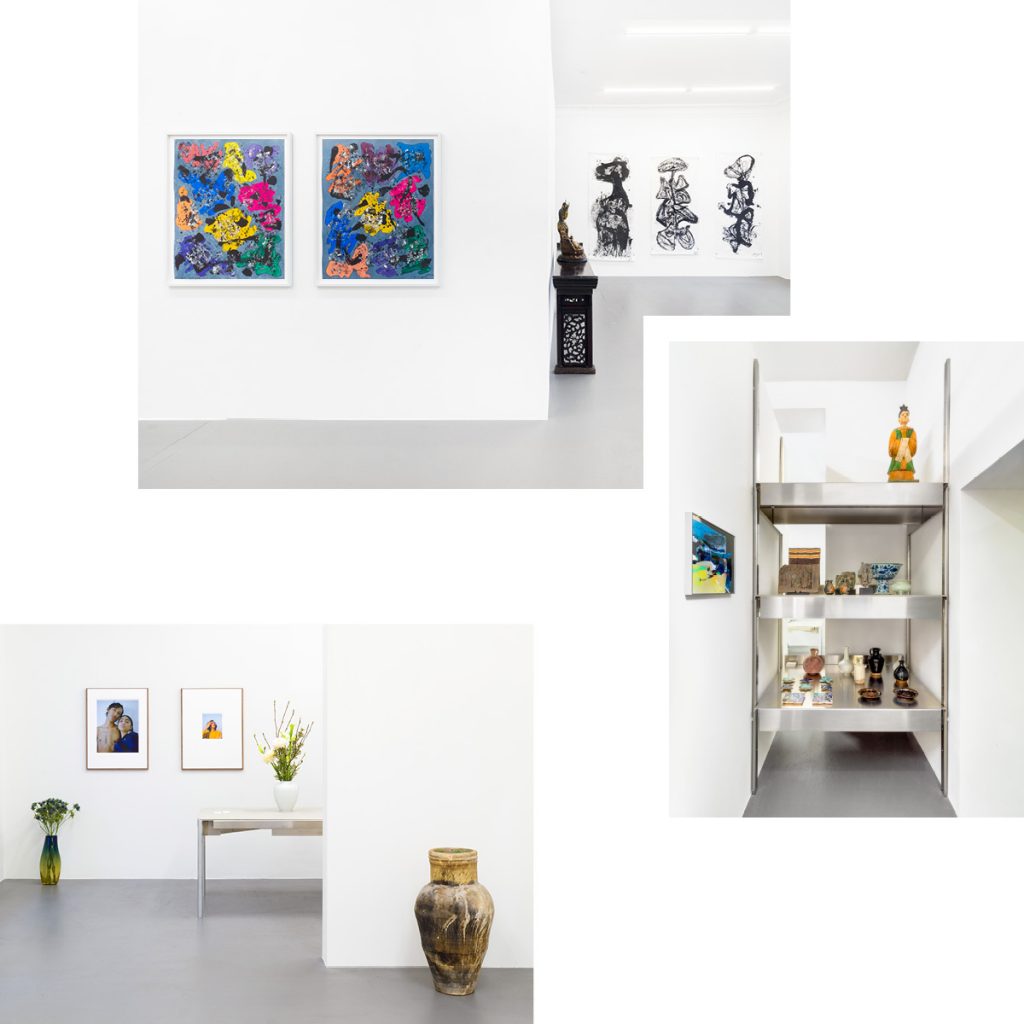
Not far from Savignyplatz in Berlin-Charlottenburg, the story of the West Berlin Renaissance continues: Anahita Sadighi, Berlin’s current gallery owner of the moment, is consolidating her previous galleries, “Anahita – Arts of Asia,” and “Anahita Contemporary,” into a new concept that will now bear only her name. For almost a decade, her approach has been both daring and trend-setting: ancient art meets contemporary positions, always with the aim of making underrepresented themes visible in the cultural landscape. Under the guidance of renowned architect Pierre Jorge Gonzalez, a new, interdisciplinary home for Anahita’s graceful balancing act between different genres, eras, and countries has been created at Schlüterstraße 16. Her inaugural exhibition, titled “What you seek is seeking you” — a quote from the Persian poet Rumi — serves as a reminder to stay true to your own vision and follow your own path unwaveringly. Perhaps this is why the Rumi quote is emblazoned in the original language above the new-old entrance or because it is to be understood as a title for Anahita’s work itself. With her first exhibition, she not only pays tribute to her family origins but also defines her new direction as a gallery owner: Monumental, sculptural installations by Dieter Detzner meet textile works from the Congo, unique Persian nomadic kilims, antique ceramics, photographs by Yumna Al-Arashi, and a painting by Wenxin Zheng. These artists have long encouraged Anahita in her vision and accompanied her on her journey. Because: “What you seek is seeking you…!”

Text: Stephanie Johne / Photos: Roman März

Anahita Sadighi, Schlüterstr.16, 10625 Berlin–Charlottenburg; map
Wed–Fri 12–19h & Sat 11–16h

@berlinartlover

cee_cee_logo
SHORT ART BREAKS FOR THE HEAD, HEART AND HUMOR: FIVE EXHIBITION TIPS FOR DECEMBER

SHORT ART BREAKS FOR THE HEAD, HEART AND HUMOR: FIVE EXHIBITION TIPS FOR DECEMBER

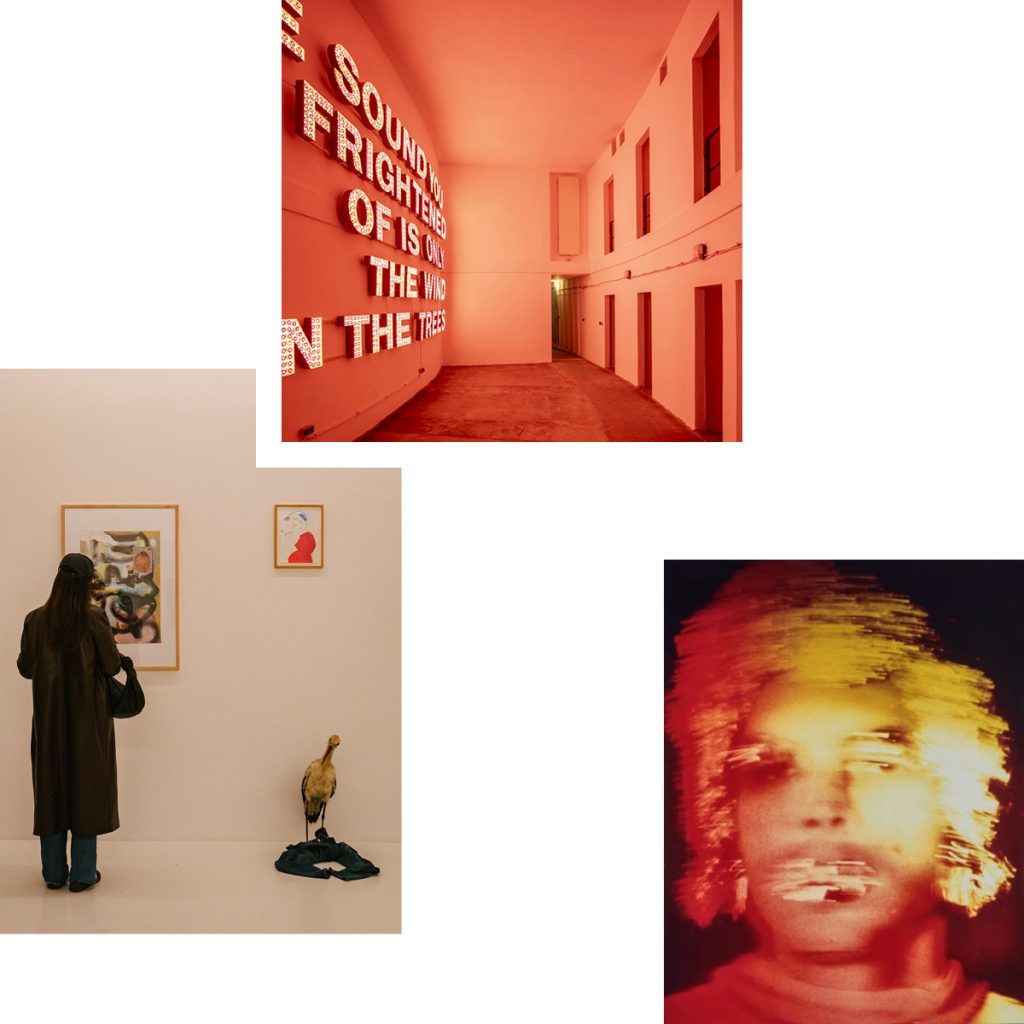
The year is almost over and there is still so much to see: Art, art, art! If you manage to carve out a few free hours in these last weeks of December, you might find some inspiration or at least a few quiet moments to take a deep breath and clear your head during these last stressful days. This is particularly easy to do in Steph Kloss’ project space “Die Möglichkeit einer Insel” at the end of Inselstraße, just before the bridge, which feels like the real end of the world on a dark winter’s day in the middle of the city, where Jonas Brinker is showing his current exhibition “Echo Eclipse” until 14.01.2024. From the darkness to the Fichtebunker: in Ebensperger‘s new location, the thick walls alone make it easy to leave the rest of the world behind. “Lost Your Way” is the fitting name of Tim Etchell’s new solo exhibition there, with the eponymous neon work (of course) taking center stage, accompanied by works on paper and moving images. Moving images, albeit this time with a lot of humor, can also be found in John Bock’s current solo exhibition “Ex-Ego-Gynt” at Sprüth Magers in Mitte. It’s familiar wild, familiar fun, familiar Berlin.

If you are there and want to calm down from all the fun, a detour to the basement is well worthwhile: Pamela Rosenkranzprovides a strangely unearthly calming effect with blue pulsating light. In Charlottenburg, on the other hand, there’s a very worldly feel: Meyer Riegger is showing the first German solo exhibition of the late photographer Jimmy DeSana with sex, punk, fun and failure, a few celebrities, lots of amateurs and their bodies and no-budget underground aesthetics. Touching and relevant, DeSana, like so many others, died too young during the AIDS epidemic in New York in the 1980s. The exhibition of his work comes late and yet is as relevant as ever. Those who prefer to explore Berlin’s underground instead can do so at Schlachter 151 – the off-space of the publishing house/agency/anything-with-media store OOR, publisher of the Berlin Numéro among others, is currently showing the US-American jack-of-all-trades Bryant Giles in its space on Wilmersdorfer Straße. His painterly works focus on overconsumption and short attention spans. Happy Holidays!

Text: Hilka Dirks / Photos: Fotos: Sophie Doering at Schlachter 151 showing Bryant Giles / Credit: Tim Etchells, In The Trees, 2020, Ebensperger; Jimmy DeSana Trust Courtesy of the Jimmy DeSana Trust, P·P·O·W, New York, and Meyer Riegger, Berlin/Karlsruhe

Die Möglichkeit einer Insel, Inselstr.7, 10179 Berlin–Mitte; map
Echo Eclipse until 14.01.2024 Fri–Sun 16–19h and by appointment.

Ebenspergers, Fichtestr.6, 10967 Berlin–Kreuzberg; map
Lost Your Way until 03.02.2024 Tue–Sat 12–18h

Sprüth Magers, Oranienburger Str.18, 10178 Berlin–Mitte; map
Ex-Ego-Gynt until 27.01.2024 Tue–Sat 11–18h

Meyer Riegger, Schaperstr.14, 10719 Berlin–Wilmersdorf; map
Jimmy DeSana until 06.01.2024 Tue–Sat 11–18h

Schlachter 151, Wilmersdorfer Str.151, 10585 Berlin–Charlottenburg; map
Bryant Giles until 31.12.2023 Mon–Fri 12–18h. Sa & So by appointment.

@diemoeglichkeiteinerinsel
@ebensperger_
@spruethmagers
@meyerriegger
@schlachter_151

cee_cee_logo
WORDS LIKE FINE FABRIC: JUDITH SCHALANSKY AT THE “BERLINER GEGENWARTSLITERATUREN” AT VILLA OPPENHEIM

WORDS LIKE FINE FABRIC: JUDITH SCHALANSKY AT THE “BERLINER GEGENWARTSLITERATUREN” AT VILLA OPPENHEIM

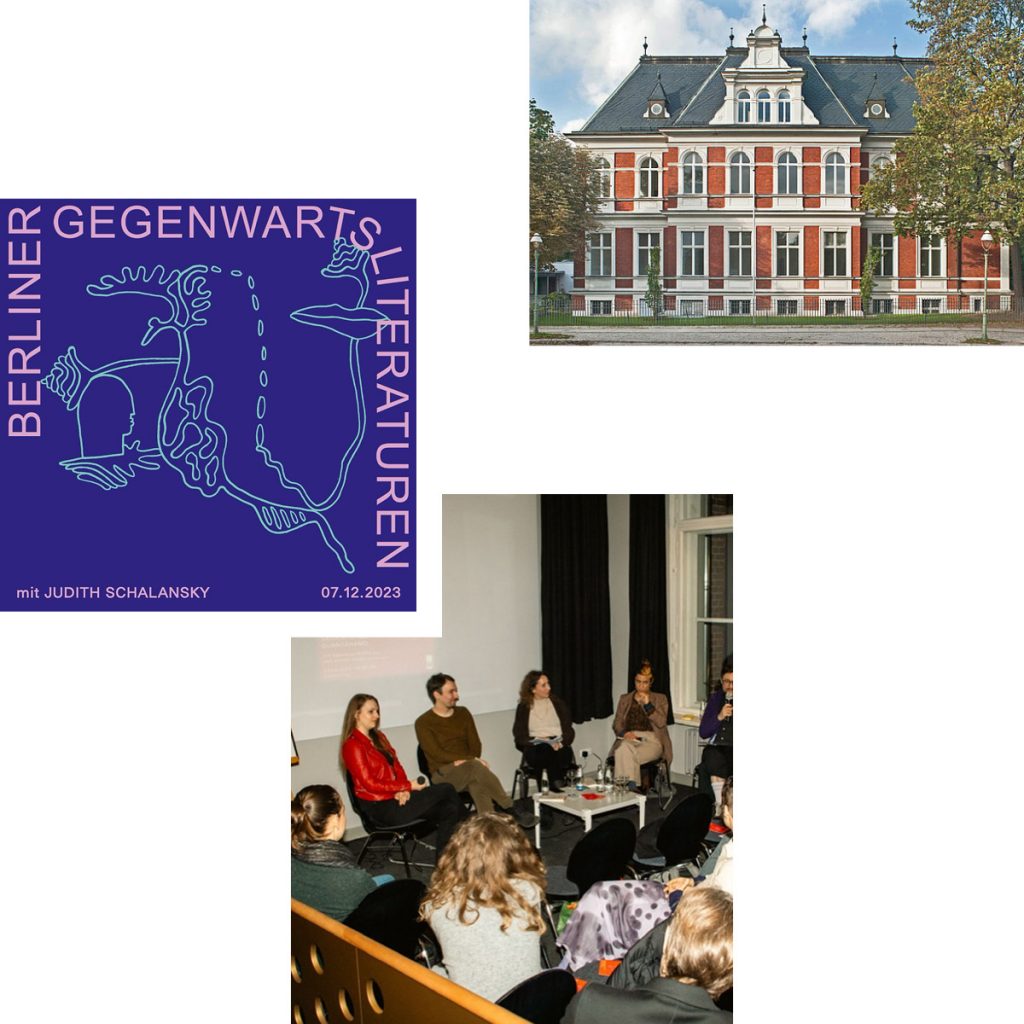
One day my best friend pressed an exceptionally beautiful Suhrkamp volume into my hand: Judith Schalansky’s “Verzeichnis einiger Verluste” – a mysteriously scribbled cover, black separating pages made of thick, open paper, printed with equally black, fine drawings on second glance. The smell of printer’s ink. Then I started reading and learned the following: Judith Schalansky uses words like weaving threads, condensing them sentence by sentence into a language so full of poetry and intensity that once you start it’s hard to put her texts down. The density of Schalansky’s language, its nostalgic feel, is carried by its content. In essay-like small forms, her “Verzeichnis einiger Verluste” (List of Some Losses) brings together precisely that: things past, lost, forgotten. Sappho’s poems, extinct tigers, the Palace of the Republic, sunken islands. Lost things, vanished things, ruins, libraries, feelings. Content and form are also held together by the design of the book. Judith Schalansky is also a book designer. Anyone who is now curious, or who loves Schalansky’s literature as much as I do, should immediately cancel everything tonight (07.12.23) and drive to Charlottenburg, where Schalansky is a guest at the discursive reading series “Berliner Gegenwartsliteraturen” at Villa Oppenheim, in which author Yael Inokai and literary critic Lara Sielmann regularly trace the themes and motifs of their guests in Berlin’s urban society and supplement them with auditory and visual elements. It is – of course – about the forgotten, as well as Schalansky’s essay “Schwankende Kanaren”, about city animals, oracles, climate change and social coexistence. And it would certainly be a loss to miss this evening.

Text: Hilka Dirks / Photos: Lilly Urbat / Credit: Villa Oppenheim

Villa Oppenheim, Schloßstr.55, 14059 Berlin–Charlottenburg; map
Berliner Gegenwartsliteraturen with Judith Schalansky Thu 07.12.2023 19h

@villaoppenheim

cee_cee_logo
IT’S CALLED CINEMA, BABY, LOOK IT UP — “SELECTS”, THE FREE STREAMING PROGRAM FROM KINEMATHEK

IT’S CALLED CINEMA, BABY, LOOK IT UP — “SELECTS”, THE FREE STREAMING PROGRAM FROM KINEMATHEK

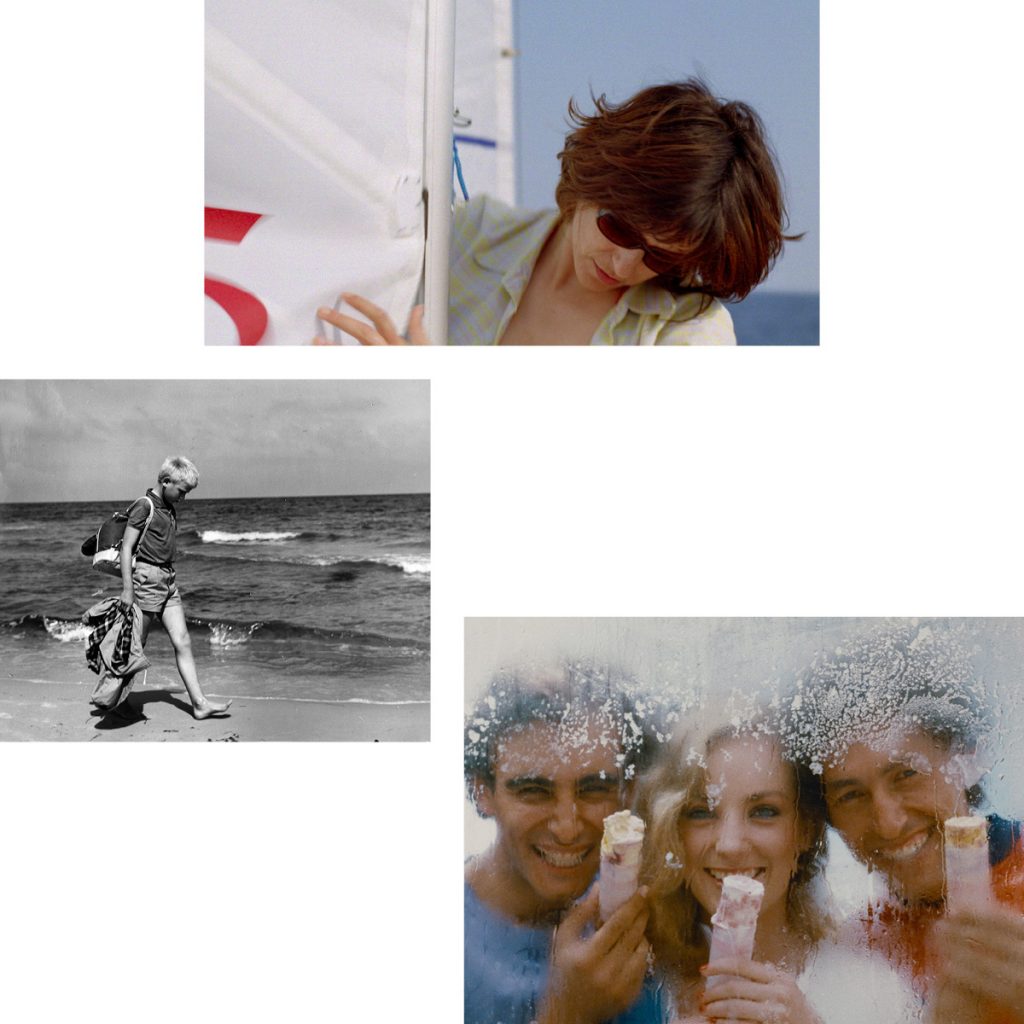
In Berlin, November is the month when it feels like there are only three hours of light a day, but you haven’t yet been able to eat all the gingerbread you can find. In other words, the best conditions for spending time with movies on your own sofa. For all those who are as bored as I am with the offerings of the usual streaming services, Deutsche Kinemathek has been providing a remedy for some time now. The curated online program, Kinemathek “Selects“, is sorted by theme and regularly presents a small but fine selection from its own collection. Free to stream, in full length and quality. And what a collection it is! Cinema meets art and vice versa. After thematic blocks such as “A Long Hot Summer” and “Female Perspectives”, the current curation of the sixth edition is dedicated entirely to a look behind the scenes of filmmaking to mark the 60th anniversary of the Kinemathek institution. Cinema on Cinema: camera, editing, extras. Nine works by greats such as Harun Farocki, Ulrich Schamoni and Thomas Brasch suck you off the couch and straight into the fantastic fictional world of film. All films are available online until January 14. And will then certainly be replaced by a new, equally worthwhile edition.

Text: Hilka Dirks / Credit: Deutsche Kinemathek; DEFA-Stiftung & Horst Bluemel

Click here for streaming.

@deutschekinemathek

cee_cee_logo