
Cee Cee Creative Newsletter Book Neighborhood Map Lessons
Stadtplan
Information
archive temp
loop temp
FROM NORTH EURASIA TO PERU: THE HKW OPENS TWO NEW EXHIBITIONS

FROM NORTH EURASIA TO PERU: THE HKW OPENS TWO NEW EXHIBITIONS

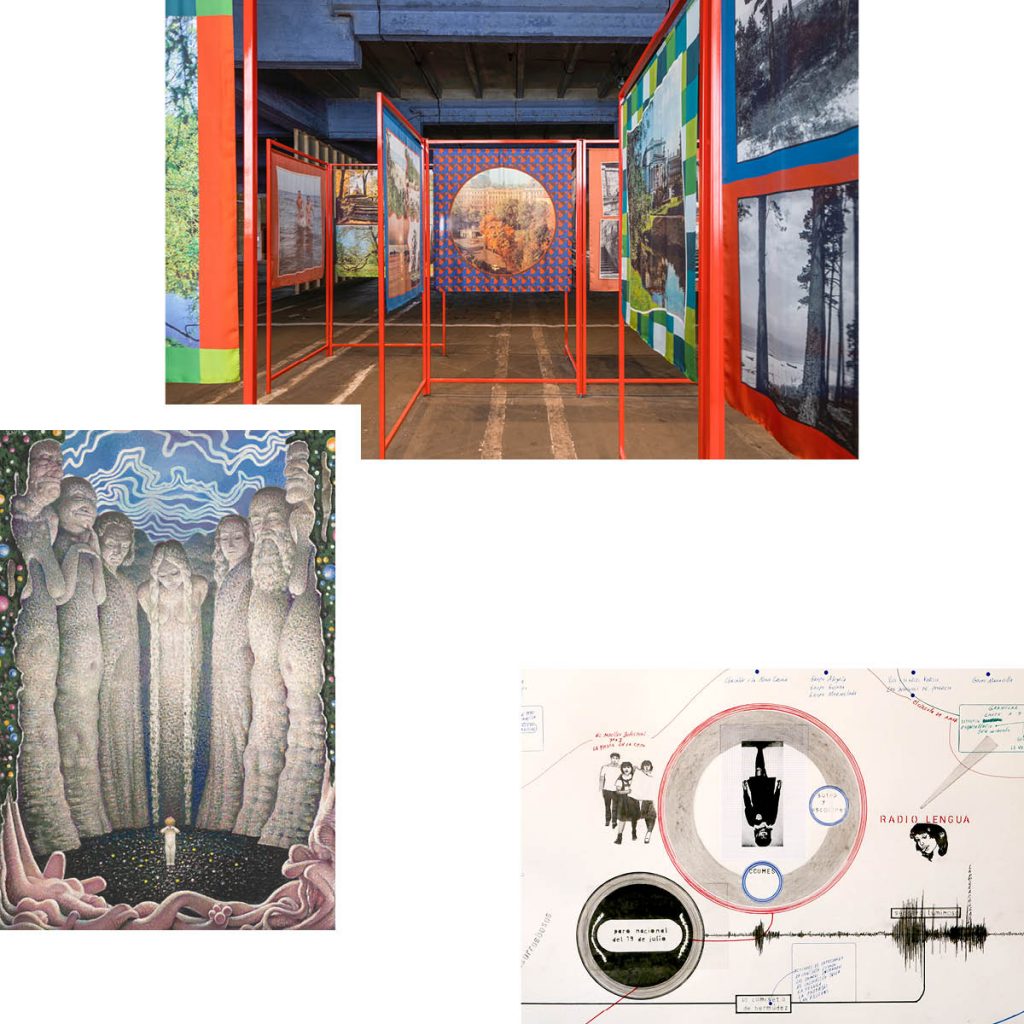
How do artists, curators and writers talk about Northern Eurasia? Beginning tomorrow evening, the Haus der Kulturen der Welt will present various chapters from which a fragmentary narrative of the region emerges as part of a new exhibition As Though We Hid the Sun in a Sea of Stories. The show roams the territory of northern Eurasia, casting spotlights on more than a dozen countries that were first in the territory or sphere of influence of the Russian Empire, and later in the Soviet Union. Equal parts presentation and research project, the show chronicles control and resistance, pain and self-empowerment. The fact that the narrative takes detours in the process and is composed in a collage-like manner is reflected in the title of the exhibition: it refers to a poem by the Kashmiri-American poet Agha Shahid Ali from 1990 – a time when the USSR was slowly dissolving. Ali dedicates it to the situation in his violence-plagued homeland and at the same time references the Polish-Jewish-Soviet poet Ossip Mandelstam, who died in a labor camp near Vladivostok in 1938. In the exhibition title, verses by the two poets are interwoven into a stanzaic line.

The fragmentary nature underlying this procedure also connects the show’s various temporal levels and narrative strands on a large scale. Only amid ambiguity and complexity can one attempt to understand what has moved the region in the past and where it is headed in the future. The Peruvian artist Sergio Zevallos is also concerned with regaining control over one’s own self in times of oppression. The HKW is dedicating a solo exhibition to him that looks back on his 40 years of work. Exercises in Transformation looks at dominant systems of knowledge and presents strategies for subverting them. In doing so, Zevallos repeatedly uses his own body as a starting point for ways out of a society determined by colonialism and capitalism. Zevallos’ performances are painful and intimate, but instead of relying on grand gestures, ultimately it is the incidental poetics found in nuances that outlast structures and situations.

Text: Laura Storfner / Credit: Sergio Zevallos; Jaanus Samma, Temnikova & Kasela Gallery; Auseklis Baušķenieks / Photos: Ansis Starks

Haus der Kulturen der Welt, John–Foster–Dulles–Allee 10, 10557 Berlin–Mitte; map
Wed–Mon 12–19h

As Though We Hid the Sun in a Sea of Stories: Fragments for a Geopoetics of North Eurasia 21.10.2023–14.01.2024

Exercises in Transformation—Sergio Zevallos Exhibition, Archive, Performances, Publication 21.10.2023–14.01.2024 Opening 20.10.2023

Free entry every Monday and every first Sunday of the month (Museum Sunday).

@hkw_berlin

cee_cee_logo
THE GREAT REPAIR  — AN EXHIBITION ON THE TOPIC OF RESOURCES & REPAIR IN OUR SOCIETY

THE GREAT REPAIR — AN EXHIBITION ON THE TOPIC OF RESOURCES & REPAIR IN OUR SOCIETY

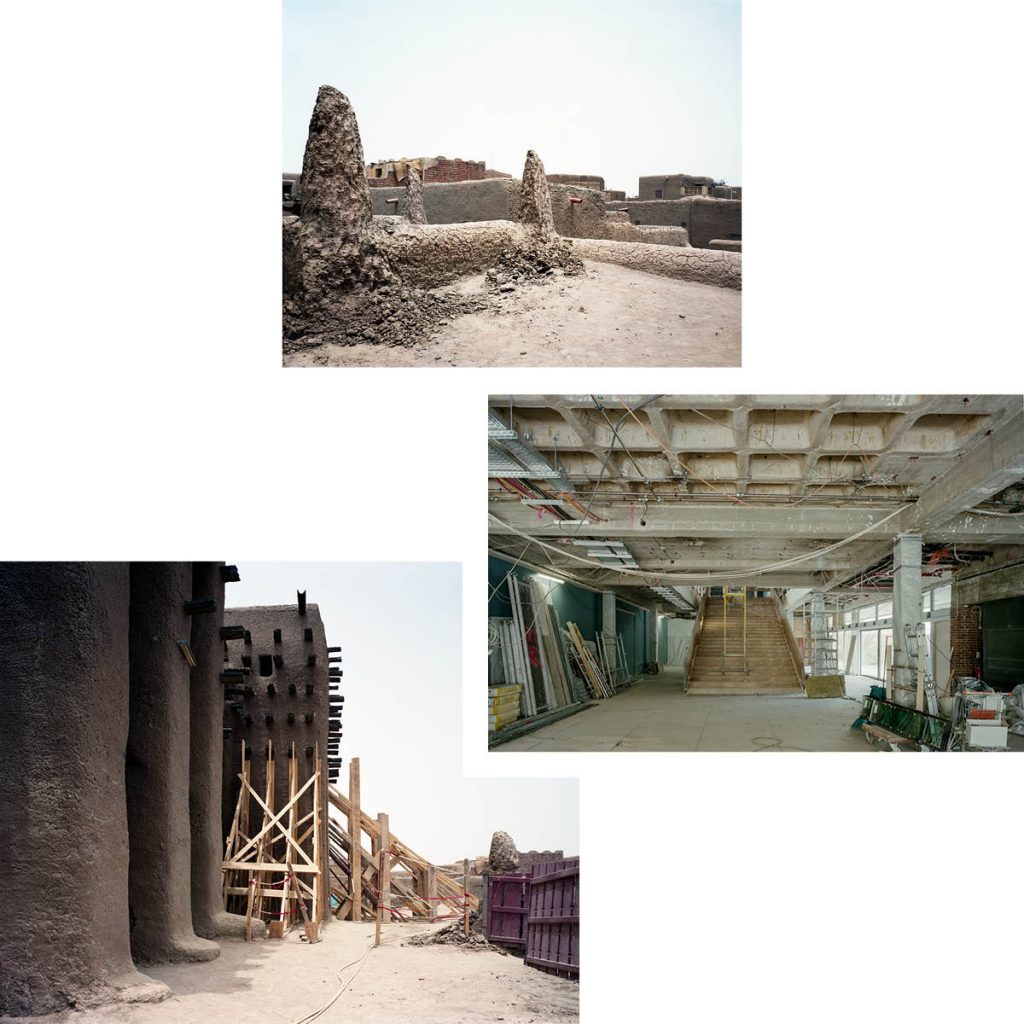
We need to rethink – and fast! Against the backdrop of ecological, social, and political crises, the ubiquitous topic of “Limits to Growth / Building in Existing Contexts” is not a task for the future but begins immediately. The effects affect us all. The handling of our resources, especially in architecture and urban planning, requires creativity and respect above all. This is demonstrated by the current exhibition, “The Great Repair,” which features over 40 positions from architecture and art in which maintenance and repair can be experienced as the design paradigms of our time. “The Great Repair” is not only an idea but a mediator on the topic of sustainability, climate, and the environmental crisis. The exhibition, organized by Arch+ and the Akademie der Künste, is dedicated to intelligent concepts that use grey energy, dovetail new construction with existing buildings, and perceive and take the city and its existing buildings and structures seriously. Key questions include: How does one deal with the advancing environmental destruction and waste of resources? How does one deal with the ongoing conflict between growth and climate protection in favor of market-oriented policies?

The most striking example is the planned construction of some 400,000 new homes, even though 40 percent of global CO2 emissions are attributed to the construction sector. At the heart of the exhibition is the recognition that the current economic system, with its emphasis on innovation, growth, and progress, and its logic based on consumption and waste, has led to a ruthless exploitation of people and nature. The exhibition explores the extent to which the politics and aesthetics of repair can be a meaningful alternative from a postcolonial and feminist perspective. Longevity and reappropriation are thereby explored as politics of a repair society. An extensive program, numerous talks and discussions, workshops, and guided tours for children, young people, and adults will expand the exhibition. It all starts on the opening weekend: in the framework of the “School of Repair,” an extensive program of events will take place to deepen the themes of the exhibition and the positions of Assemble, Atelier Bow-Wow, the Center for Spatial Technologies, Anna Heringer, the University of Luxembourg, Folke Köbberling & Martin Kaltwasser, Lacaton & Vassal, Charlotte Malterre-Barthes, Mapping Ukraine ETH Zurich, Zara Pfeifer, Bas Princen, Basel Nasr, Natasha Aruri, Sahar Qawasmi, Milica Topalović / Architecture of Territory ETH Zurich, and others.

Text: Milena Kalojanov / Credit: Bas Princen & Holger Herschel

The Great Repair, Akademie der Künste, Hanseatenweg, Berlin–Tiergarten; map
14.10.2023–14.01.2024 Tues–Fri 14–19h, Sat & Sun 11–19h. Vernissage 13.10.2023 19h.

@archplusnet

cee_cee_logo
A NEW LOOK AT CONCEPT “PERSONAL BEST” — ASICS AND MARIA STURM AT ANAHITA CONTEMPORARY

A NEW LOOK AT CONCEPT “PERSONAL BEST” — ASICS AND MARIA STURM AT ANAHITA CONTEMPORARY

Sometimes you get the feeling that the world is slowly changing for the better. With small steps, it is slowly moving in the right direction. And when you stop for a moment and look back, you see how far it has already come. You can see that particularly well right now at Anahita Contemporary in Charlottenburg’s KantGaragen. For the launch of the new Asics initiative “A New Personal Best”, a campaign that inspires to celebrate the emotions of sports and exercise and not just results and numbers, Asics has realized an impressive portrait series with renowned photographer Maria Sturm – the campaign title says it all. Instead of high-performance bodies and exceptional athletes, the focus here is on people who exercise not only for the physical benefits but also for their mental health. Just like the brand itself, which is named after an acronym. Asics founder Kihachiro Onitsuka recognized from the beginning that physical exercise has the power to lift one’s spirits, instill positivity and move people and entire communities forward. That’s why Asics means “Anima Sana In Corpore Sano” – meaning “A healthy mind in a healthy body.” For more than 70 years, Asics has focused on physical and mental health as well as the joy of movement, counterbalancing the prevailing “no pain, no gain” mentality and pressure to perform. Now, just in time for World Mental Health Day (10.10.2023), the new campaign launched to redefine the concept of “Personal Best.” People of all ages with real bodies and authentic joy gather in Sturm’s photographs and inspire hope. For the normalization of body and movement, for the merging of physique and psyche, and for the slow but necessary change in the right direction.

Text: Alina Herbel / Photos: Maria Sturm / Credit: Asics

“A New Personal Best” exhibition by Asics at Anahita Contemporary (3rd floor), Kantstr.126, 10625 Berlin–Charlottenburg; map
Tue–Fri 14–19h, Sat 11–16h. The exhibit runs from 06.10.–15.10.2023.

@asics
@berlinartlover

cee_cee_logo
LONGING FOR THE NORTH: EDVARD MUNCH IN THE BERLINISCHE GALERIE

LONGING FOR THE NORTH: EDVARD MUNCH IN THE BERLINISCHE GALERIE

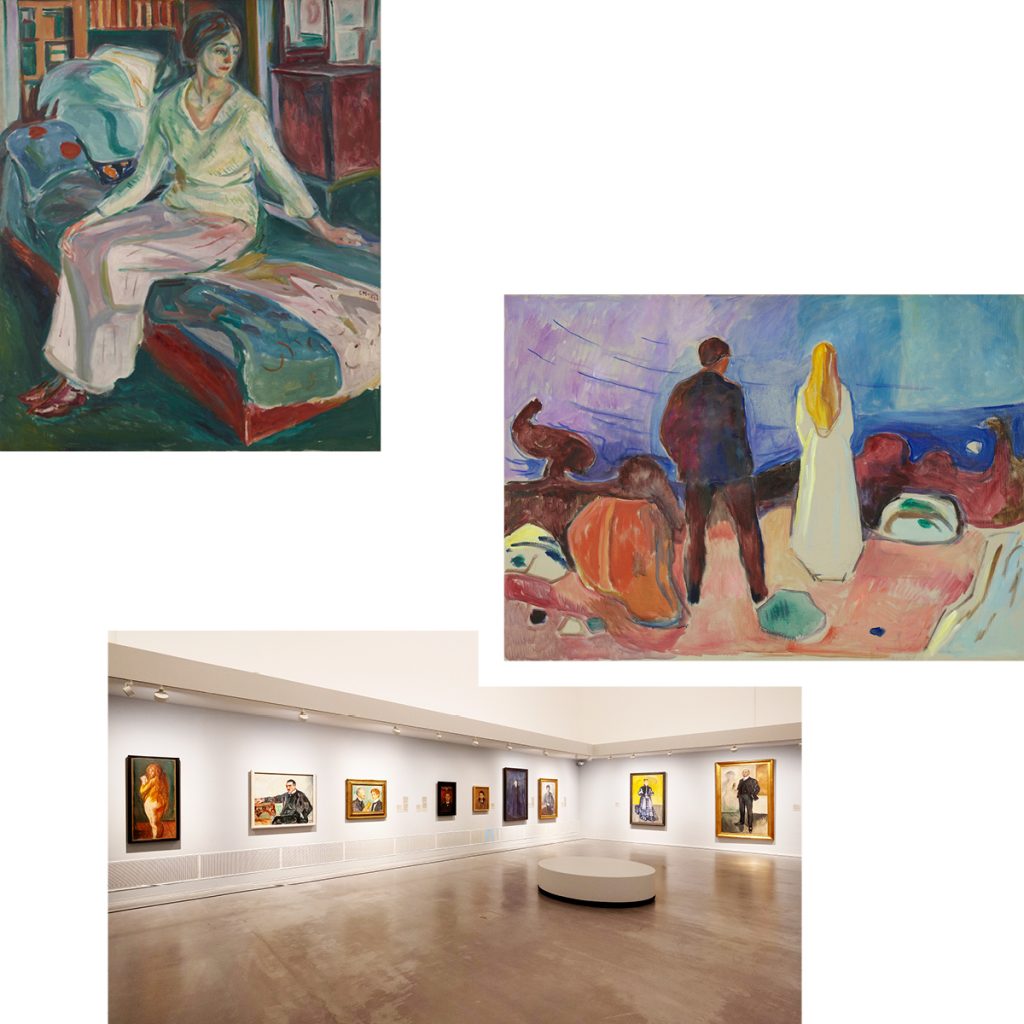
Every child knows Edvard Munch’s works – and not just because an emoji is based on his most famous work, “The Scream.” What few people know, however, is that Munch not only left his mark on his native Norway, he also had a decisive influence on the Berlin art scene at the turn of the century. In 1892, at the invitation of the “Verein Berliner Künstler,” the young artist came to the capital for the first time: but his solo exhibition led to a scandal. In Berlin, people were not ready for Munch’s colors and the immediacy of his scenes. The press and conservative painters were shocked, Munch’s works were called “smear works” and his exhibition had to close after a few days. The then 29-year-old was not dissuaded. On the contrary. The Berlinische Galerie now looks back on the history of Edvard Munch and Berlin with around 80 works.

In interplay with works by other artists who crossed Munch’s path in Berlin, an atmospheric picture of the late 19th century emerges. The show demonstrates how Munch became part of the city’s artistic scene: how he met writers, poets, and artists in the wine tavern “Zum schwarzen Ferkel” in Mitte and eventually worked as a member of the Berlin Secession. In contrast to works by Berlin colleagues such as Ludwig von Hofmann or Walter Leistikow, Munch’s views of nature still seem so progressive today, as if comparing different eras. Munch not only broke with the romanticized notion of picturesque fjords – his art pushed the boundaries of what was representable at the time. In this way, the Berlinische Galerie succeeds in conveying why the so-called “Munch Affair” did not go down in the history books as a debacle – but is celebrated to this day as part of the birth of modernism.

Text: Laura Storfner / Photos: Harry Schnitger / Credit: Edvard Munch & Berlinische Galerie

Berlinische Galerie, Alte Jakobstr.124–128, 10969 Berlin-Kreuzberg; map
Edvard Munch: Magic of the North until 22.01.2024. Mon, Wed, Fri, Sat, Sun 10–18h, Thu 10–20h (reduced entry from 17 Uhr)

@berlinischegalerie

cee_cee_logo
A DEAD MAN IN THE ELEVATOR, QUESTIONS OF EXISTENCE IN THE LOBBY & BACH TO SING ALONG WITH — THE NEUKÖLLNER OPERA STAGES “DER TEUFEL IM LIFT”

A DEAD MAN IN THE ELEVATOR, QUESTIONS OF EXISTENCE IN THE LOBBY & BACH TO SING ALONG WITH — THE NEUKÖLLNER OPERA STAGES “DER TEUFEL IM LIFT”

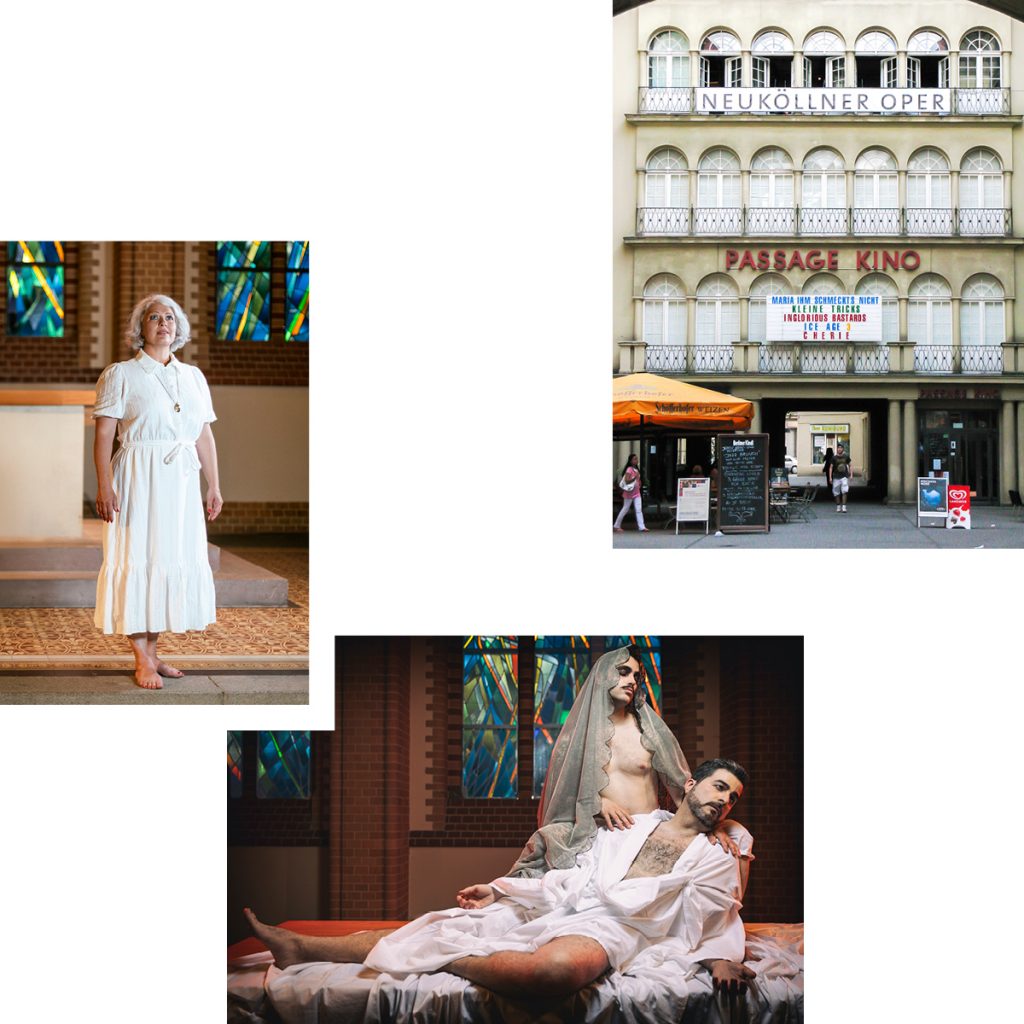
Few cantata works – lyrical poems in various movements with instrumental accompaniment – are as well known as that of Johann Sebastian Bach. But how does one approach such authoritative material? Beginning this Saturday (14.10.2023), the Neuköllner Oper will present what is probably the best possible variant of a reinterpreted approach: “Der Teufel im Lift” is based on music by J.S. Bach, with text by John von Düffel and the lautten compagney. It pours onto the stage full of humor and suspense. And that’s what it’s all about: The “light-seer” Blanche (what else could her name be?), the brain specialist Prof. Dr. Sanchez, the young journalist Raquel and a helpless and restless porter meet at night in the lobby of the “Hotel Heaven.” When a mysterious stranger falls from the elevator, confronting the travelers with their deepest and most dramatic longings, fears and surreal fantasies. Is it a fallen angel? Is it Lucifer, the devil, as the mounted cantatas say? “Say, how do you feel about religion” – or about science? Suddenly the eternal Gretchen question is in the room, suddenly it’s all at stake: past and future, life and death, meaning and faith. Gripping, whirling, erratic and thrilling, the piece quite literally takes the audience with it – one or two chorales can be explicitly sung along to. Rarely has Bach felt so close.

Text: Hilka Dirks / Photos: Thomas Koy & Neuköllner Oper

Neuköllner Oper, Karl-Marx-Str.131–133, 12043 Berlin–Neukölln; map
Tue 15–19h.

Teufel im Lift, information and tickets available here.

@neukoellneroper

cee_cee_logo