
Cee Cee Creative Newsletter Book Neighborhood Map Lessons
Stadtplan
Information
archive temp
loop temp
BETWEEN RITUAL & REALITY: THE PHOTOGRAPHY OF GRACIELA ITURBIDE AT C/O BERLIN

BETWEEN RITUAL & REALITY: THE PHOTOGRAPHY OF GRACIELA ITURBIDE AT C/O BERLIN

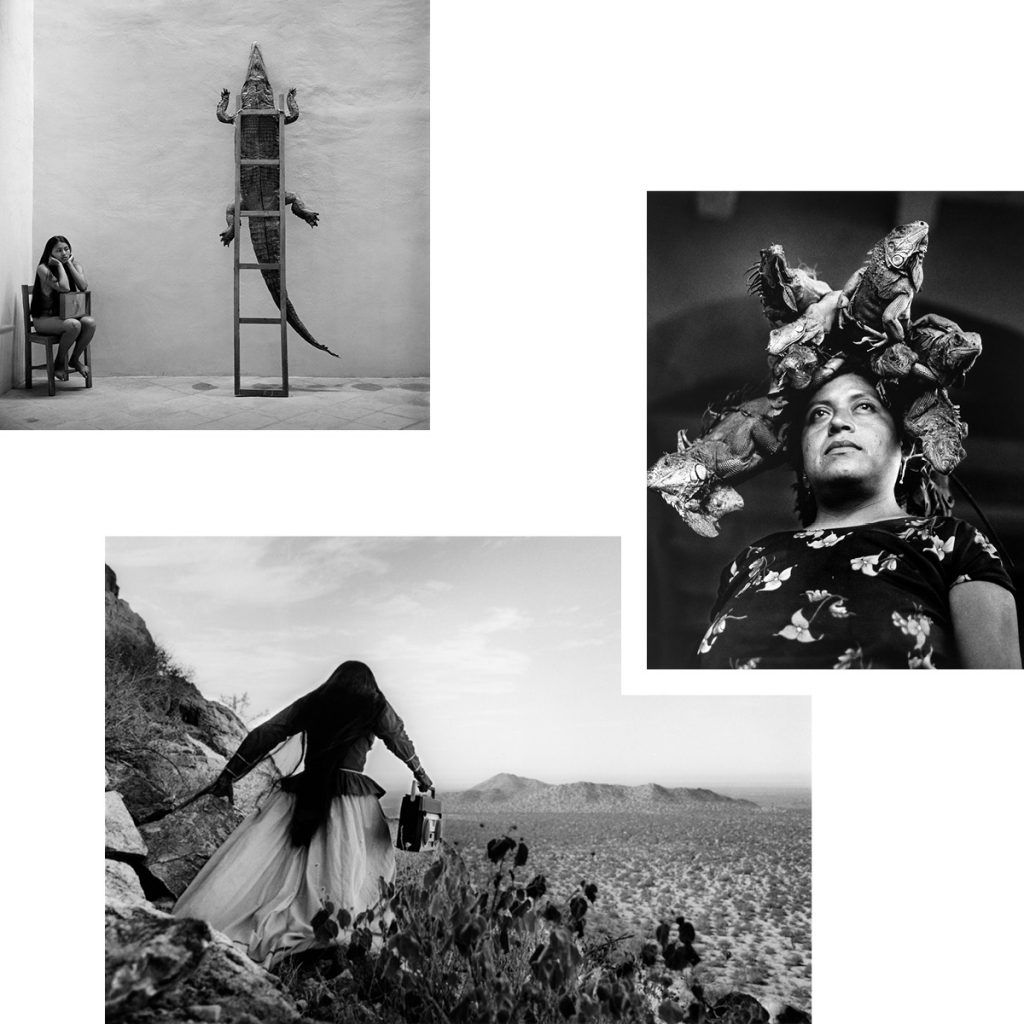
Magic and surprise are two forces that continue to drive Mexican photographer Graciela Iturbide to this day. Her career, too, began unexpectedly. In 1969, in her late twenties and a mother of three, she heard a radio announcement from Mexico’s national film school and decided to apply. She was accepted and soon became a teacher’s assistant to Manuel Álvarez Bravo, now regarded as the founder of Mexican art photography. A fascination with symbolism, the fantastical and experimentation shaped Iturbide’s work, although she soon devoted herself to documentary photography. In the early 1980s, she followed the nomadic Seri people into the Sonoran Desert for a photographic reportage. She also explored traditions deeply rooted in Mexican culture in her series La Matanza, for which she accompanied the ritual slaughter of goats in the Mixteca region. C/O Berlin now presents an overview of her body of work. Developed in close collaboration with Iturbide herself, the exhibition Eyes to Fly With brings together her most important series while placing particular emphasis on the role of women in Mexican society.

A key example is the series Juchitán de las Mujeres, created among the Indigenous Zapotec community. Over nearly ten years, Iturbide returned again and again to the small town of Juchitán in Oaxaca, forming friendships and becoming familiar with local culture. At the center of her work are women and the so-called muxes — people assigned male at birth who identify differently. In Juchitán, women and muxes hold significant political, economic and spiritual influence. Iturbide’s photographs never objectify or exoticize them. Instead, her practice is shaped by a deeply personal way of seeing. She does not approach her subjects as an anonymous outsider, but documents her own encounters and relationships with the community. Her engagement with Mexico’s most renowned artist, Frida Kahlo, was similarly respectful and subjective. Years after Kahlo’s death, Iturbide approached her former home, Casa Azul in Mexico City, as both a place of artistic presence and cultural pilgrimage. Wherever Iturbide photographs — whether in her homeland or while traveling — she creates powerful, intimate portraits defined by her empathetic and distinctive visual language. Her images move between documentation and dream. They are firmly rooted in reality, yet imbued with such poetic sensitivity that Iturbide seems intent on revealing nothing less than the quiet magic of everyday life.

Text: Laura Storfner / Photos: Alhelí, Oaxaca, México, 1995; Nuestra Señora de las Iguanas, Juchitán, Oaxaca, México, 1979; Angel Woman, Sonoran Desert, México, 1979 / Credit: Graciela Iturbide

C/O Berlin, Hardenbergstr.22–24, 10623 Berlin–Charlottenburg; map
Graciela Iturbide: Eyes to Fly With until 10.06.2026

@coberlin

cee_cee_logo
CAMPUS MEETS KIEZ: UDK X BERLIN AT MASUMI SPACE

CAMPUS MEETS KIEZ: UDK X BERLIN AT MASUMI SPACE

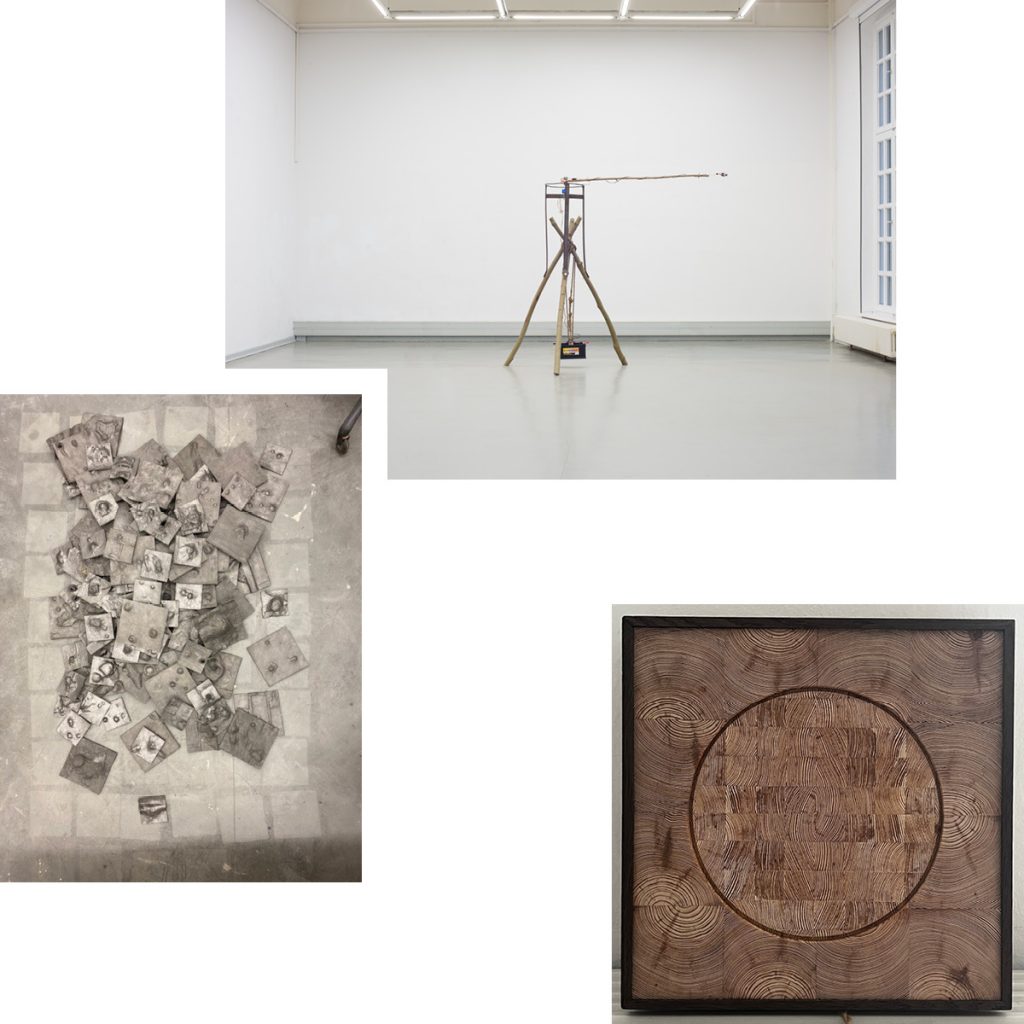
Those who study art in Berlin rarely begin with a blank canvas. The city is no neutral backdrop. Studios sit next to Spätis, seminars end at Kotti, and discussions continue on the subway. This is exactly where the UdK x Berlin Pop-up Gallerybegins. From 24.02.–26.02.2026, the Berlin University of the Arts will present just how closely study, artistic research and urban practice are intertwined at Masumi Space. The cooperation between the State of Berlin, Berlin Partner and UdK Berlin brings to light that the city is not just a backdrop, but a campus, a place of work and inspiration. Students and teachers present works in different formats from different perspectives, united by a shared question: How do creative teaching and research shape the city? And how does the city shape creative teaching and research? A dialogue emerges between campus and neighborhood, exploring how art responds to a constantly changing metropolis — and how it, in turn, feeds back into it. Works from Performing Arts, Music, Fine Arts, Design and the Design Research Lab are represented. Sara Assadi presents Berlin, ein visuelles Memoir (Berlin, a Visual Memoir), a drawn diary of the city: twelve districts condensed into a series and transformed into a foldable art book with a sculptural twist. Özkan Ertek’sAcoustic Horizon is a rotating, solar-powered sound sculpture that brings distant sounds into the room. Seonkyu Oh’sHolzzeit filters light through cross-sections of wood. And Ana Luiza Anjos, together with her team, presents Roupa Velha: a performance and video made from old clothing that stores memories, and seems to dance through Berlin at night. If you want to understand how university and neighborhood shape one another, mark these three days in your calendar. Admission is free.

Text: Emma Zylla / Credits: Clemens Fischer (Tag 3, 2026), Seonkyu OH (Holzzeit), Sally Frey (Spuren der Gewalt, 2025)

Masumi Space, Kurfürstendamm 229, 10719 Berlin–Charlottenburg; map
UdK x Berlin 24.02.–26.02.2026 13–20h

@udkberlin

cee_cee_logo
GLITCH WITCH — COLLECTIVE MAGIC AT HAU

GLITCH WITCH — COLLECTIVE MAGIC AT HAU

Bodies remember. They stumble, they repeat, they connect. From 12.–14.02.2026, a production that makes these processes tangible returns to HAU2. Glitch Witch is a dance performance by choreographer Meg Stuart, Damaged Goods, and the Dance On Ensemble. In this collective work, three women confront their past and dance their way through it. On stage, Meg Stuart, dancer Omagbitse Omagbemi, and composer Mieko Suzuki encounter one another in a gloomy, exhausted landscape that promises fertile ground for something new. Their movements are permeated by personal stories that cannot be shaken. Between hesitation and urgency, the three search for a shared language, forming a bond of solidarity. Gradually, a collective strength begins to emerge. Glitch Witch is a tentative state, a ritual of resistance and devotion, of disruption and cohesion. The work was created as part of Encounters, a collaboration between Meg Stuart and the Berlin Dance On Ensemble for dancers over 40. If you don’t feel like going home after the performance on Saturday (14.02.), simply stay under the spell. During the break at WAU, Mieko Suzuki will take over the DJ booth. Her sets of deep bass, drones, and crackling vinyl sounds carry the energy of the performance forward. The magic continues, and admission is free.

Text: Emma Zylla / Photos: Laura Van Severen

HAU2, Hallesches Ufer 34, 10963 Berlin–Kreuzberg; map

Glitch Witch 12.–14.02.2026. Find tickets hereBreak @WAU 14.02.2026 from 21h30.

@hauberlin

cee_cee_logo
HIGH VOLTAGE ANTICIPATION: THE DEUTSCHE KINEMATHEK CELEBRATES ITS REOPENING AT THE E-WERK

HIGH VOLTAGE ANTICIPATION: THE DEUTSCHE KINEMATHEK CELEBRATES ITS REOPENING AT THE E-WERK

The Deutsche Kinemathek remains one of Berlin’s best-kept secrets, even after all these years. Who would have guessed that the film architect behind James Bond left his estate to Berlin? In the Kinemathek’s archives, visitors can dive into Ken Adam’s mind and process — his sketches, storyboards, and concept ideas. Born in Berlin, Adam emigrated with his family to the UK as a teenager and quickly rose through the ranks in 1960s London as a production designer. For 007, he created the playful spy gadgets that fill entire chapters of film history. While Ken Adam’s works continue to be displayed at the Marienfelde archive, others are given a new cinematic stage. The Deutsche Kinemathek has relocated from Potsdamer Platz to the E-Werk in Mitte. The striking brick complex, built in the 1920s, originally served as a power substation, and later enjoyed a 1990s renaissance as a techno club. Now, it ushers in a new era of film history, filled with scenes, voices, icons, and objects from the silver screen. To celebrate the reopening, the Kinemathek is offering free admission and special events until Sunday (25.01.2026).

Visitors are invited to immerse themselves in the historic hall of the E-Werk with the installation “Screentime”. 130 years of moving-image history are made spatially tangible in an obstacle-course-like experience. That the Kinemathek is about more than just watching is also evident in its children’s program. During workshops in front of a green screen, kids and teens can film their own scenes, experiment with techniques, and design their own movie posters. During the opening weekend, the museum team leads tours into the neighborhood around Checkpoint Charlie, where films such as Octopussy and Funeral in Berlin were shot. These walking tours introduce filming locations, production sites, and landmarks of Berlin’s cinematic past. The relocation is more than just a change of scenery; it’s a statement. Film and television history belong in the heart of everyday life. At the E-Werk, it will be accessible to the whole family starting tomorrow (23.01.), and presented in a fresh, contemporary context. In February 2026, just in time for Berlin Film Month, the Berlinale Retrospective continues. This edition will focus on Berlin’s decade of awakening: the 1990s. A perfect opportunity to dive into films like Lola Rennt and Slacker. Or, as the retrospective’s title suggests, to feel truly “Lost in the 90s”.

Text: Laura Storfner / Photos: Deutsche Kinemathek

Deutsche Kinemathek’s Museum of Film and Television, Mauerstr.79, 10117 Berlin–Mitte; map

23.–25.01.2026 10–18h (free admission & program), 26.01.–06.02.2026 10–18h. Find the full program here.

@deutschekinemathek

cee_cee_logo
THE KINDL AS A SPACE OF RESONANCE: CONTEMPORARY ART IN THE HEART OF NEUKÖLLN

THE KINDL AS A SPACE OF RESONANCE: CONTEMPORARY ART IN THE HEART OF NEUKÖLLN

Once, enormous brewing vats filled this space with beer. Today, ideas and artworks inhabit the halls of the former Neukölln brewery. Since its careful renovation in 2016, the Kindl has established itself as a hub for contemporary Berlin art, and not just because of its 20-meter-high boiler house. Here, British artist Cornelia Parker realized Stolen Thunder (A Storm Gathering), an immersive installation that can be experienced until 24.05.2026. Sound, light, and shadow create a fictional, physically tangible event that recalls expressionist cinema while reflecting on climate disasters and political instability. Minimalist in gesture but monumental in effect are the works of Phoebe Collings-James. Until 15.02., the Maschinenhaus M1 hosts the British-Jamaican artist’s first institutional solo exhibition in Germany. Ceramic sculptures and a newly created sound work merge personal and collective experience, making the engagement with body, desire, and anti-colonial practices spatially perceptible. In the M1 VideoSpace, Cihad Caner presents hybrid, animated monsters inspired by historical and pop-cultural figures. Born in Istanbul in 1990, the artist gives them voices, exploring — both abstractly and directly — questions of integration and hospitality. On 04.02., Cihad Caner will discuss the exhibition’s themes in conversation with Çaǧla Ilk, the Designated Artistic Director of the Maxim Gorki Theatre.

Urban life and coexistence are also central to Erik Schmidt, whose retrospective The Rise and Fall of Erik Schmidt is on view until 01.02. in Maschinenhaus M2. Through a narrative parcours of painting, drawing, and video, he constructs a layered self-portrait that encompasses queer identity and a sense of community. On 29.01., Schmidt will provide further insight into his practice in conversation with Krist Gruijthuijsen, the new Director of the Espoo Museum of Modern Art. All of these exhibitions reveal what the Kindl is at its very core: not a quiet display case, but a vibrant kaleidoscope. A place of exchange that responds to (and engages with) its audience. For ten years, the Kindl has proven itself as an institution where art can be reflexive, conversational, and at times challenging. It is a space that connects and sparks discussion. The impressive building, where the industrial pulse of the past is still palpable, has reinvented itself as a dynamic forum for discourse. Under the direction of Kathrin Becker, art is not simply exhibited; it is negotiated as an expression of feeling, power relations, and uncertainty in our globalized world.

Text: Laura Storfner / Photos: Fabian Brennecke, Jens Ziehe, Marco Funke

Kindl – Zentrum für zeitgenössische Kunst, Am Sudhaus 3, 12053 Berlin–Neukölln; map

Cornelia Parker: Stolen Thunder (A Storm Gathering) until 24.05.2026

Phoebe Collings-James: The subtle rules the dense until 15.02.2026 
Landing / Bodies – Lecture by Kathryn Yusoff (Professor of Inhuman Geography, Queen Mary University of London), followed by a conversation with Maïa Beyrouti (artist, material research, Berlin) and Kathryn Yusoff, as part of the Phoebe Collings-James exhibition. 21.01.2026 19h, in English.

Cihad Caner, Demonst(e)rating the Untamable Monster until 15.02.2026
Çaǧla Ilk (Designated Artistic Director of the Maxim Gorki Theatre, Berlin) in conversation with Cihad Caner, as part of the exhibition Cihad Caner. Demonst(e)rating the Untamable Monster. 04.02.2026 19h, in English.

The Rise and Fall of Erik Schmidt until 01.02.2026
Krist Gruijthuijsen (Director, EMMA | Espoo Museum of Modern Art, Finland) in conversation with Erik Schmidt, as part of the exhibition The Rise and Fall of Erik Schmidt. 29.01.2026 19h, in English.

@kindlberlin

cee_cee_logo