


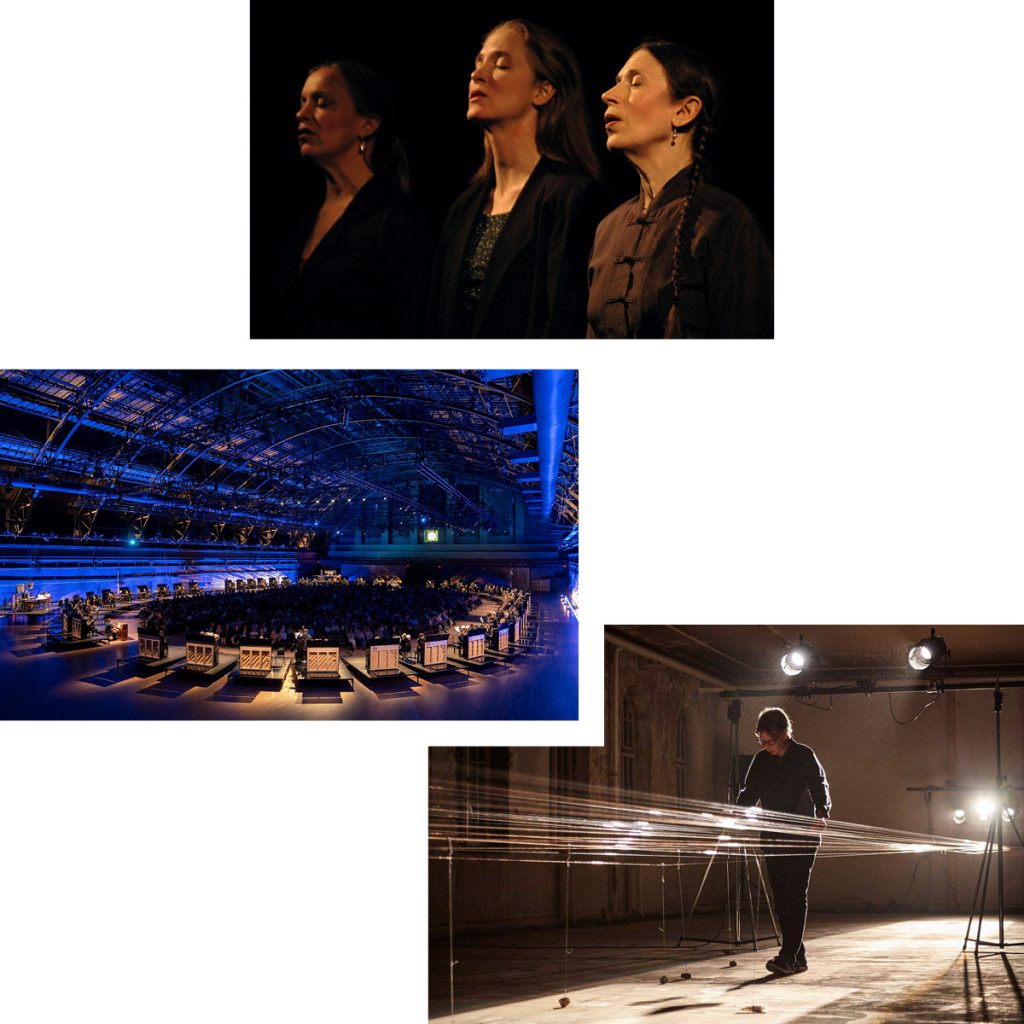
Synthetic vocals. Songs made by algorithm. Neural networks that can clone a voice with 30 seconds of audio. It is clear that we are living through a transformation of what counts as music – with human musicians edged out in the process. It’s this dizzying change that forms the backdrop of this year’s MaerzMusik (20–29.03.2026) which has – surely pointedly – chosen to highlight the human voice for its program of contemporary concerts and performances. The ten-day festival features hymnody aplenty, not least from contemporary classical musician Juliet Fraser. If synthetic voices raise questions about what a voice is, Fraser’s Lament: a ritual of letting go asks what it is for (25.03 20h). The British soprano draws on vocal traditions from Byzantine hymns to Corsican folk song to reconstruct something increasingly rare: communal singing as a ritual. Beyond the festival’s home at the Haus der Berliner Festspiele, a worthwhile program of performances, discourse and dialogue is showing at the Radialsystem center for performing arts. One highlight will surely be Cybernetic Entanglements by composers Ken Ueno and Viola Yip, who have created a wearable instrument that produces varied sounds on account of the duo’s different genders, backgrounds and bodies (27.03 18h). This year’s festival closes with I Am All Ears (29.03 from 15h), a sprawling sound installation that moves the audience through corridors and hidden spaces, with the theater itself becoming, in the organizers’ words, “a listening body.” It reminds us what music and performance can be: communal, physical, embodied.
Text: Benji Haughton / Photos: Ellen Fullman, Daniel Wolcke, John Edward Mason, Luz Soria
MaerzMusik (20–29.03.2026) – for the full program and tickets see the website.
@berlinerfestspiele
