


Cee Cee is a weekly email magazine with hand-selected recommendations for Berlin and beyond. Every now and then you’ll find paid posts as part of the newsletter, marked as “Sponsored Posts”. Subscribe here to receive Cee Cee every Thursday and follow us on Facebook and Instagram for more tips!
page-template-startpages
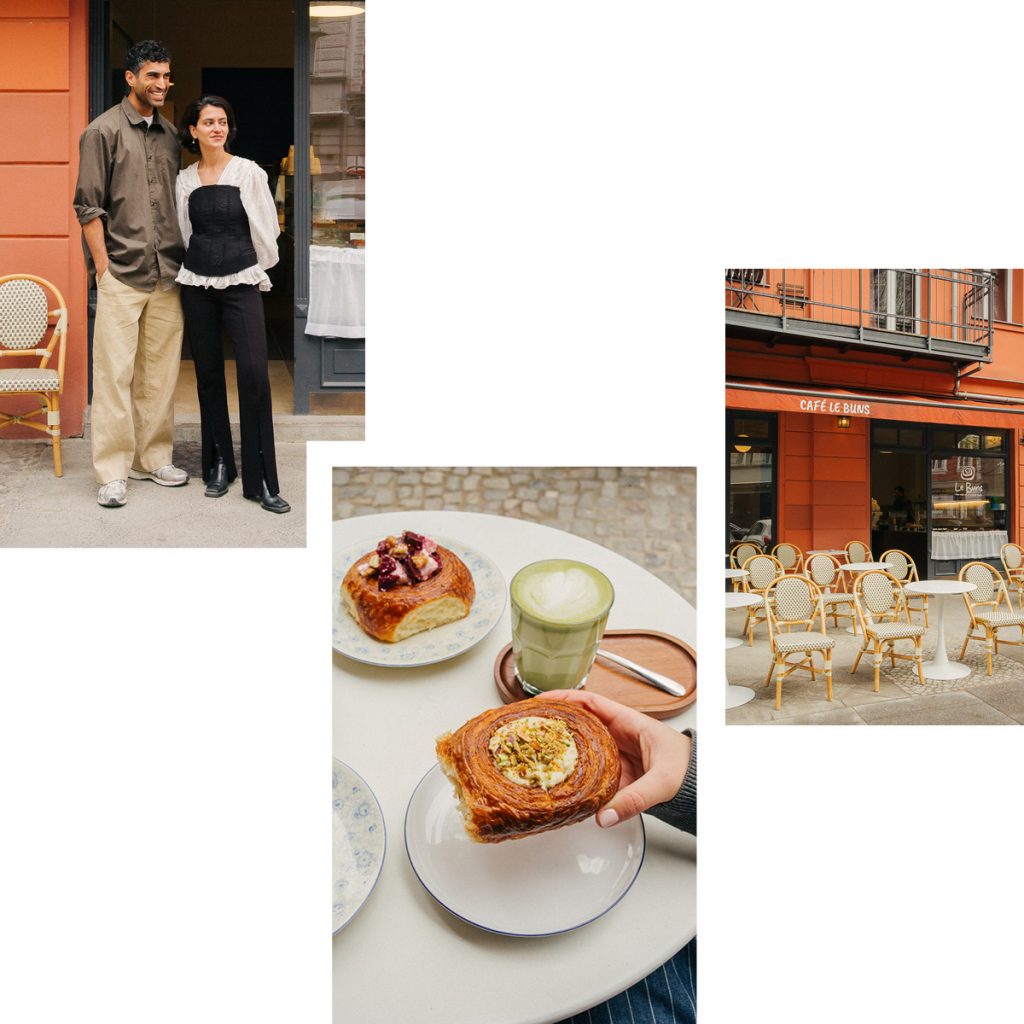
Moving into a new neighborhood in Berlin can be both exciting and intimidating, especially if you’re new to the city. You try to find that one spot you can call your own, somewhere you can walk in and ask for “the usual, please”. That’s where Café Le Buns comes in. Owners Yesim and Azhario’s mutual goal was to create a space where anyone can come, whether for a quick coffee or a slow afternoon with a book and the whole menu to choose from. For them, running a café isn’t about building a clientele. They would rather create a community where everyone feels comfortable. When putting Le Buns together, Yesim describes it like decorating your own apartment: little by little, changing the paintings, rearranging the books, which is exactly what gives it that familiar, lived-in feeling. With a sun-drenched terrace that catches the light for most of the day, Café Le Buns is the kind of place that’s impossible to walk past without stopping in. As for the menu, the Parisian-inspired concept offers a variety of sweet and savory rolls, made from flaky, buttery croissant dough. We also tried the milktart, inspired by Azhario’s South African childhood favorite, somewhere between custard and German classic Milchreis mit Zimt und Zucker. The pistachio roll, flaky on the outside, soft inside, comes with just enough sweetness from the cream. The cheese and jalapeño toastie didn’t last long on our plates, and the seasonal Summer Beet bun, with beetroot, feta and walnut, was fresh and crunchy. The buttery buns aren’t vegan, but there’s a small selection of vegan cakes waiting for you. So many bites to try, and if you live in the area, you’ll find a new spot to hang here.
Text: Stefania Basano / Photos: Sophie Doering
Café Le Buns, Sredzkistr.63, 10405 Berlin–Prenzlauer Berg; map
@lebuns.berlin

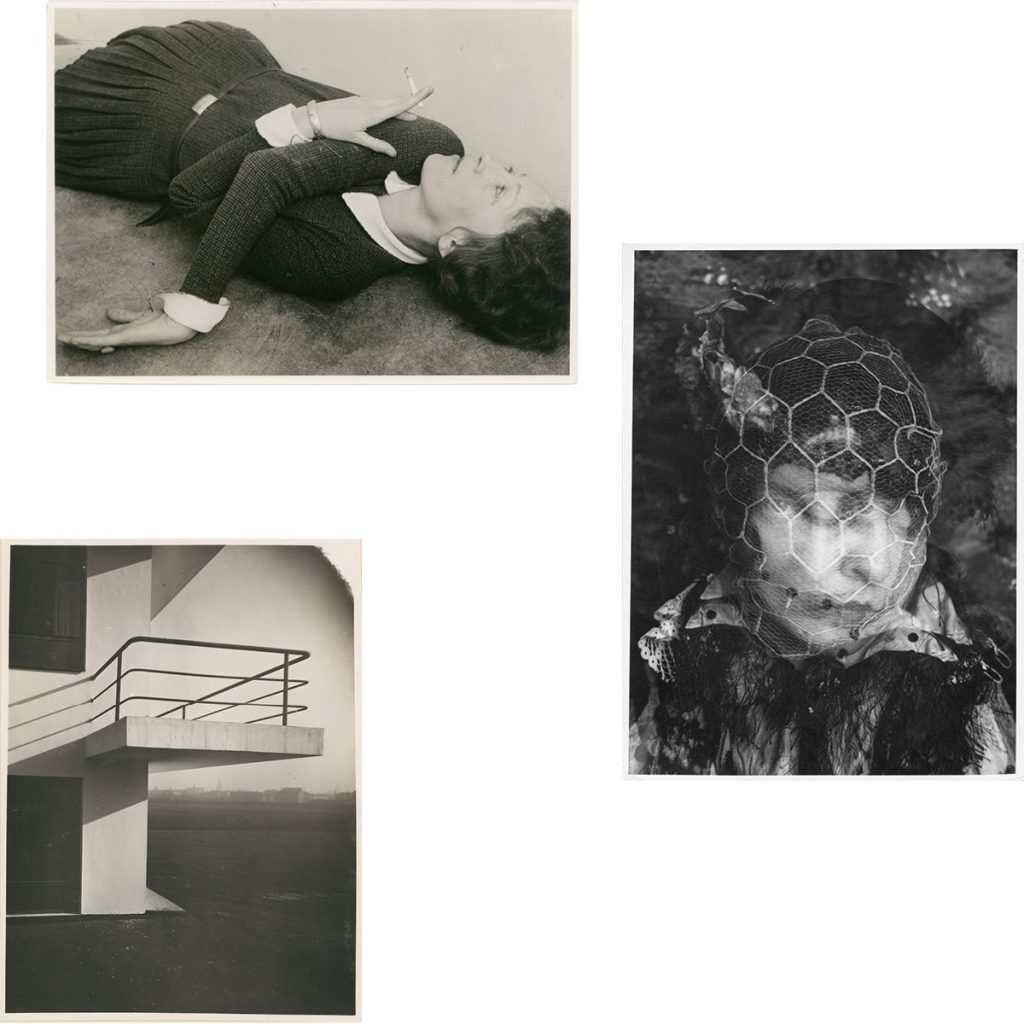
There were quite a few women at and around the Bauhaus. And in recent years, interest in their work has steadily grown. One persistent myth remains, however: the idea that women at the Bauhaus were confined to the textile workshops. This simplification ignores the fact that women worked across different departments, studying architecture, painting, design, and photography. To push back against that, the Bauhaus-Archiv / Museum für Gestaltung has developed an exhibition that celebrates the women of the Bauhaus through its women photographers. Tonight, New Woman, New Vision. Women Photographers of the Bauhaus at the Museum für Fotografie. The first exhibition under the new director of the Bauhaus-Archiv, Brigitte Franzen, brings together around 300 photographs from the collection, some of whose subjects are famous even if their makers are far less so. On view at the Museum für Fotografie as part of the Kunstbibliothek of the Staatliche Museen zu Berlin, the exhibition explores questions of belonging, participation, and why we still know so little about these women. At the same time, it challenges familiar assumptions about the Bauhaus and its women artists, bringing figures back into view who were long forgotten or overlooked.
Alongside the many women photographers on view, the exhibition includes works by women artists from the Institute of Design in Chicago, the Bauhaus’s successor institution in the United States. In addition, three contemporary artists, Kalinka Gieseler, Caroline Kynast and Sinta Werner, were invited to place their work in dialogue with the historical material on show. Students from the Nelson Mandela School also contributed audio descriptions for selected works, which can be accessed via QR code. A broad accompanying program will run throughout the exhibition. It’s a look back that does less to supplement than to correct and, above all, to celebrate.
Text: Inga Krumme / Credit: Gertrud Arndt, VG Bild-Kunst, Bonn 2026; Grit Kallin-Fischer, Bauhaus-Archiv Berlin; Lucia Moholy, Bauhaus-Archiv Berlin, VG Bild-Kunst, Bonn 2026
Museum für Fotografie, Jebensstr.2, 10623 Berlin–Charlottenburg; map
New Woman, New Vision. Women Photographers of the Bauhaus, until 04.10.2026.
@bauhaus_archiv
@staatlichemuseenzuberlin
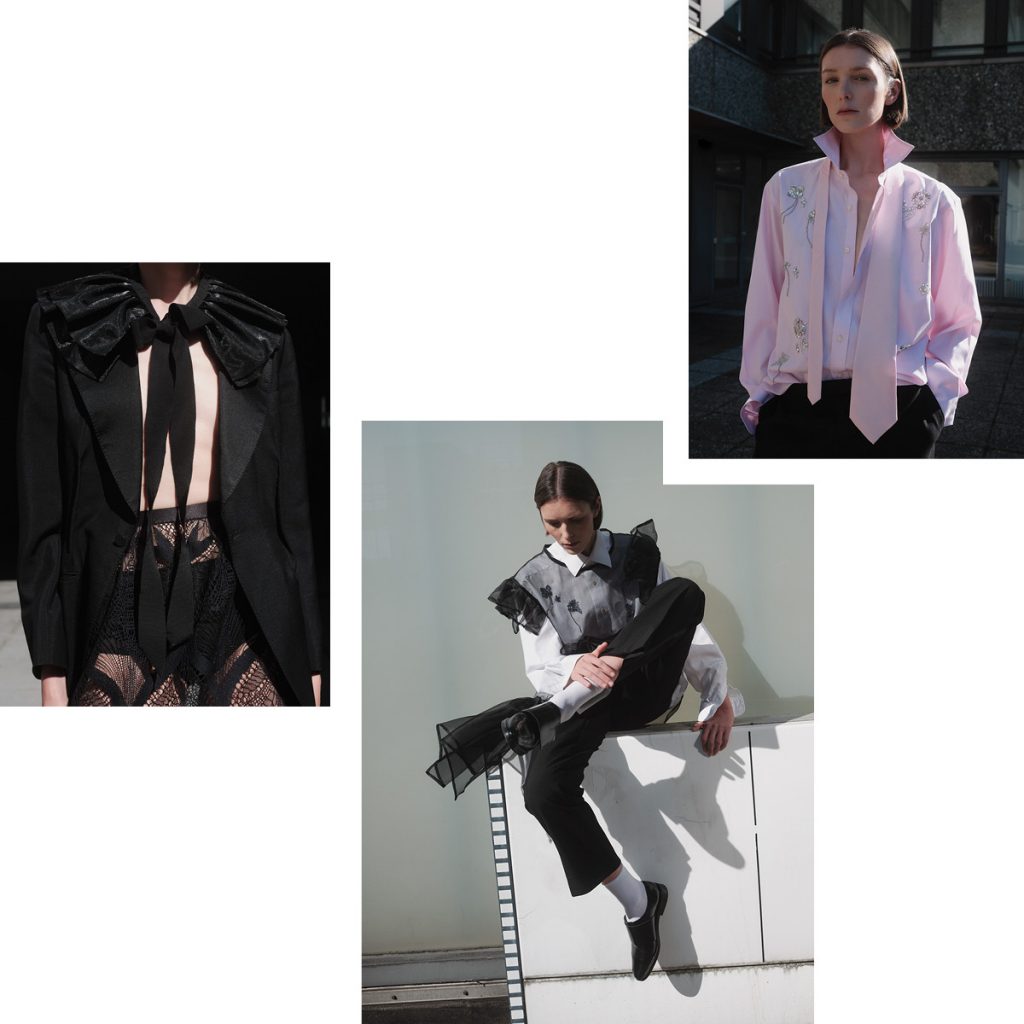
A vintage shirt does not have to sparkle. But it could, if it has passed through the hands of Anne Bernecker. Pre-loved becomes a statement piece with slow couture, made in Berlin. I first met Anne Bernecker when she was still living in London. We swapped apartments once, briefly, over the holidays. We have found each other again in Berlin, where she is now based and designs under her own name. Our conversations are always a kind of exchange in themselves, because Anne knows this industry inside out. After training as a tailor, she went on to study at Central Saint Martins in London, where she was taught by, among others, Hussein Chalayan, who now teaches at HTW Berlin. What followed were years at international fashion houses, including Versace, and a growing understanding of how the industry works and its limits. In response, she founded her label not as a retreat from fashion, but as a considered position within it.
Her pieces are created in Berlin and don’t follow a conventional production cycle. The starting point is always a vintage find, often menswear: blazers, shirts, jackets that have already lived a life. Through intricate hand embroidery, she gives them a new language. Masculine cuts meet delicate couture craftsmanship and become something unexpectedly elegant in the process. The embroidery is produced partly in her Berlin atelier and partly in Mumbai, where she works with one of the city’s leading embroidery companies, a business that is around 150 years old and now run by its sixth-generation embroidery director. The company is also part of the Uthan NGO program, which supports embroidery workers in India. Each finished piece is one of a kind. Slow fashion, or more precisely, slow couture. Personalities such as Iris Berben wear her designs both privately and in editorial contexts, which makes perfect sense: these are pieces that can elevate an everyday look just as easily as they hold their own on a larger stage. Alongside her collection, Anne Bernecker works as a trend consultant, advising companies on cultural and consumer shifts. She sees what is coming and what will last. Her own pieces fall firmly into the second category.
Text: Nina Trippel / Photos: Ansgar Sollmann
Anne Bernecker
@anne_bernecker
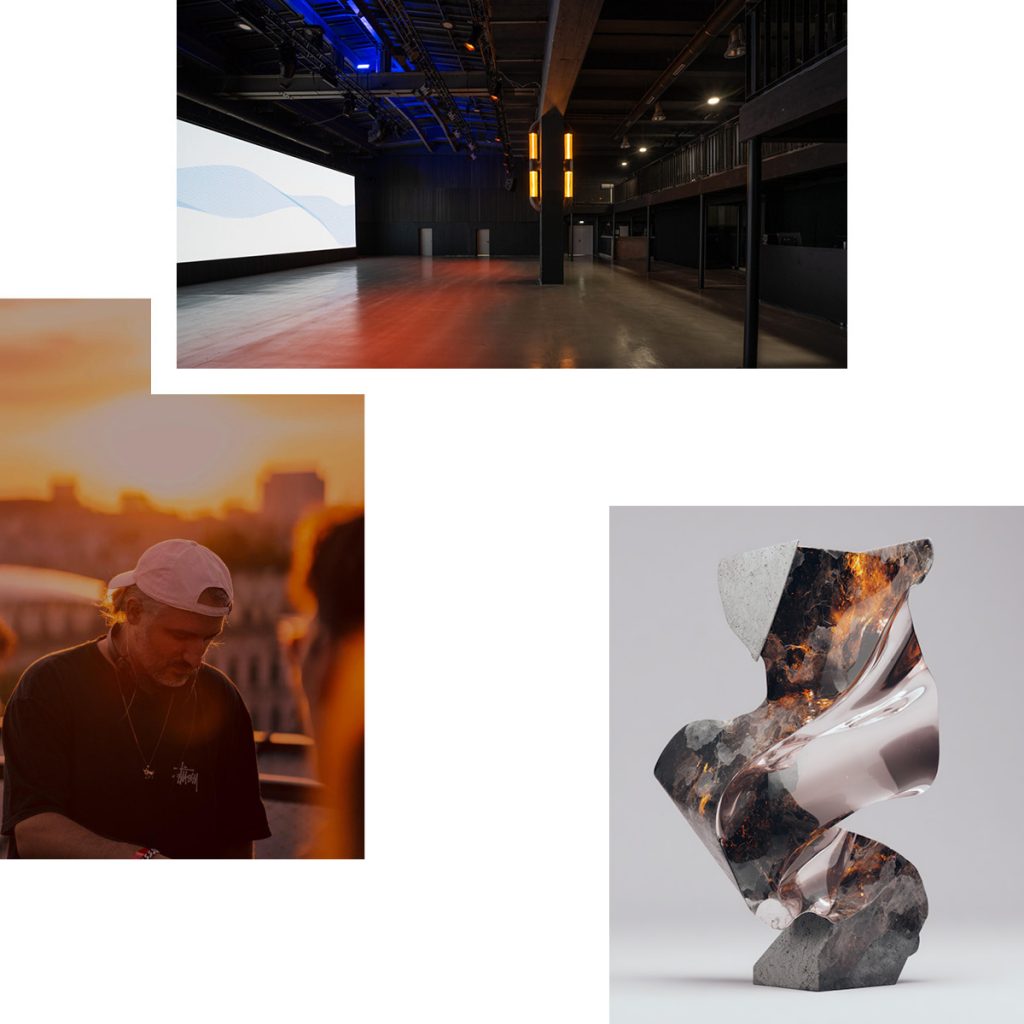
Bass you can feel in your bones, beams of lights that wash over you and a crowd of dancers fusing into one rippling mass. Few things are as hypnotic and entrancing as being on a dancefloor with people all locked into the same rhythm. But add visuals on top of the music and things get more gripping and glassy-eyed still. If that sounds like your world, you might want to check out AIxploration 2.0, a night of electronic music and digital art at Alte Münze next Thursday (23.04.2026). Innovative animations – from googly-eyed magenta monsters to darkly apocalyptic sculptures – will be projected onto the 90 square meter screen that fills the Prägehalle at the former coin factory, where blank discs were once stamped into Deutschmarks. Music-wise, house selections will be supplied by REMEN ‘til late, allowing you to linger in front of retina-grabbing visuals from the likes of Hati Hati Mas,Philipp Ries and AVHS. A night spent two-stepping amid the brick and metal of the old money factory will make you realize how well-matched dance music and digital sculpture really are. Two sides of the same coin, if you will.
Text: Benji Haughton / Credit: Andreas Babenko / Photos: Florian Kroll, REMEN
Alte Münze, Molkenmarkt 31, 10179 Berlin–Mitte; map
Free tickets for AIxploration 2.0 (23.04.2026 20–3h) are available here.
Enabled by Lenovo @lenovode – curated and music by REMEN @remen_sumari.
@lenovode
@remen_sumari
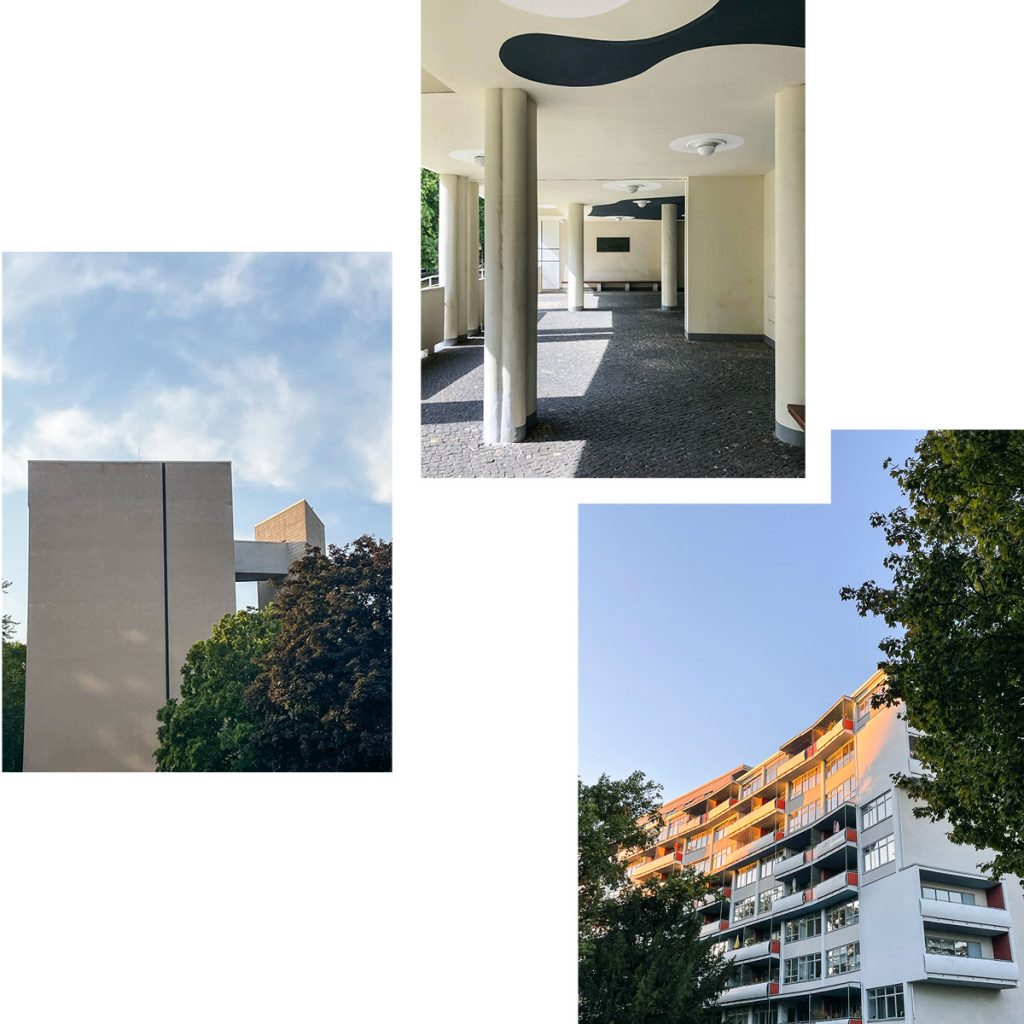
The Berlin district of Hansaviertel and I go way back. As a landscape architect, I know the area between the Großer Tiergarten and the Spree inside out, through every season. At least, I thought I already knew everything. Tours by Grotto, with architect Maria Helena (in English) or curator and café owner Leonie Herweg (in German) — an expert who lives and works there — proved me wrong. Before the Hansaviertel became what it is today, it was one of Berlin’s most sought-after bourgeois addresses. The cityscape at the time featured elegant boulevards, richly decorated façades and grand villas, and was home to historic sites such as Rosa Luxemburg’s first Berlin apartment and Käthe Kollwitz’s studio. It was also home to one of Berlin’s largest Jewish communities and two synagogues in pre-war Berlin. Three remaining historic buildings and the original street names still recall those past eras. After the Second World War, the area became the site of the 1957 International Building Exhibition, a model project for modern housing. The Interbau 1957 invited Walter Gropius, Oscar Niemeyer, Alvar Aalto, Werner Düttmann and around fifty visionary architects to design a city of tomorrow, positioned as a direct ideological counter-model to the monumental Karl-Marx-Allee (then Stalinallee), which was built in the eastern part of the city in 1951.
The Hansaviertel is composed of a range of architectural typologies: slab and point high-rises, linear housing blocks, special-purpose buildings and bungalows. Herta Hammerbacher, the only woman among the participants, designed the Hansaplatz — the heart of the district. We stroll past architectural jewels such as the Akademie der Künste, known not only for its striking façade but also as a hub for art and culture. Further west, set within the dense greenery of the Tiergarten, stand my favorite buildings: the Oscar Niemeyer House, the Eternithaus, the Alvar Aalto House and the Swedish House with the new Café Tiergarten, which Leonie has been running with her business partners since 2025. In the sunny garden of the Hansabibliothek, we enjoy the calm together with a few scattered readers. It’s the perfect retreat in the middle of the city’s bustle. Walking further west, we pass the bungalows by Sep Ruf and Arne Jacobsen. From the ruins emerged one of Berlin’s boldest urban experiments. The use of new materials, split-levels, flexible floor plans and generous glass façades defines the new residential buildings. The Hansaviertel remains a built utopia, and at the same time, a place where history resonates in every sightline. Anyone joining the tour with Leonie and Maria and paying close attention will discover, between concrete and greenery, the layered history of a city that is constantly reinventing itself.
Text: Milena Kalojanov / Photos: Grotto
Meeting point: Hansabibliothek, Altonaer Str.15, 10557 Berlin–Hansaviertel; map
Book the Hansaviertel tour here.
@grotto.berlin
 ANMELDUNG