
Cee Cee Creative Newsletter Book Neighborhood Map Lessons
Stadtplan
Information
home temp
loop temp
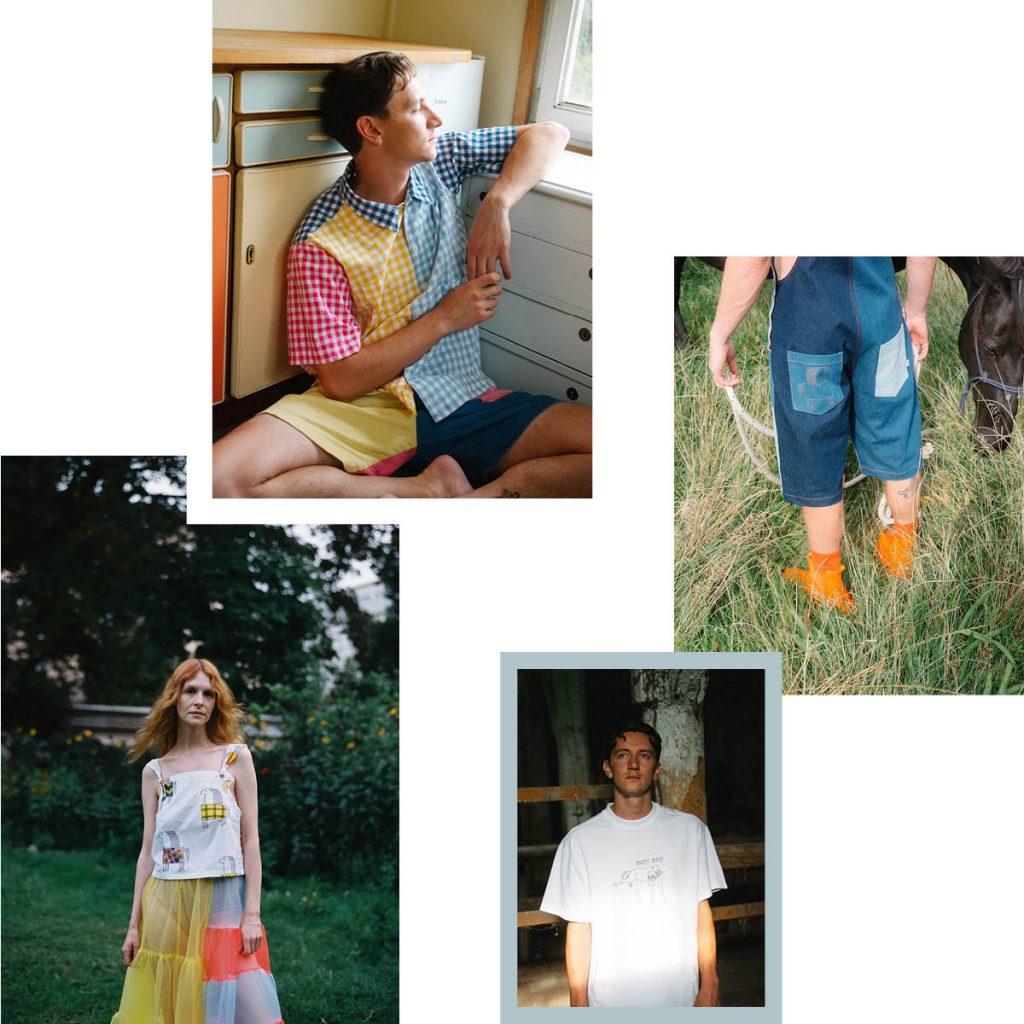
SINCE THE FIRST SUIT I’M HOOKED: FASHION FOR SALTY WALRUS PEOPLE — RECOMMENDED BY DAVE MURRIN

SINCE THE FIRST SUIT I’M HOOKED: FASHION FOR SALTY WALRUS PEOPLE — RECOMMENDED BY DAVE MURRIN

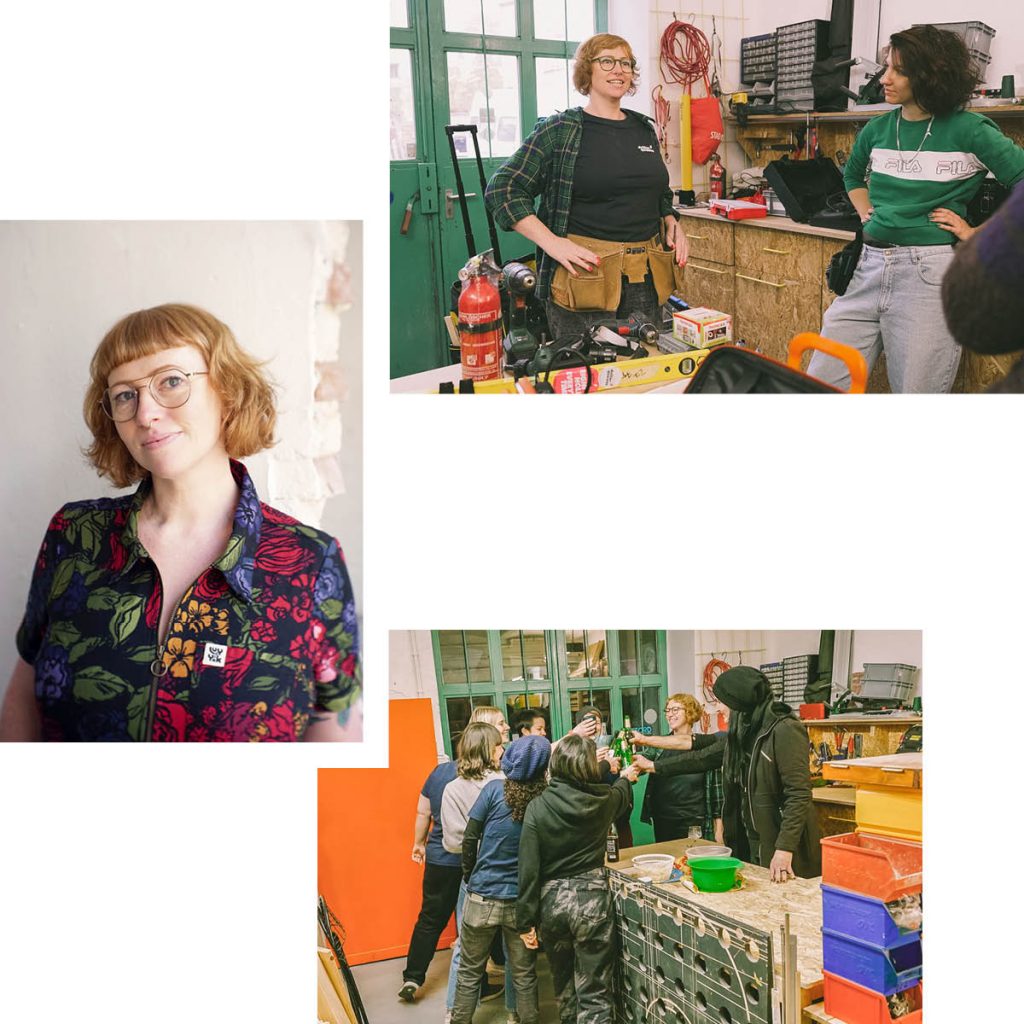
Janne Haland is an independent fashion studio with Danish and German roots based in Kreuzkölln. With almost a decade of experience, Janne Haland designs fabric patterns and illustrations — combining pop culture with traditional costume design. Improvising with small amounts of deadstock fabric she creates one-of-a-kind pieces. Her focuses are crafts and intuitive problem-solving for the human body. You won’t find gender or age limitations here. All those who enjoy color and appreciate quality craftsmanship are invited to sit down with Janne and bounce ideas off her to create a finished product that is unique to you. The quality and attention to detail Janne channels into each item is something I’ve never experienced before. Every piece tells a different and fantastic story that allows the wearer to become a part of Janne Haland’s unique world. It’s what keeps me coming back for more. Visit the online shop or knock on her studio door to travel down the rabbit hole and into the remarkable world of Janne Haland.

Dave Murrin is a DJ/producer from Dublin and co-owner of record label “Púca Sounds”. He also serves you (with love and passion) natural wines and the best negronis in town at Bar Sway.

Text: Dave Murrin / Photos: Gavin Kenny, Nele Haland, Toby Sheppard

Studio Janne Haland, Nansenstr.17, 12047, Berlin–Neukölln; map

@janne_haland_fashion

cee_cee_logo
DRILLER QUEENS: THE INCLUSIVE HANDYMAN PLATFORM FOR YOUR HOME

DRILLER QUEENS: THE INCLUSIVE HANDYMAN PLATFORM FOR YOUR HOME

In theory, you can do it yourself. At the very least, you can watch a “how to” YouTube video and figure it out. But putting that theory into practice is a different story. What do you do when the hole is too big, the dowel doesn’t hold and you don’t know for sure where the power lines run? Then you need to hire a professional craftsman for the job, right? Not necessarily! Sometimes all you need is someone handy who has taught themselves and mastered the trade. Someone who wants to lend a hand and share their knowledge (and tools) without the mansplaining. It’s a good thing the Driller Queensexist: the first inclusive handyperson platform that’s open to all genders and consists of a team in which over 80% identify as female, trans or non-binary. But that doesn’t mean cis men aren’t welcome, on the contrary. The Driller Queens’ mission is to uphold inclusion because excluding people based on their gender is a huge problem in the industry and one of the reasons they started in the first place. Driller Queens are here to help you so that mirror hangs straight, the lamp lights up, the curtains stay in place and the chest of drawers remains safely screwed to the wall.

In other words, the people who come to your home via Driller Queens have know-how and tools, but also soft skills such as communication and respect. So you can feel comfortable and safe in your home. This platform does all that and they do it with a sense of humor. I recommend following them directly on Instagram so you never forget this wonderful service exists if you ever need it. Special services are also offered, such as cat solutions (cat nets in front of your windows). And of course, there are things the Driller Queens don’t offer, such as removing floor coverings. On the website, you can get an overview by reading their service list. Now you can finally fix things in your home that have been wonky or broken for far too long. At least that’s what I’m doing, and I’m already looking forward to ticking off the boxes one by one.

Text: Nina Trippel, Photos: Arte, Driller Queens

Driller Queens

@drillerqueens

cee_cee_logo
RADICAL POLITICS OF THE BODY: VALIE EXPORT AT C/O BERLIN

RADICAL POLITICS OF THE BODY: VALIE EXPORT AT C/O BERLIN

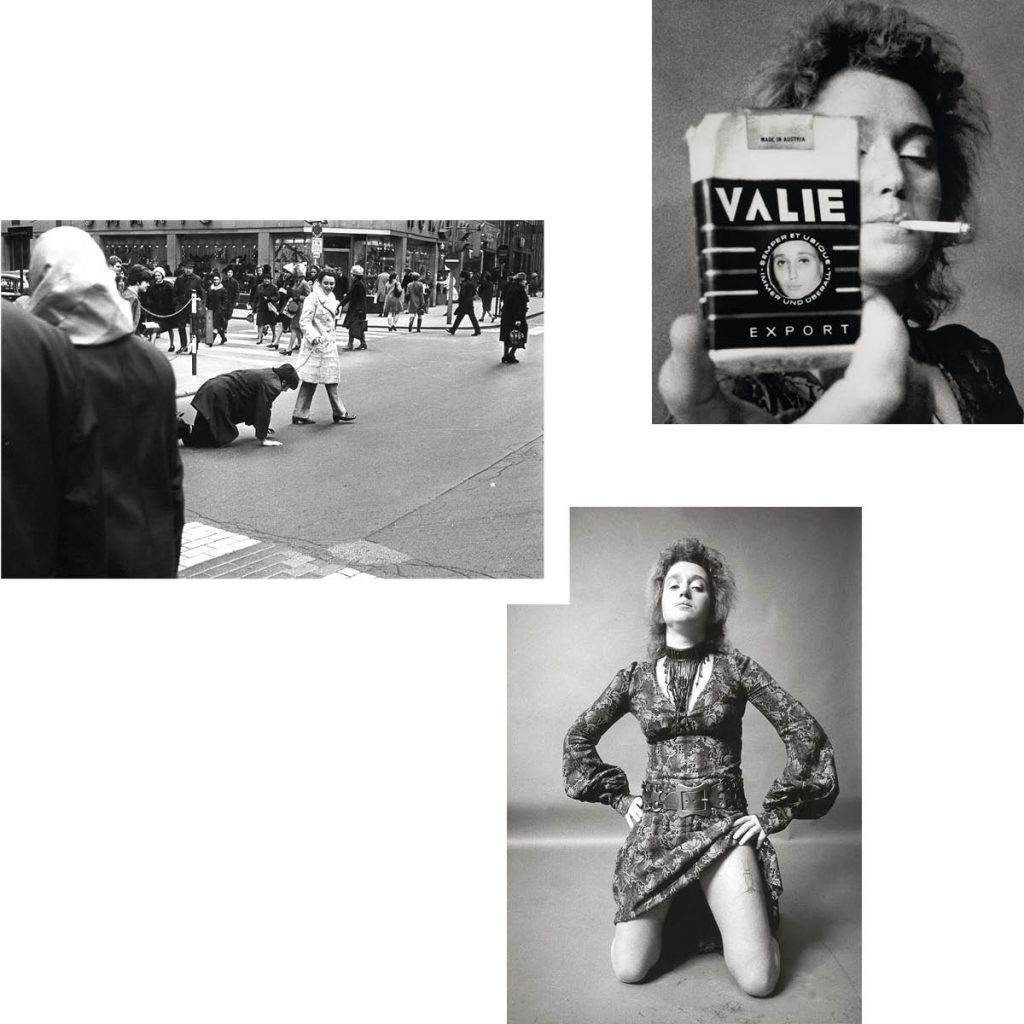
The year is 1968. A woman leads a leashed man on all fours through the center of Vienna. The woman is the media artist Valie Export and the man is her colleague Peter Weibel, who she worked with frequently in the sixties. The message of her art is as simple as it is effective. Export embodies (with a wink) the woman liberated from patriarchy, reversing gender roles to an extreme. She had already laid the foundation for this work a year earlier when she dropped her real name and called herself “Valie Export”, written in capital letters and inspired by a cigarette brand. She no longer wished to bear a man’s surname. Instead, she adopted a new, chosen identity. C/O Berlin is now dedicating a comprehensive retrospective to the 83-year-old Austrian, which traces how Export challenged not only social norms but the way we perceive ourselves.

It features one of her best-known works, Tapp- und Tastkino. In a pedestrian zone, she strapped a cardboard box in front of her naked upper body and asked passers-by to touch her breasts (the screen) for a few seconds while looking her in the eye. Export wanted to expand the concept of film, but above all she wanted to radically criticize the male gaze on the female body. This debate runs through much of her work — including her Body Sign Action campaign in 1970, when she had a garter belt tattooed. As with many female artists of her generation, her own body remained her most important means of expression over the years. Sometimes she presented it as a projection screen for male pleasure, sometimes as a recipient of pain. Her photo series Body Configurations proves that her work always questions what place a woman can occupy in society. In contrast to some of her more radical work, these black-and-white photographs appear restrained at first glance. But there is a quiet power in the scenes — Export reclaims public space by lying prone on the street or nestling against buildings, steps and architecture. No one can argue Valie Export’s place in art history. As this exhibition at C/O demonstrates, she is one of the most important contemporary artists.

Text: Laura Storfner / Credits: Body Sign B, 1970, The Albertina Museum, Vienna © Valie Export, VG Bild-Kunst, Bonn 2023; Photo: Gertraud Wolfschwenger; Valie Export – Smart Export, Self-Portrait, 1970, The Albertina Museum, Vienna © Valie Export, VG Bild-Kunst, Bonn 2023, Photo: Gertraud Wolfschwenger; Aus der Mappe der Hundigkeit, 1968, gemeinsam mit Peter Weibel, Courtesy Galerie Thaddaeus Ropac © Valie Export, VG Bild-Kunst, Bonn 2023; Photo: Joseph Tandl

C/O Berlin Amerika Haus, Hardenbergstr.22–24, 10623 Berlin-Charlottenburg; map

Valie Export: Retrospective, until 22.05.24.
Daily 11–20h.

@coberlin

cee_cee_logo
CRAFTSMANSHIP, ART AND DESIGN COMBINED: STUDIO JUMI

CRAFTSMANSHIP, ART AND DESIGN COMBINED: STUDIO JUMI

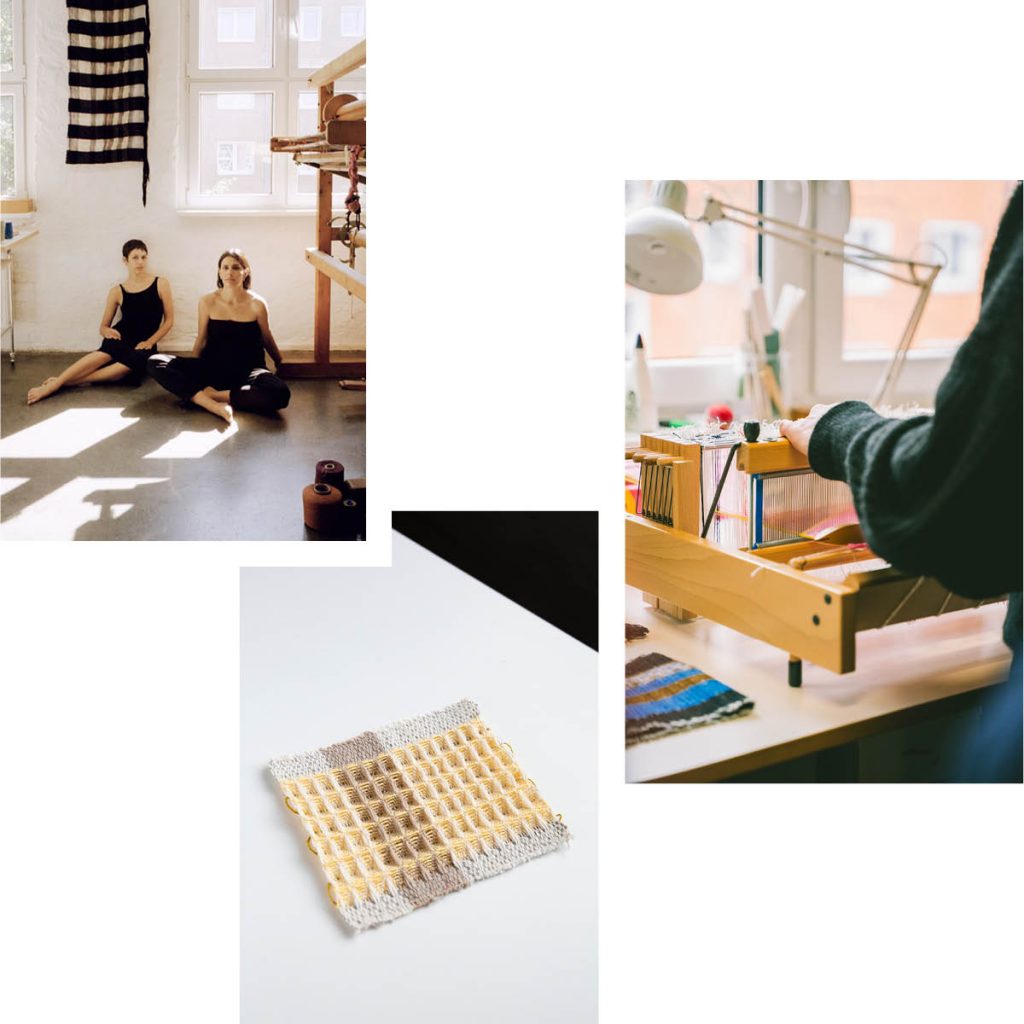
Strict lines and grids combined with soft materials, in playful, almost meditative rhythms — no one else interprets hand weaving as beautifully and poetically as Studio Jumi. Jumi is Julia Buntzel and Miriam Rose Gronwald – the artist duo joined forces in 2022 to work together at the intersection of art, craft and design, and to campaign for the preservation of traditional hand weaving. But they even go one step further. Breaking away from conventions without breaking sacred traditions, Jumi shows how weaving can be a fine art. Inspired by the Bauhaus and its textile workshops — where artists such as Anni Albers, Gunta Stölzl and Otti Berger combined the craft of hand weaving with the language of modern art — Julia and Miriam draw on their knowledge while simultaneously searching for new possibilities and pushing the boundaries of weaving by dissolving and condensing woven fabric structures. In doing so, they ultimately create unique works of art, fragments, forms and materials. Jumi aims to keep the history of weaving alive with commissioned works, site-specific pieces and small limited editions (here too, each piece remains unique). They also host regular weaving workshops in their studio.

In the “Sketching with Yarn” workshop, you spend an afternoon weaving different materials, textures and colors on a four-shaft loom to create your very own textile. In the “Napkins! The Art of Handcrafted Table Weaves” workshop, you can even make your own set of (up to four) table napkins over a weekend. It feels magical to go home with two of your own textile patterns without having any prior weaving knowledge. In the end, there’s only one thing left to say: thank you. Thank you for making textile art so exciting and accessible, thank you for showing us how things can be reinterpreted without sacrificing tradition, and thank you, Julia and Miriam, for ensuring such a beautiful craft will not be forgotten.

Text: Robyn Steffen / Photos: Chiara Lüghausen, Jean-Paul Pastor Guzmán, Robyn Steffen

Studio Jumi, Seelenbinderstr.141, 12555 Berlin–Köpenick; map
Find out more about the next workshops here

@studio.jumi

cee_cee_logo
HOT, HOTTER, HOU TANG – SHARING HOTPOT ON THE MOST HISTORIC PROMENADE IN THE WEST

HOT, HOTTER, HOU TANG – SHARING HOTPOT ON THE MOST HISTORIC PROMENADE IN THE WEST

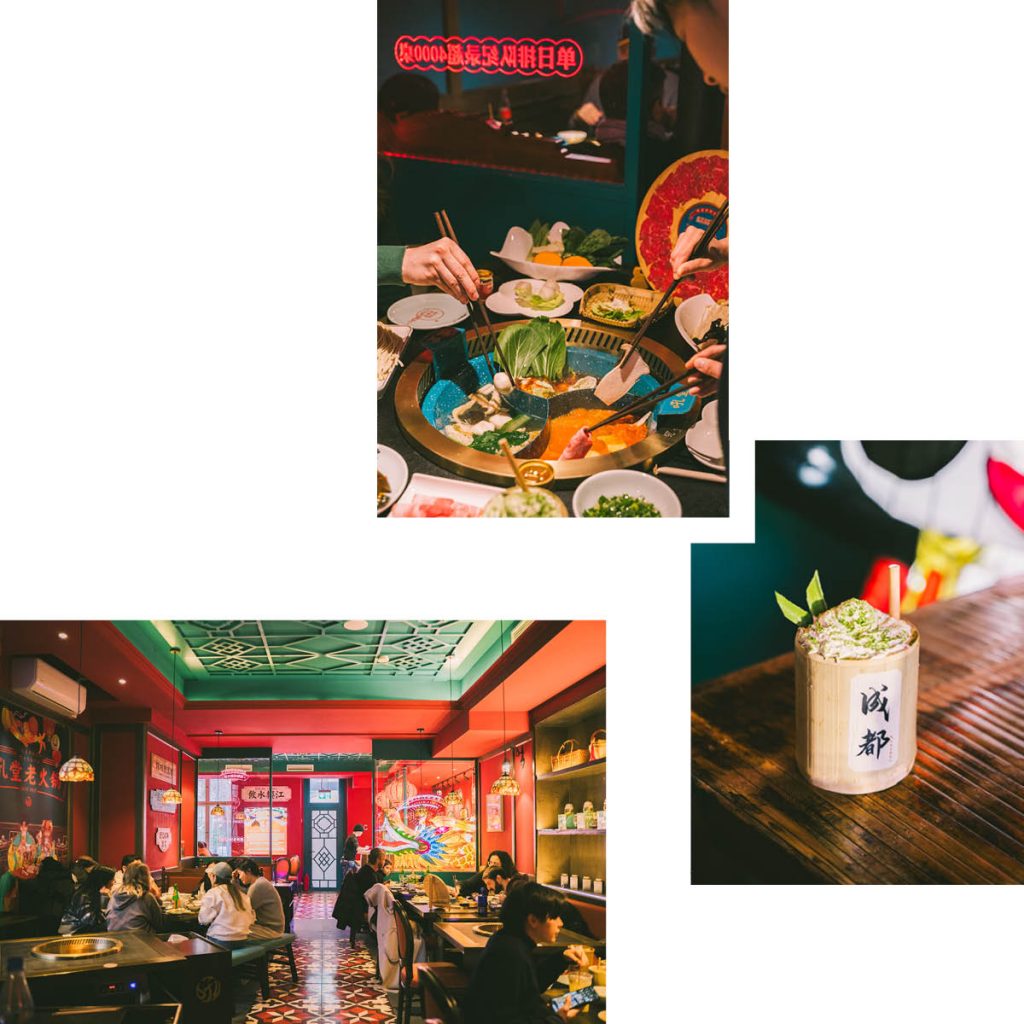
Between luxury boutiques and rows of hotels, historic shopping centers and international restaurants, there has been one more stop on my Ku’damm list since the end of last year (2023): Hou Tang. Hotpot à la Chengdu is served here – a fire pot that is a true classic in East Asia, especially in winter. The restaurant’s interior is reminiscent of Asia’s tea rooms and bustling marketplaces. Take the tiled corridor that you share with waiters and their serving trolleys is narrow for example. Traditional handicrafts such as bamboo weaving and Guo Hua paintings, red lanterns and neon lettering adorn the room creating an exciting atmosphere. Hou Tang is practically straight out of China, and people have long been queuing up to get a table. What makes it so popular? There are many reasons but above all is that everyone can enjoy a shared hotpot exactly as they like it. Here you don’t have to choose just one broth, the hotpot can be subdivided as you wish with the help of small partitions, saving you the headache of deciding who in your group likes it spicy (and who likes it over-spicy), who only eats vegan food or who has allergies. We end up with three different broths in the pot: the spicy version with Szechuan pepper, dried chillies, star anise, cloves and cumin, where you can choose the level of spiciness yourself; a pork bone broth, and a vegan tomato-based version.

And then the real choices begin, because the list of ingredients is long: beef, lamb, pork, shrimps, meatballs, noodles, quail eggs, mushrooms, pak choi, tofu skin – you’ll find all the classics, but I’ve also discovered a lot of new things here too. You can also put your own sauces together at a help-yourself counter: soy, sesame oil, oyster sauce, fermented tofu paste, spring onions, garlic and ginger – you can mix everything to your liking. If it all sounds too overwhelming, there is also a guide to traditional sauce mixtures hanging above the counter. Drinks and desserts are also catered for. The homemade lemonade adds balance to the spicy food and the jasmine milk tea is so delectable it’s almost dessert (but only almost). Don’t miss out on the desserts because the shaved ice is the perfect way to cool down after a hot firepot. Every street has an end, but Ku’damm feels endless – Hou Tang brings the Chengdu of the 1930s to the boulevard of Berlin’s West – and with it on your list, you’ll discover Ku’damm’s final destination.

Text & Photos: Robyn Steffen

Hou Tang, Kurfürstendamm 175, 10707 Berlin–Wilmersdorf; map
Mon–Sun 12–23h

@houtang_hotpot

cee_cee_logo