
Cee Cee Creative Newsletter Book Neighborhood Map Lessons
Stadtplan
Information
archive temp
loop temp
BRINGING MINDFULNESS TO THE PARTY — A NEW GENERATION OF NIGHTLIFE AT INGWER

BRINGING MINDFULNESS TO THE PARTY — A NEW GENERATION OF NIGHTLIFE AT INGWER

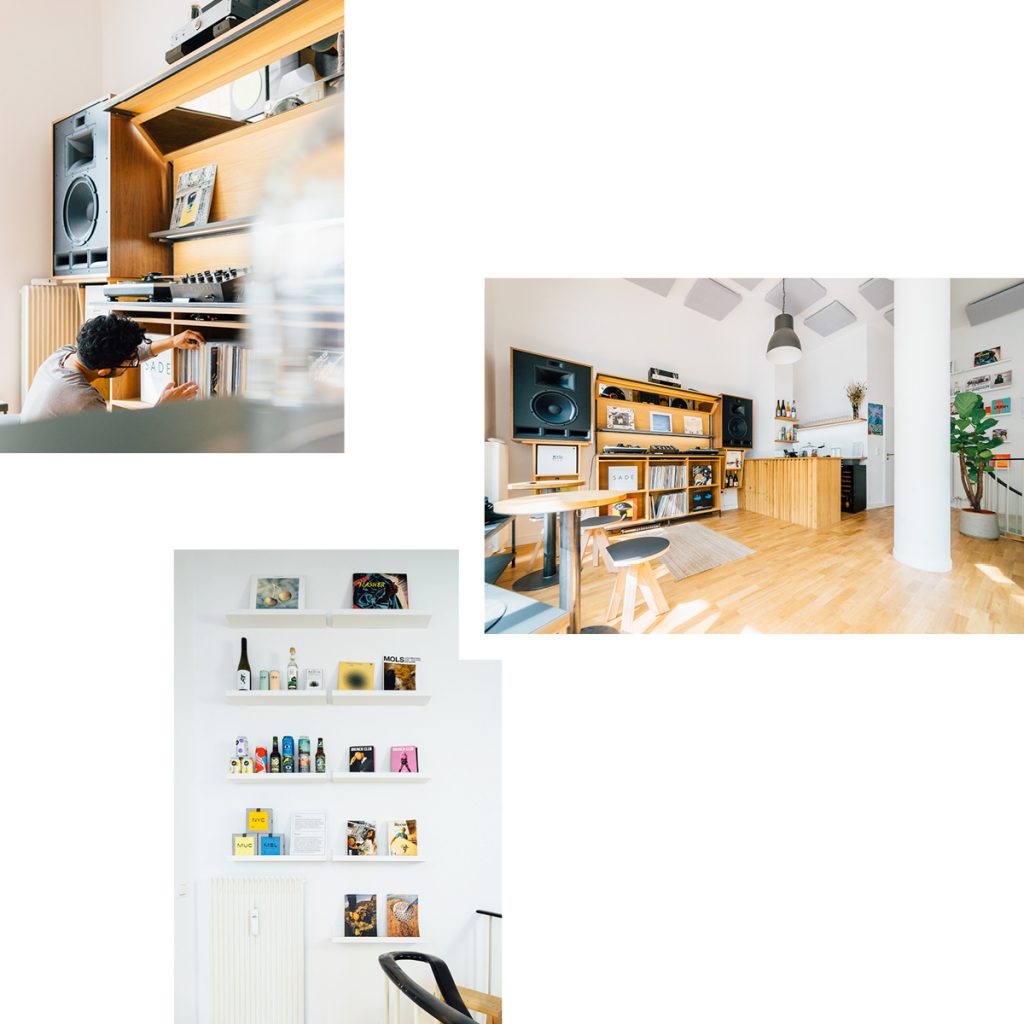
There’s a shift in the night air, aligning perfectly with the changing seasons. Berlin is known for its hardcore, bustling nightlife, but as the cultural landscape is ever evolving, we look to places like Ingwer for a space that reflects this shift. The community-driven cafe is situated in the heart of Kreuzberg, in a protected heritage building. It takes on a few personalities, with a refined, alternative approach to the late-night scene. It caters to those who love DJ sets, plant-based foods, coffee, matcha-drinks and natural wine. The intention behind founders Tommy Four Seven and Stefanie Witt is mindfulness, fluidity, and a good time. From the moment you enter the space, a calmness sweeps over you. The minimalist design, neutral tones, smooth tunes, and friendly staff make it easy to leave all your troubles at the door. The entire space is designed to calm your senses and delight your taste buds. Every detail is carefully thought out, from their locally-sourced products to the ingredients they cook with — everything is made in-house. They aim to welcome the community, creatives, and gastronomy lovers to get together and enjoy a fun evening.

With natural wines from Sublime Wines, Ingwer offers crowd favorites alongside rotating, seasonal wines. They also deliver balanced, creamy coffee with plant-based milk. And if that doesn’t tickle your fancy, you can always go for a strawberry matcha or their zero alcohol options. To satiate your cravings, sweet and savoury options are available. Our favorites are the cashew mozzarella focaccia and pear and almond cake paired with the sparkling melon ginger and iced vanilla sea salt latte. Ingwer’s core value is to support their guests’ well-being and creativity. They regularly host intimate gatherings with sound meditations, pop-up food events, and DJ sets.

Text & Photos: Ruby Watt

Ingwer, Bürknerstr. 12, 12047 Berlin–Neukölln; map

@ingwer.co

cee_cee_logo
CAFÉ TIERGARTEN — A CLASSIC RENEWED, SURROUNDED BY GREENERY

CAFÉ TIERGARTEN — A CLASSIC RENEWED, SURROUNDED BY GREENERY

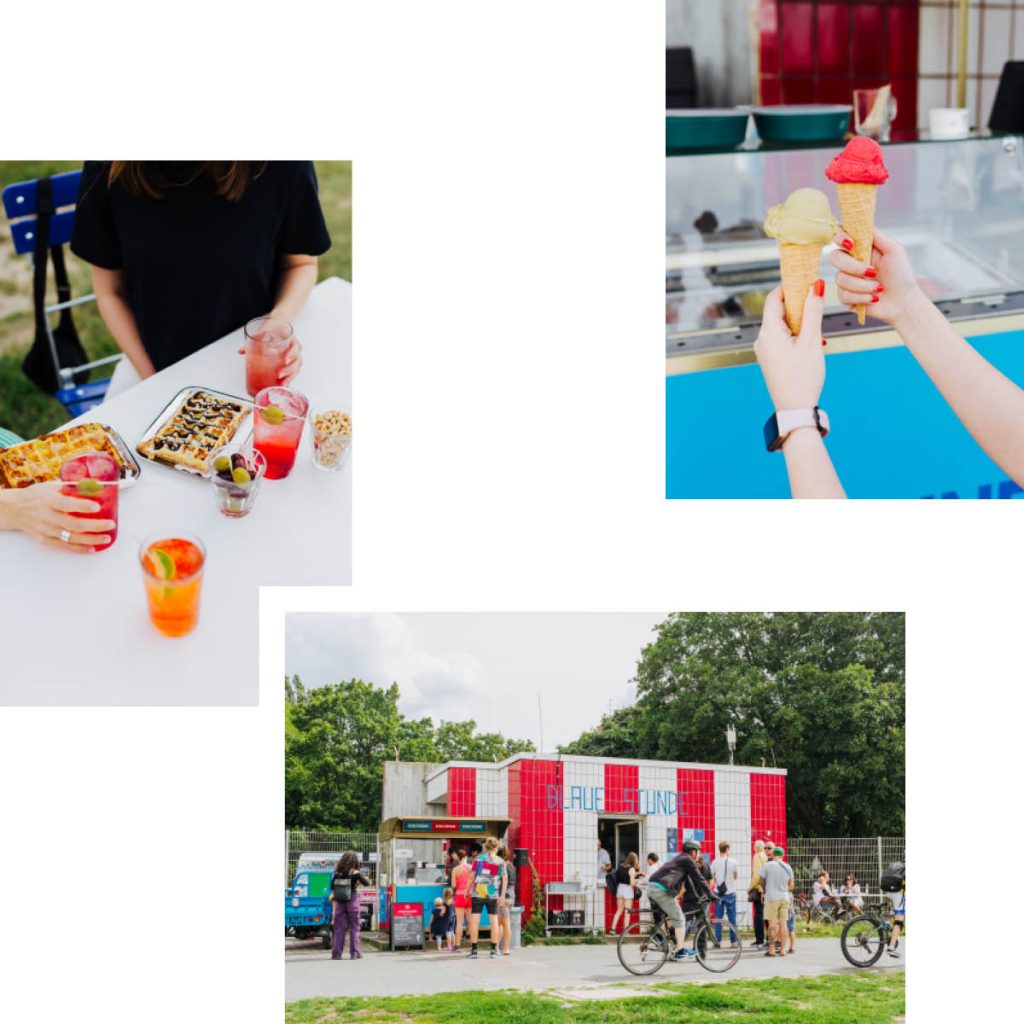
Hansaviertel, here we come. Berlin feels a little different here — in the best possible way. And now that Café Tiergarten has reopened under new management, a visit is all the more worthwhile. Nestled between trees and lush greenery stands the Sweden House by Sten Samuelson and Fritz Jaenecke. The striking blue, red and white slab, together with the residential building (designed by Oscar Niemeyer), forms the architectural gateway to the neighborhood, built in 1957 as part of the International Building Exhibition “The City of Tomorrow”. And it’s right here, on the ground floor of the Sweden House, that Café Tiergarten has called home since 1957. The rooms hold Berlin’s history. Originally used by the industrial bakery Wittler ( Europe’s largest bread producer in the 1920s, later closely entangled with the Nazi regime), the space was a coffeehouse for decades before emptying out. In 2024, a “For Rent” sign appeared in the window. The restart is brought to us by a team with a clear vision and strong signature: artist Simon Freund (most recently at Bouche), art director Leonie Herweg (co-founder of the project space Grotto), restaurateur Nicolas Mertens, and Sophie Kretzschmar (a graduate of the Slow Food University in Piedmont). For them, this place had to be brought back to life as an open, modern, and international “neighborhood living room”.

The restoration was a balancing act between preservation and vision. Step by step, the original spaciousness was revealed, and with the support of a conservator, the 1957 color scheme was reconstructed in the light-filled rooms. The furnishings align with a modern-international spirit: vintage Alvar Aalto tables and Eiermann chairs, porcelain lamps from Ifö, and silk lamps by New York designer Nick Poe. The walls feature works by Daniel Moldoveanu, Marcel Broodthaers, Thomas Schütte, and Catharine MacTavish, among others. Out on the generous sun terrace, overlooking the Tiergarten greenery, enjoy a moment of calm right in the middle of the city. Alongside excellent filter coffee, cakes, and tortes, find freshly baked focaccia (every Wednesday), bread, olives, wine, and sage croissants. The program extends beyond food and drink with readings, wine tastings, yoga sessions, and filter coffee classes, like the one happening this Saturday (30.09). To this day, the Hansaviertel remains a unique ensemble and a place filled with international ideas for contemporary living surrounded by nature. And already, Café Tiergarten has once again become what it was always intended to be: a place of gathering, calm, art, and culture. Simple and good. A piece of Berlin history retold.

Text: Milena Kalojanov / Photos: Robyn Steffen

Café Tiergarten, Altonaer Str.3, 10557 Berlin–Tiergarten; map

@cafetiergarten

cee_cee_logo
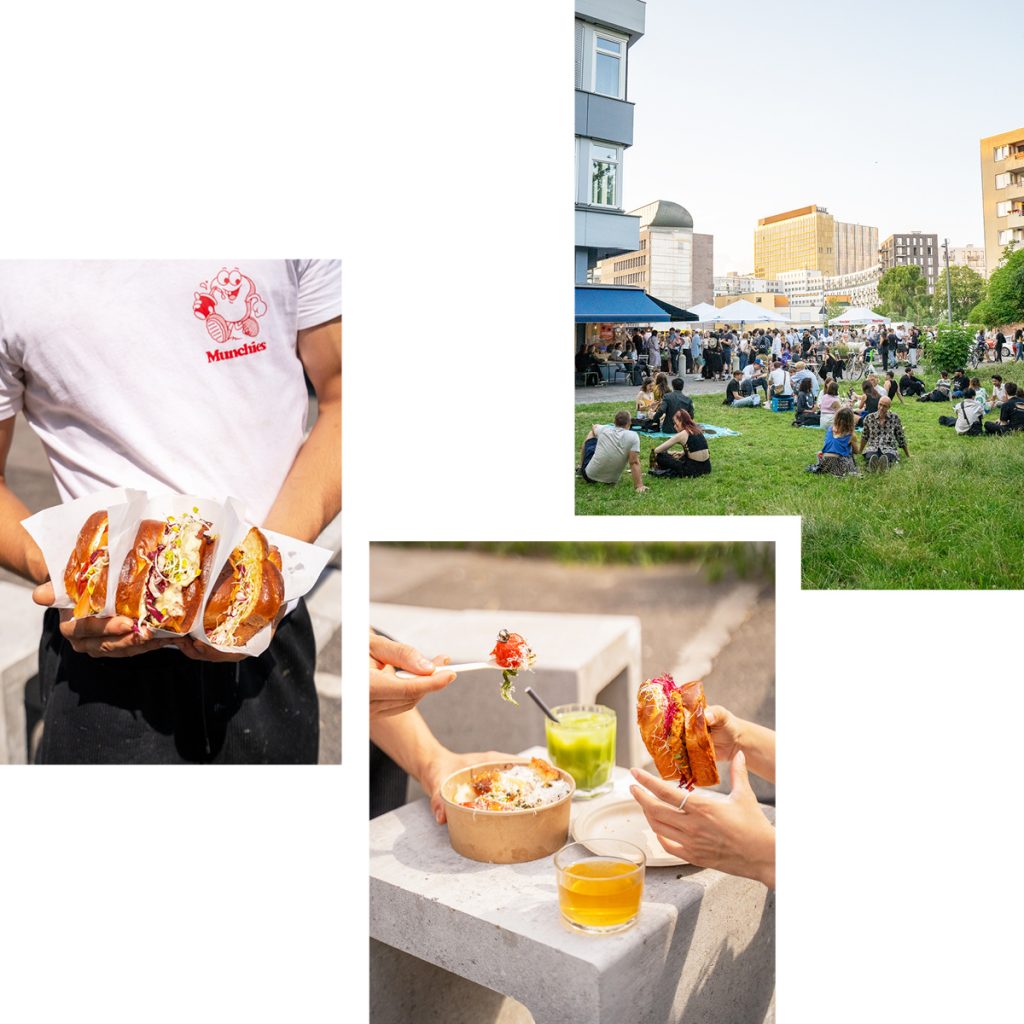
KAFFEEKREIS — MOLDOVA ON MÖCKERNSTRASSE

KAFFEEKREIS — MOLDOVA ON MÖCKERNSTRASSE

Berlin has almost everything when it comes to cuisine, but Moldovan food? Not so much. At least until now. Kaffeekreishas opened in Kreuzberg, filling a gap in the restaurant scene. With their shop, the two founders bring a touch of home to the city: Papanasi (quark slices), which they grew up eating, accompanied by homemade sea buckthorn tea. There are wines that few in Berlin know, even though they are among the oldest in Europe. The setting is as authentic as the menu: brick walls, old-building charm, and a hand-knotted carpet on the wall. Indoor and outdoor seating fills up quickly, whether for brunch with a cappuccino in the morning, or caviar blinis, savory papanasi with salmon, and a glass of Rară Neagră in the evening. Behind it all are Alexandru and Valeria, who wanted to bring their Moldovan homeland to Berlin. Together, they have turned a former bar into a living room for the neighborhood to create a place where people can linger. Kaffeekreis doesn’t follow trends; it fills a gap you didn’t even know existed. And suddenly, you find yourself asking: why only now?

Text: Leo Sandmann / Photos: Kaffeekreis

Kaffeekreis, Möckernstr.91, 10963 Berlin–Kreuzberg; map

@kaffeekreisberlin

cee_cee_logo
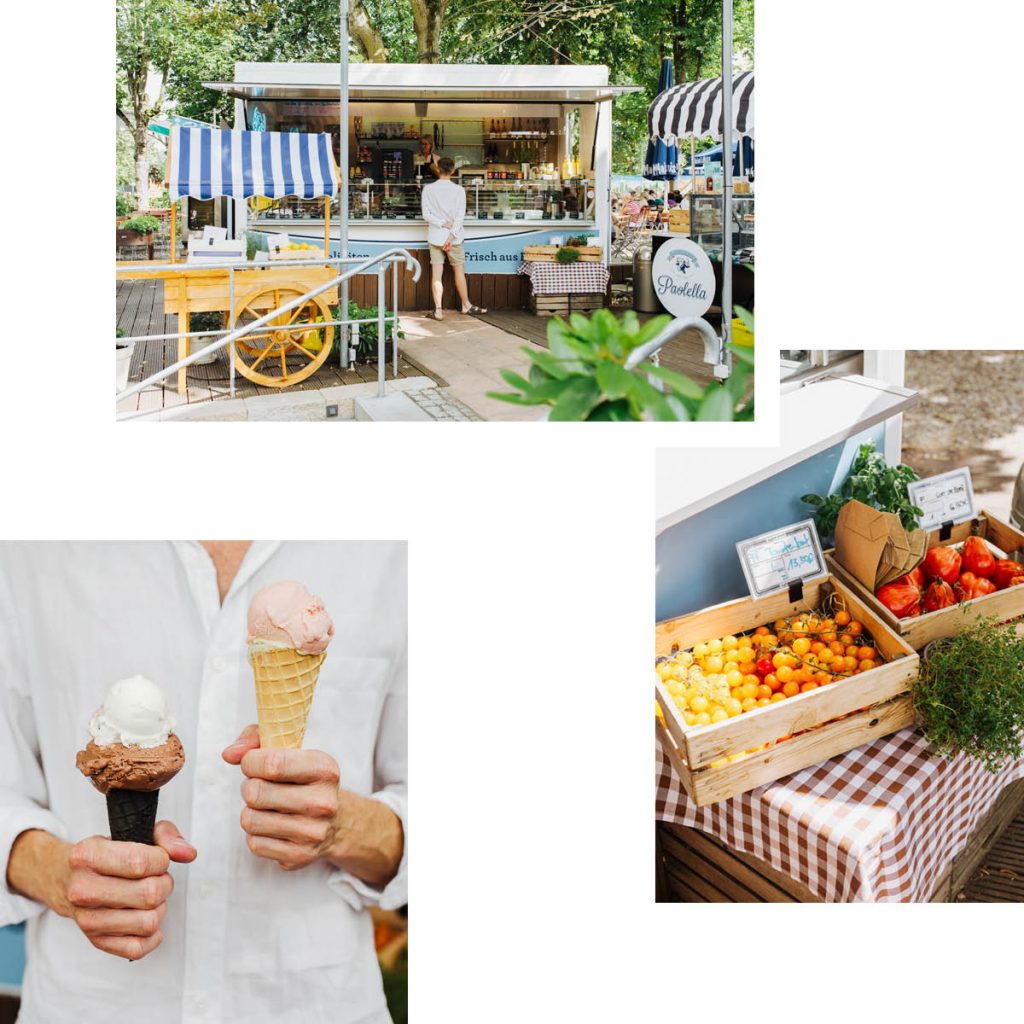
MIXING BEATS TASTING: CHILDHOOD FLASHBACKS BY THE SCOOP AT KURÉME

MIXING BEATS TASTING: CHILDHOOD FLASHBACKS BY THE SCOOP AT KURÉME

There was a small corner shop next to my elementary school back when I was a kid. Whenever my grandfather gave me pocket money, I would run there full of excitement after school. The shelves were always stacked to the ceiling with transparent plastic containers filled with sweets in every shape and color. I feel the same way when I’m at Kuréme. Instead of sour snakes and fizzy UFOs, there’s creamy ice cream, and instead of transparent boxes, there’s a display of pozzetti. But just like the colorful bags, the selection feels like a playground for your imagination. Over 300 possible combinations await you here, thanks to 40 flavors and three glazes (matcha, chocolate, and pistachio) that you can dip the scoops into. The interior of Kuréme is minimalist, shiny, sculptural — exactly as co-founders My and Duong imagined it. The ice cream is produced in small batches, with Gabriele Atzeni, Head of Production and a good friend of the co-founders. The trio combines traditional Italian craftsmanship with new and unusual flavors, inspired by travels and childhood memories. Similar to perfumes, many flavors have top, middle, and base notes. The result ranges from reinterpreted classics to desserts and dishes transformed into ice cream. Mango Sticky Rice combines pandan, coconut milk, and mango swirls; Bananatella translates stracciatella into a banana split dream; Bufala combines buffalo milk ricotta with olive oil, salt, and pepper.

With Viet Coffee, condensed milk is deliberately added to the finished ice cream mixture — this is how My and Duong recreate the experience of Vietnamese iced coffee as closely as possible. That’s exactly what makes Kuréme so special to me: in addition to the wonderful flavor combinations, they also go wild with textures, yet nothing is created arbitrarily, but with a concept in mind. You also have the opportunity to do your own thing. Are you a matcha ultra? Get a scoop of matcha, or a scoop of matchatella with matcha glaze on top? Or a scoop of matcha, but with a chocolate glaze? Or maybe you want to try something really crazy. There are no limits to the combinations. Five to six vegan varieties are always on offer — sometimes fruity like mandarin, sometimes creamy like douhua, inspired by the Chinese silken tofu dessert. The selection is huge and the possibilities endless. And I feel transported back to my childhood, when three euros put the world of sweets at my feet.

Text & Photos: Robyn Steffen

Kuréme, Adalbertstr.23, 10997 Berlin–Kreuzberg; map

@thisiskureme

cee_cee_logo
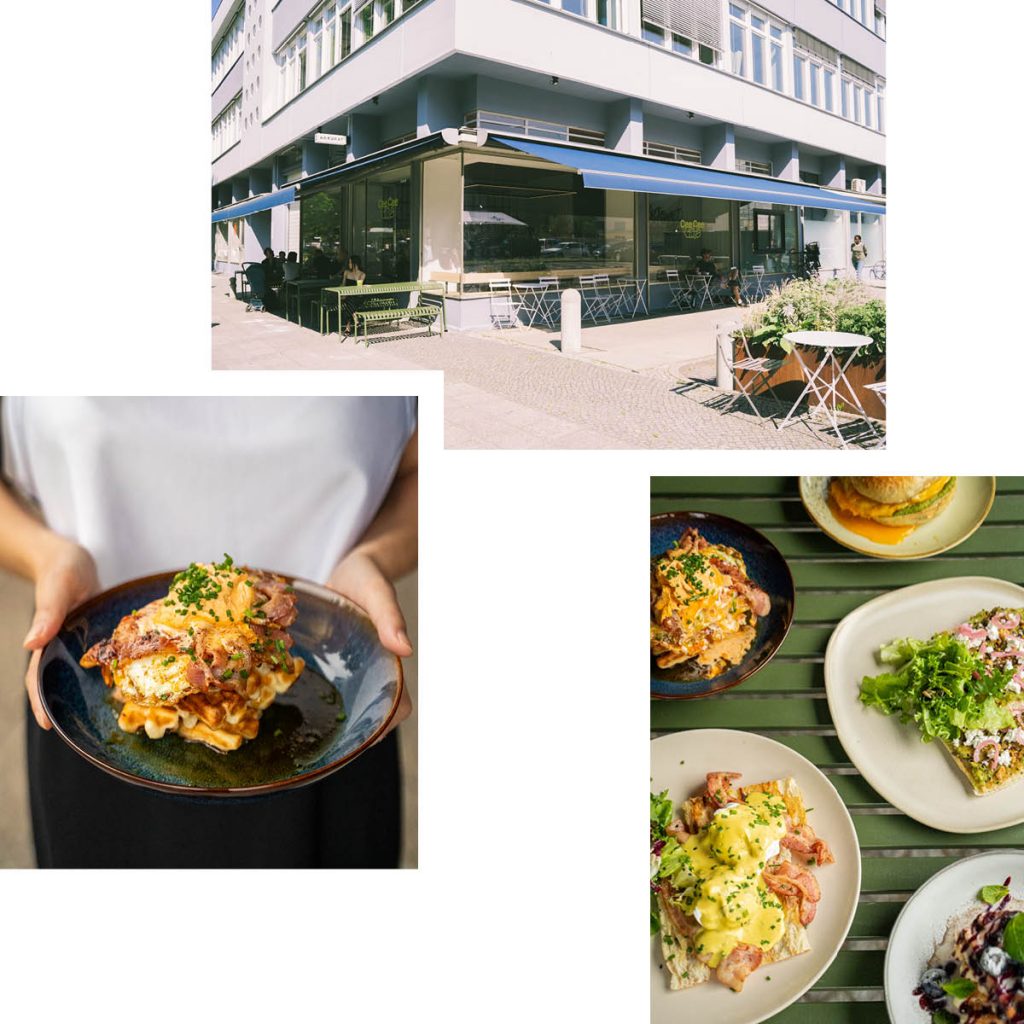
COMMON — CAFÉ, MICROBAKERY & PIZZA WINDOW ON KARL-MARX-STRASSE

COMMON — CAFÉ, MICROBAKERY & PIZZA WINDOW ON KARL-MARX-STRASSE

“Common” means many things: ordinary, shared, familiar. The new café on Karl-Marx-Straße plays with this ambiguity because Common wants to be both a place for everyone and a place that holds itself to high standards. After several stops in Berlin and Copenhagen, Maximilian Korrenz-Lemke opened the café in June 2025, fulfilling his long-held dream of launching his own project, without compromise. On the menu, find specialty coffee from August 63 and baked goods made daily in-house — cardamom buns, cinnamon swirls, sourdough brioches, bostocks, plus savory options like rye sandwiches with North Sea cheese or seasonal galettes. Next week, the Pizza Window officially opens in the backyard. From Thursday to Sunday evenings throughout the summer, sourdough pizzas will be served, starting with Pizza No. 1 (garlic, olive oil, parsley), optionally topped with Pecorino from the Allgäu or anchovies, up to Pizza No. 5 (spicy house sausage, Samson capers, Berlin mozzarella, black pudding, and bacon from the Blutwurstmanufaktur). You can’t go wrong. Eat in peace inside or take it to the nearby Körnerpark. The interior at Common reflects the same calm, thoughtful vibe. Developed in collaboration with designer Thalea Schmalenberg, the space features warm reds, natural wood, and design objects from Germany and Denmark.

Max wants Common to be a place to escape the noise of Karl-Marx-Straße and everyday life. And it works: once you’re inside, the street seems to disappear. Large windows offer a visual connection to the outside world, but the pace slows down as soon as you enter. Take a seat on the upholstered bench, gather around the large communal table, or perch at one of the standing counters. The café is divided into two rooms with distinct atmospheres — one more secluded with darker wood tones, the other bright and open, ideal for groups. The menu is intentionally compact, with seasonal offerings. Vegan options are in the works, not as a substitute, but on their terms. Max and the team are taking their time with that, too. Common sees itself as a neighborhood meeting place: unpretentious, yet thoughtful in every detail. A space that stays open all day, for whatever you want to make of your free time.

Text: Robyn Steffen / Photos: Sophie Doering

Common, Karl-Marx-Str.176, 12043 Berlin–Neukölln; map

@common.berlin

cee_cee_logo