
Cee Cee Creative Newsletter Book Neighborhood Map Lessons
Stadtplan
Information
archive temp
loop temp
SO-SO DESIGN DISCOURSE? CONCEPTUAL CONVERSATIONS BY TINA ROEDER

SO-SO DESIGN DISCOURSE? CONCEPTUAL CONVERSATIONS BY TINA ROEDER

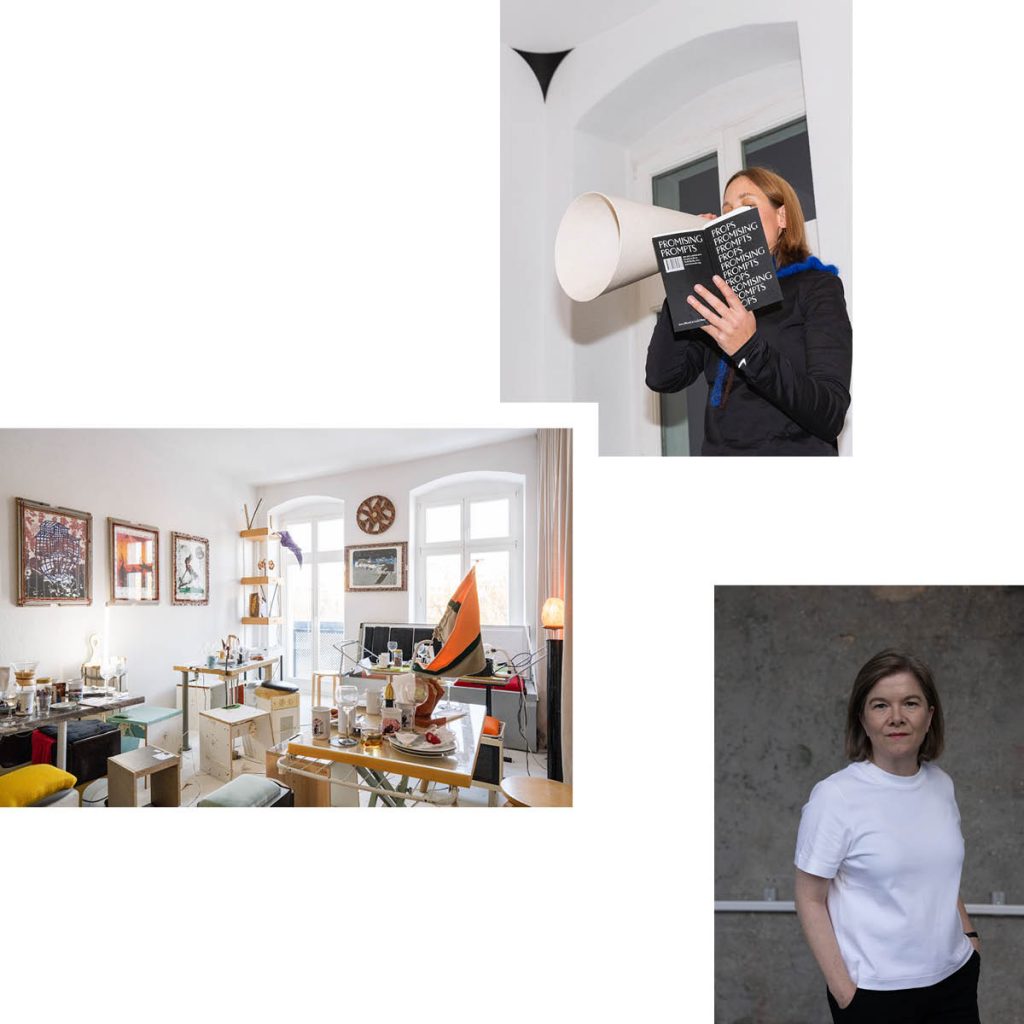
Baby, we need to talk: about concept. With her Conceptual ConversationsTina Roeder has been hosting talks about design for several years. This expanded talk format — somewhere between exhibition, discursive space and presentation of work – originated in a group exhibition that Tina (also co-founder of the Conceptual Biennale) curated in 2023. Situated within design, close to art, and in dialogue with architecture, the format brings together international, Berlin-based positions that critically question structures and systems. She has welcomed a range of guests. Alongside more established figures in Berlin’s design scene, such as Sam Chermayeff, who prepared Live Snacks, there have been Anaïs Nyffeler and Jil Schuberth, who served cake suspended between sports equipment, and The Thing Magazine, which invited attendees to bring their favorite stolen object. There is no overarching theme. Each invited practice develops a presentation of its working context. CC13, taking place on 26.02.2026, brings together Fatma Cankaya and Inhwan Oh. Under the title 360 LIPO + BBL Package — design yourself!, they examine the body as a malleable object and identity as material of the present. Their point of departure lies in hyper-aestheticized body images shaped by transformation, celebrity culture and digital visibility. Up for discussion is the body as sculptural form, beauty as a deliberate statement, and identity as a designable project. As always, the invitation is to Tina’s home. Seats are limited. Let’s talk concept.

Text: Inga Krumme / Photos: Conceptual Conversations, Oliver Boualam, Pia Henkel

Studio Tina Roeder, Granseer Str.5, 10435 Berlin–Mitte; map
Conceptual Conversations: CC13 with Fatma Cankaya & Inhwan Oh 26.02.2026 19–22h

@tinasroeder
@fatmacankaya
@innipendent

cee_cee_logo
BETWEEN RITUAL & REALITY: THE PHOTOGRAPHY OF GRACIELA ITURBIDE AT C/O BERLIN

BETWEEN RITUAL & REALITY: THE PHOTOGRAPHY OF GRACIELA ITURBIDE AT C/O BERLIN

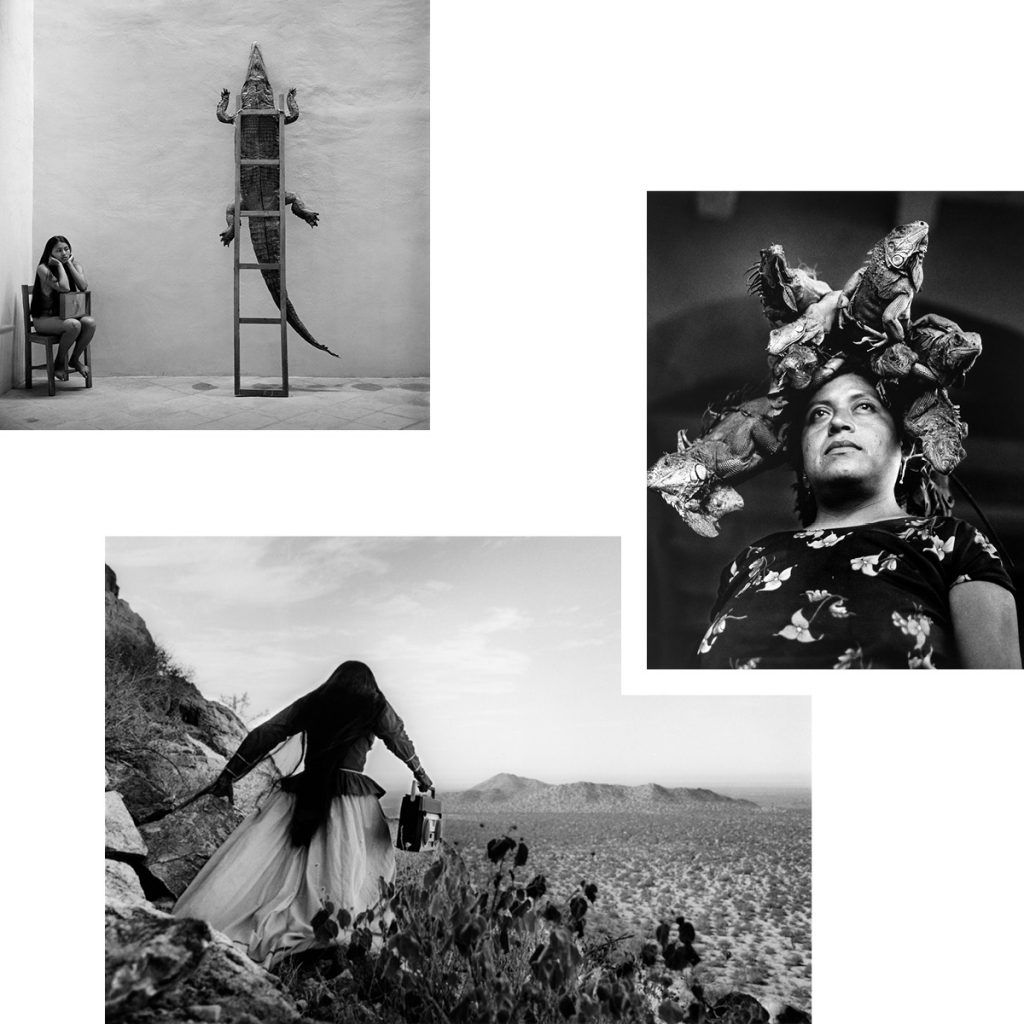
Magic and surprise are two forces that continue to drive Mexican photographer Graciela Iturbide to this day. Her career, too, began unexpectedly. In 1969, in her late twenties and a mother of three, she heard a radio announcement from Mexico’s national film school and decided to apply. She was accepted and soon became a teacher’s assistant to Manuel Álvarez Bravo, now regarded as the founder of Mexican art photography. A fascination with symbolism, the fantastical and experimentation shaped Iturbide’s work, although she soon devoted herself to documentary photography. In the early 1980s, she followed the nomadic Seri people into the Sonoran Desert for a photographic reportage. She also explored traditions deeply rooted in Mexican culture in her series La Matanza, for which she accompanied the ritual slaughter of goats in the Mixteca region. C/O Berlin now presents an overview of her body of work. Developed in close collaboration with Iturbide herself, the exhibition Eyes to Fly With brings together her most important series while placing particular emphasis on the role of women in Mexican society.

A key example is the series Juchitán de las Mujeres, created among the Indigenous Zapotec community. Over nearly ten years, Iturbide returned again and again to the small town of Juchitán in Oaxaca, forming friendships and becoming familiar with local culture. At the center of her work are women and the so-called muxes — people assigned male at birth who identify differently. In Juchitán, women and muxes hold significant political, economic and spiritual influence. Iturbide’s photographs never objectify or exoticize them. Instead, her practice is shaped by a deeply personal way of seeing. She does not approach her subjects as an anonymous outsider, but documents her own encounters and relationships with the community. Her engagement with Mexico’s most renowned artist, Frida Kahlo, was similarly respectful and subjective. Years after Kahlo’s death, Iturbide approached her former home, Casa Azul in Mexico City, as both a place of artistic presence and cultural pilgrimage. Wherever Iturbide photographs — whether in her homeland or while traveling — she creates powerful, intimate portraits defined by her empathetic and distinctive visual language. Her images move between documentation and dream. They are firmly rooted in reality, yet imbued with such poetic sensitivity that Iturbide seems intent on revealing nothing less than the quiet magic of everyday life.

Text: Laura Storfner / Photos: Alhelí, Oaxaca, México, 1995; Nuestra Señora de las Iguanas, Juchitán, Oaxaca, México, 1979; Angel Woman, Sonoran Desert, México, 1979 / Credit: Graciela Iturbide

C/O Berlin, Hardenbergstr.22–24, 10623 Berlin–Charlottenburg; map
Graciela Iturbide: Eyes to Fly With until 10.06.2026

@coberlin

cee_cee_logo
CAMPUS MEETS KIEZ: UDK X BERLIN AT MASUMI SPACE

CAMPUS MEETS KIEZ: UDK X BERLIN AT MASUMI SPACE

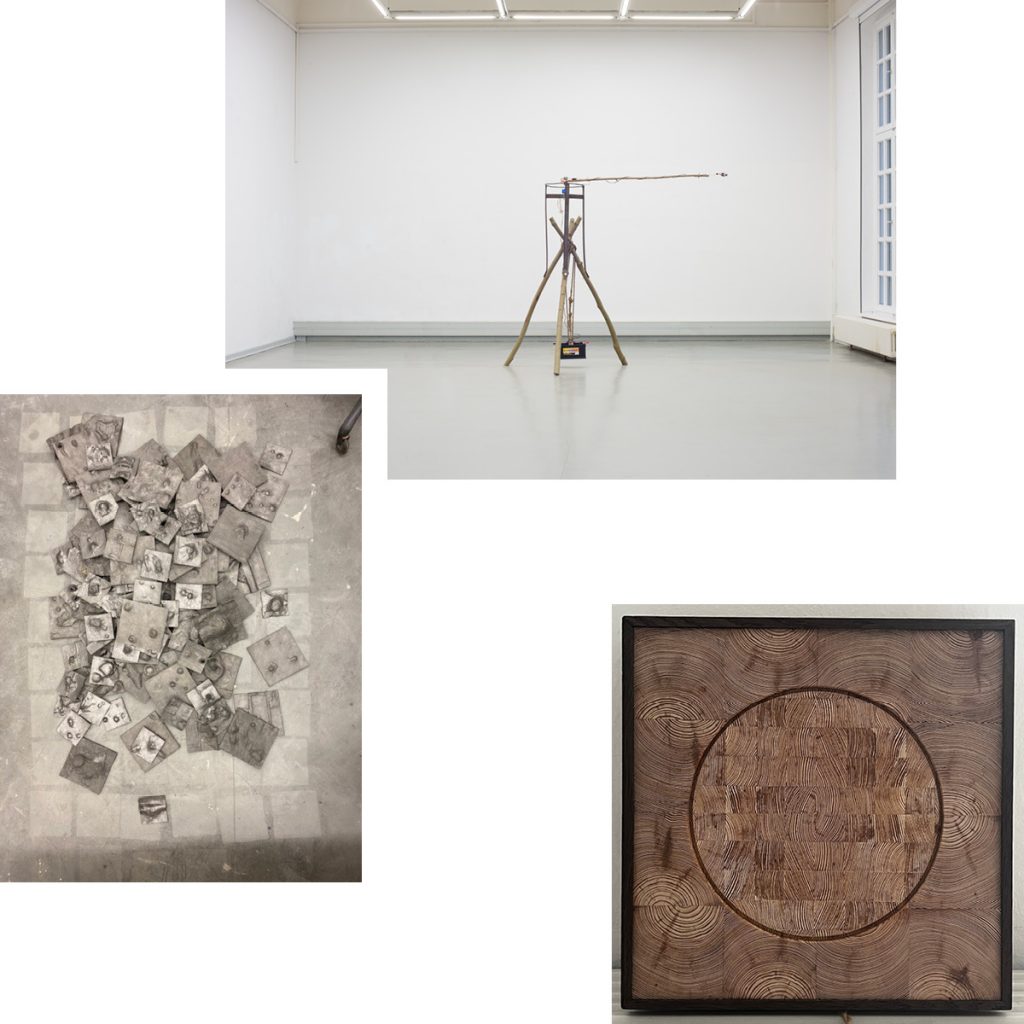
Those who study art in Berlin rarely begin with a blank canvas. The city is no neutral backdrop. Studios sit next to Spätis, seminars end at Kotti, and discussions continue on the subway. This is exactly where the UdK x Berlin Pop-up Gallerybegins. From 24.02.–26.02.2026, the Berlin University of the Arts will present just how closely study, artistic research and urban practice are intertwined at Masumi Space. The cooperation between the State of Berlin, Berlin Partner and UdK Berlin brings to light that the city is not just a backdrop, but a campus, a place of work and inspiration. Students and teachers present works in different formats from different perspectives, united by a shared question: How do creative teaching and research shape the city? And how does the city shape creative teaching and research? A dialogue emerges between campus and neighborhood, exploring how art responds to a constantly changing metropolis — and how it, in turn, feeds back into it. Works from Performing Arts, Music, Fine Arts, Design and the Design Research Lab are represented. Sara Assadi presents Berlin, ein visuelles Memoir (Berlin, a Visual Memoir), a drawn diary of the city: twelve districts condensed into a series and transformed into a foldable art book with a sculptural twist. Özkan Ertek’sAcoustic Horizon is a rotating, solar-powered sound sculpture that brings distant sounds into the room. Seonkyu Oh’sHolzzeit filters light through cross-sections of wood. And Ana Luiza Anjos, together with her team, presents Roupa Velha: a performance and video made from old clothing that stores memories, and seems to dance through Berlin at night. If you want to understand how university and neighborhood shape one another, mark these three days in your calendar. Admission is free.

Text: Emma Zylla / Credits: Clemens Fischer (Tag 3, 2026), Seonkyu OH (Holzzeit), Sally Frey (Spuren der Gewalt, 2025)

Masumi Space, Kurfürstendamm 229, 10719 Berlin–Charlottenburg; map
UdK x Berlin 24.02.–26.02.2026 13–20h

@udkberlin

cee_cee_logo
MORE THAN DINNER — A CULTURAL NIGHT OUT IN BERLIN

MORE THAN DINNER — A CULTURAL NIGHT OUT IN BERLIN

Red roses, chocolates, candlelight and dinner plans — what’s it going to be this Valentine’s Day? Luckily, there’s Abundo. With the Berlin culture subscription, the month of love doesn’t feel like a compulsory couples’ program, but rather a gentle nudge toward concert halls, dance floors and cinema seats. Into places where you can experience something together, in the moment, far away from cheesy loveheart decorations. Throw yourself into Bohème Sauvage, for example — a night that wants too much in the very best way. At Metropol, there’s Charleston, swing, absinthe, and grand gestures. The ticket to this glittering adventure? A monocle and a feather boa (dressing up is half the fun). Prefer to philosophize about the bigger picture? At Sustainable Listening, don’t simply sit in the audience but inside a walk-in climate capsule. Music from the Staatskapelle Berlin meets live electronics by the Teichmann brothers, accompanied by voices from climate and future discourses. It’s an evening for listening closely and talking at length afterward. Maybe you’re craving a little loss of control? Kurt Schwitters’ Ursonate at the Deutsches Theater Berlin isn’t a traditional performance, but a sound poem that dismantles and reassembles language. A piece that gently shatters conventions. Written in the 1920s as a Dadaist revolt against logic and order, the Ursonate still feels fresh and gloriously nonsensical. If classical romance is more your thing, try Tango at Ballhaus Wedding. Parquet floors, the Marlene Bar, a DJ, and the freedom to drift off in between: for a drink, into the courtyard, and back to the dance floor. Abundo is a culture subscription that makes February feel a little warmer. Because love happens in real life. Often, a good evening out in the city is all it takes to remind you of that.

Text: Emma Zylla / Photos: Abundo

Find out more about Abundo here.

Right now, you can get your first month for €18 with a duo subscription or €9 solo (regularly €29 or €55). As a Cee Cee reader, you also get an exclusive perk: use the code “ceeceegift” to receive 20% off gift cards. All tickets included. Cancel anytime.

Metropol, Nollendorfplatz 5, 10777 Berlin–Schöneberg; map
Bohème Sauvage 21.02.2026 21h

Staatsoper, Unter den Linden 7, 10117 Berlin–Mitte; map
Sustainable Listening 24.02.2026 21h

Deutsches Theater, Schumannstr.13A, 10117 Berlin–Mitte; map
Ursonate 21.02.2026 20h

Ballhaus Wedding, Wriezener Str.6, 13359 Berlin–Wedding; map
Tango im Ballhaus Wedding 18.02.2026 24h

@abundoberlin

cee_cee_logo
“IRGENDETWAS IST PASSIERT”: A PLAY BY & WITH FABIAN HINRICHS — RECOMMENDED BY ANTJE DRINKUTH

“IRGENDETWAS IST PASSIERT”: A PLAY BY & WITH FABIAN HINRICHS — RECOMMENDED BY ANTJE DRINKUTH

Irgendetwas ist passiert is a new play by and starring Fabian Hinrichs, in in artistic collaboration with René Pollesch, at the Berliner Volksbühne. The seemingly casual title captures exactly what the play explores: the feeling that the world has gone off its hinges, even as everyday life continues as normal. Hinrichs stands alone on stage, performing dual roles as the couple Claudia and Paul in a rapid back-and-forth. Their dialogues oscillate between separation and closeness, despair and banal intimacy. When Paul, after an argument, suggests watching the news together and offers a massage, it encapsulates the ambivalence of a relationship that was once rooted in deep love, formed on that evening when a reactor exploded in Fukushima. Global history and private biography are intertwined from the very beginning. This connection runs throughout the evening. Hinrichs plays with his characteristic nervous, intelligent, and self-ironic precision. He indicts life, love, and political madness, teetering between attack and surrender. While arguments unfold in a minimalist suburban home over salad or an overpriced kitchen countertop, war sounds, news fragments, and images of violence intrude through sound and projection.

Claudia withdraws, watches pornography, and then the focus shifts again to the war in Ukraine and Israel’s violence in Gaza. Before going to bed, American Psycho plays, immediately followed by images of destroyed cities. The urge to smash the TV becomes the cry of a generation that is permanently informed yet simultaneously powerless. The relentless juxtaposition of bourgeois comfort and global catastrophe pushes the play to its moral limit. Luxury advertisements flicker across the screen, private dialogues and political abysses collide. Anger, overwhelm, and quiet moments alternate. Dramaturgy and technical design are so finely balanced that not a single moment of the ninety-minute performance feels dull. Memories of the Pollesch solo evenings are unmistakable, most recently Ja nichts ist ok. Yet Hinrichs goes a step further. Created with his wife, Anne Hinrichs, the piece is radically personal, focusing on the existential doubts of a relationship amid multiple crises. Critics’ accusations of melodrama and moralizing were to be expected. But its immediacy strikes a raw nerve: informed, overwhelmed, privately entangled, politically paralyzed. A theater evening that hurts, is intelligent, and lingers long after. Go see it!

Text: Antje Drinkuth / Photos: Apollonia Theresa Bitzan

Antje Drinkuth is a professor of fashion design and has lived in Berlin since 1987.

Volksbühne am Rosa-Luxemburg-Platz, Linienstr. 227, 10178 Berlin–Mitte; map

Irgendetwas ist passiert by Fabian Hinrichs, Anne Hinrichs & René Pollesch, 08. & 15.02. (sold out), 14. & 22.03.2026. Get tickets here.

@volksbuehne_berlin
@antje_drinkuth

cee_cee_logo